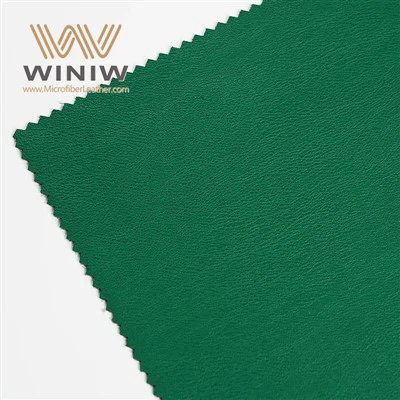
Material Overview
Technical Specifications and Chemical Resistance Testing Standards
|
Chemical Exposure Agent
|
Concentration Level
|
Contact Exposure Time
|
Mechanical Property Retention
|
Test Reference Protocol
|
Sourcing Compliance Status
|
|---|---|---|---|---|---|
|
Sulfuric Acid (H2SO4)
|
30% Concentration
|
20 hours continuous
|
Tensile strength retention ≥ 85%
|
EN ISO 20344 / EN 344
|
Passed (Class I Protection)
|
|
Sodium Hydroxide (NaOH)
|
20% Concentration
|
20 hours continuous
|
Tear strength retention ≥ 80%
|
EN ISO 20344 Section 5.1
|
Passed (Industrial Safety)
|
|
Sodium Chloride (NaCl)
|
10% Saline Solution
|
48 hours continuous
|
Surface color gray scale ≥ 4
|
ISO 11640 / ISO 105-E04
|
Passed (Salt Spray Resistant)
|
|
Martindale Abrasion
|
Dry / Wet Rubs
|
After chemical exposure
|
Endures > 50,000 cycles (No cracking)
|
EN ISO 12947-2 (12 kPa Load)
|
Certified (High Durability)
|
|
Bally Flexing Endurance
|
Room Temperature
|
After chemical exposure
|
Endures > 50,000 cycles (No cracking)
|
EN ISO 5402-1
|
Passed (Crease Recovery)
|
|
Stitch Tear Strength
|
Warp & Weft
|
Untreated control
|
High-tenacity performance ≥ 55 N
|
EN ISO 3377-2
|
Passed (High Seam Security)
|
Material Structure Selection: Engineering for Chemical Defense


Application-Specific Chemical-Resistant Solutions
- Safety & Industrial Footwear (EN ISO 20345): Supplied in 1.8mm to 2.0mm thickness with oil-resistant and acid-resistant uppers, engineered to protect industrial workers on active chemical plants, petrochemical refineries, and metal processing lines.
- Protective Work Gloves (EN 388 / EN 374): Highly flexible, breathable microfiber suede (0.6mm to 0.8mm) and PVC palms engineered to provide steady wet/dry grip and mechanical protection without hardening after contact with detergents.
- Laboratory & Medical Seating: Waterproof, non-porous PU and silicone upholstery designed to resist harsh chemical sanitizers, hospital-grade disinfectants, and alcohol wipe-downs (70% IPA) without color fading or cracking.
- Industrial Equipment & Valve Covers: Heavy-duty, high-tensile PVC and PU protective sheeting designed to shield critical factory machinery from accidental acid splashes, oil leaks, and outdoor weathering.
Common applications of acid and alkali resistant synthetic leather
Acid and alkali resistant synthetic leather is widely used in many fields due to its unique properties:


Our Closed-Loop Custom Engineering Process
- Standard Analysis: You provide your target regulatory or industry codes (e.g., IATF 16949, EN ISO 20345, BS 5852 Crib 5).
- Formulation Matching: Our laboratory adjusts polymer cross-linking density, UV stabilizers (HALS), plasticizer molecular weights, and backing fibers.
- Pilot Lab-Dip Production: We manufacture physical swatches matching your custom Pantone color and gloss levels within 7 to 10 days.
- On-Site Destructive Testing: Swatches undergo Wyzenbeek double rubs, tropical chamber hydrolysis, and low-temperature Bally flex tests to verify compliance.
- Traceable Mass Production: Once approved, volume production is completed within 15 to 20 days with strict batch-code traceability.
Sourcing Policy: MOQ, Lead Time, and Packaging
- Minimum Order Quantity (MOQ): Our standard custom manufacturing MOQ for chemical-resistant microfiber substrates is 300 linear meters per color and thickness. For standard PU or PVC formulations, the MOQ is 1,000 linear meters per color and thickness. For standard program stocks in black or white, we can dispatch trials starting from 100 linear meters to support your prototyping.
- Color Matching Consistency: Lot-to-lot color shading (ΔE) is a critical quality concern for automated assembly lines. Our laboratory utilizes automated gravimetric pigment dispensers and Datacolor spectrophotometers to maintain the overall color difference strictly under ΔE≤0.82 under standard D65 illuminants.
- Packaging and Transport: All bulk rolls are packed in dual-layer PE moisture-barrier roll wrapping with heavy-duty woven outer PP bags and labeled with unique traceable batch-code roll IDs.
Buyer Sourcing FAQs
Q: Does a material being "chemical-resistant" mean it is immune to all industrial solvents?
A: No. Chemical resistance is highly specific to the chemical type, concentration, contact duration, and temperature. A material that is highly resistant to sulfuric acid (EN ISO 20344) may still experience surface swelling when exposed to harsh organic solvents like acetone or MEK. WINIW recommends providing your specific chemical exposure list and target concentration levels so our laboratory can match the correct polymer formulation.
Q: Does adding chemical-resistant properties make the synthetic leather stiff or heavy?
A: Absolutely not. While cheap industrial coatings use heavy fillers that harden the material, WINIW utilizes advanced polyurethane resins and sea-island microfiber bases. This process ensures the material retains high flexibility, passing over 100,000 Bally flex cycles under room temperature, while maintaining a supple, luxurious touch suitable for high-end safety shoes and work gloves.
Contact Our Engineering Materials Team
- Plant Footprint: 100,000 m² total manufacturing area
- Annual Output: 2,000,000 meters of high-grade synthetic roll goods
- On-Site Lab: Certified thickness gauges, tensile testers, and Bally flex chambers
- Direct Inquiry Email: MKT@MicrofiberLeather.com
- B2B WhatsApp: +8618150976625
- Corporate Address: 3rd Floor, Huixia Building B, Meiling Street, Jinjiang, Quanzhou, Fujian 362200 China
Hot Tags: acid and alkali resistance, China acid and alkali resistance manufacturers, suppliers, factory