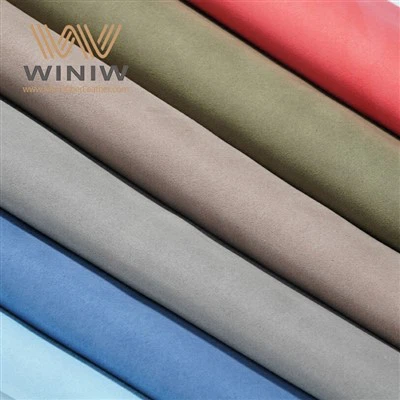
What is High-Temperature Resistant Synthetic Leather?
Technical Specifications & Heat Resistance Testing Standards
|
Thermal & Mechanical Evaluation Metric
|
Verified Technical Typical Value
|
Conventional PU / PVC Leather
|
Calibrated Testing Standard
|
Sourcing Compliance Status
|
|---|---|---|---|---|
|
Continuous Service Temperature
|
Up to 120°C (240 hours continuous)
|
Fails above 70°C (Softens/cracks)
|
ISO 188 Hot-Air Aging
|
Passed (Class A Heat Rating)
|
|
Transient Peak Temperature
|
Up to 150°C (Short-term thermal load)
|
Melts instantly (Coating flows)
|
Factory Thermal Stress Test
|
Passed (Heavy Duty Industrial)
|
|
Dimensional Heat Shrinkage
|
≤ 1.5% Dimensional Shift (At 100°C)
|
> 5.0% Shrinkage (Base deforms)
|
ASTM D1204 / ISO 17130
|
Certified (High Calibration)
|
|
Surface Discoloration Resistance
|
Gray Scale ≥ Grade 4 (After heat)
|
Grade 1-2 (Severe yellowing)
|
ISO 105-B02 (Tested at 90°C)
|
Passed (Anti-Yellowing UV)
|
|
Tensile Strength Retention
|
≥ 85% Strength Retained (Post-aging)
|
< 30% Retained (Fiber brittle)
|
ISO 1421 (After ISO 188 aging)
|
Passed
|
|
Windshield Fogging Behavior
|
≥ 90% Condensation Reflection
|
< 50% Reflection (Heavy oily fog)
|
DIN 75201 Method B (At 100°C)
|
Certified (Automotive Grade)
|
High temperature resistant leather type
WINIW's high temperature resistant leather mainly includes various types to meet the needs of different customers.


Material Structure Selection: High-Heat Polymer Chemistries
1. Liquid Silicone Rubber LSR Coated Leather
(The Gold Standard)
2. Polycarbonate-Grade Polyurethane Matrices
(Aliphatic Stability)
3. High-Molecular-Weight PVC Vinyl
(Cost-Effective Thermal Barriers)
Common applications of heat-resistant synthetic leather

Aerospace
Used to manufacture aircraft seats, interior parts and other components that can withstand extreme environments such as high temperature and high pressure.

Used in automobile seats, interior decoration and other parts, which can maintain stable shape and performance in high temperature environment, and improve driving comfort and safety.

Electronic instruments
Used to manufacture the casing and internal components of electronic instruments, which can withstand complex environments such as high temperature and electromagnetic interference.

Industrial Manufacturing
Used to manufacture covers and interior parts of various industrial equipment and machines, capable of withstanding harsh conditions such as high temperature and friction.
Application-Specific Heat-Resistance Solutions
- Automotive Instrument Panels & Dashboards: Low-odor, low-VOC aliphatic PU and silicone substrates engineered to survive direct solar heat trapped under modern windshields (where temperatures frequently reach 90°C–105°C). Fully VDA 278 and DIN 75201 compliant to eliminate oily cabin fogging.
- High-Heat Safety Shoes & Metallurgy (EN ISO 20345): Heavy-duty 2.0mm microfiber leather uppers designed to protect industrial workers in iron foundries, glass factories, and welding stations. Resists high radiant heat and localized hot sparks without shrinking or melting onto the wearer's foot.
- Industrial Pipe & Valve Thermal Covers: Flame-retardant, high-temperature resistant PVC and silicone-coated fabrics designed as structural outer wraps for hot thermal pipelines, protecting sensitive factory equipment from high-temperature exhaust environments.
Engineering behind Thermal Dimension Stabilization
- Heat-Set Pre-Shrunk Base Matrix: Prior to coating, our three-dimensional sea-island microfiber base is run through high-tension thermal calendering rollers at 130°C to release all manufacturing fiber tension.
- Inorganic Heat-Stable Pigments: Traditional organic dyes fade and shift hue when exposed to hot air. We color our compounds using specialized metal-oxide inorganic pigments that maintain perfect color tone consistency without yellowing or fading.
- Caliper Uniformity Control: Under strict automated optical scanners, we maintain overall thickness tolerance within +/-0.05mm, ensuring completely uniform heat transfer and preventing localized overheating during your factory's lamination processes.
Sourcing Policy: MOQ, Lead Time, and Packaging
- Minimum Order Quantity (MOQ): Our standard custom manufacturing MOQ for heat-resistant microfiber substrates is 300 linear meters per color and thickness. For standard PU or PVC formulations, the MOQ is 1,000 linear meters per color and thickness. For standard program stocks in black or white, we can dispatch trials starting from 100 linear meters to support your prototyping.
- Color Matching Consistency: Lot-to-lot color shading (ΔE) is a critical quality concern for automated assembly lines. Our laboratory utilizes automated gravimetric pigment dispensers and Datacolor spectrophotometers to maintain the overall color difference strictly under ΔE≤0.82 under standard D65 illuminants.
- Packaging and Transport: All bulk rolls are packed in dual-layer PE moisture-barrier roll wrapping with heavy-duty woven outer PP bags and labeled with unique traceable batch-code roll IDs linked to our laboratory thermal aging records.
Buyer Sourcing FAQs
Q: Why does a standard "fire-retardant" leather still crack and fail under high temperatures?
A: This is a common B2B misunderstanding. A fire-retardant (FR) material is designed to prevent open flames from propagating (self-extinguishing under FMVSS 302 or BS 5852). However, FR chemistry does not protect the polyurethane polymer chains from slowly oxidizing, yellowing, and losing mechanical strength when subjected to continuous non-flaming heat (e.g., 90°C inside a closed car cabin). Heat-resistance requires distinct thermal-oxidative stabilizers and aliphatic polyols that prevent thermal degradation over thousands of continuous hours.
Q: Can silicone leather be laminated using standard high-frequency (HF) welding?
A: Silicone leather possesses an exceptionally high thermal resistance and a distinct molecular structure compared to polar polymers like PVC. Because of this, it cannot be melted or laminated using standard high-frequency (HF) welding machines designed for PVC. Silicone leather must be sewn, bonded using specialized silicone-compatible adhesives, or thermal-fused at significantly higher temperature ranges. Please consult our technical engineers for matched lamination guides.
Contact Our Engineering Materials Team
- Plant Footprint: 100,000 m² total manufacturing area
- Annual Output: 2,000,000 meters of high-grade synthetic roll goods
- On-Site Lab: Certified thickness gauges, tensile testers, and Bally flex chambers
- Direct Inquiry Email: MKT@MicrofiberLeather.com
- B2B WhatsApp: +8618150976625
- Corporate Address: 3rd Floor, Huixia Building B, Meiling Street, Jinjiang, Quanzhou, Fujian 362200 China
Hot Tags: high temperature resistance, China high temperature resistance manufacturers, suppliers, factory