Footwear
Shoe uppers, linings and safety footwear may prioritize flex resistance, peel strength, breathability, abrasion, water exposure and lasting behavior.
Explore footwear material selection →
Microfiber leather combines a dense nonwoven microfiber base with polyurethane impregnation and a finished surface. The construction can be adjusted for footwear, automotive interiors, upholstery, bags and sports balls. Buyers should select an article by end-use component, thickness, usable width, backing, grain, hand feel and required tests—not by appearance alone. WINIW supports material matching, color and texture development, sample evaluation and specification review for importers, distributors, brands and product manufacturers.

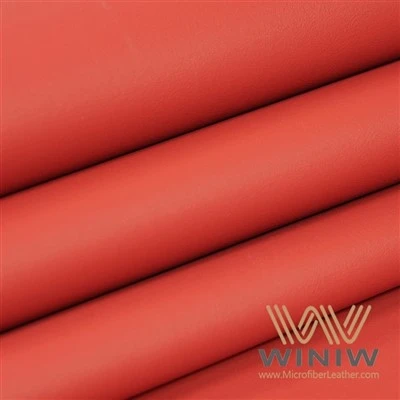
Microfiber leather is a synthetic leather built on a very fine-fiber nonwoven base that is impregnated or combined with polyurethane. A coated, embossed or finished surface creates the required appearance and touch. The base structure is designed to provide more uniform thickness and conversion behavior than many natural hides, while the final performance still depends on the selected article, formulation, backing and test conditions.
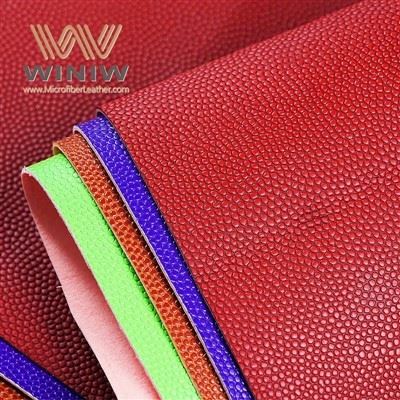
It should not be treated as a single universal grade. A shoe-upper article, automotive trim article and ball-cover article may look similar but require different flexibility, surface friction, abrasion, seam, hydrolysis, lightfastness or flammability evaluations.
Begin with the part being manufactured and the conditions it must survive. These examples show why a single generic “durable microfiber leather” specification is not enough.
Shoe uppers, linings and safety footwear may prioritize flex resistance, peel strength, breathability, abrasion, water exposure and lasting behavior.
Explore footwear material selection →
Seats, door panels and steering components require component-specific abrasion, light, heat, cold, odor, VOC and flammability review.
Review automotive applications →
Seating materials should be evaluated for wear areas, seam behavior, flexing, cleaner compatibility, stain removal and market-specific fire requirements.
Compare upholstery requirements →A usable quotation depends on the material construction and approval criteria. The following fields should be confirmed for the exact article rather than assumed across the whole category.
| Selection Field | What the Buyer Should Specify | How to Confirm |
|---|---|---|
| End use | Product, component, indoor or outdoor exposure and expected service conditions | Application brief, reference sample or component drawing |
| Construction | Microfiber base, surface coating or finish, backing and lamination requirements | Article code, construction statement and cross-section review |
| Dimensions | Target thickness, tolerance, usable width, roll length and weight if critical | TDS and incoming inspection method |
| Appearance | Color reference, grain, gloss, hand feel, embossing and batch shade limits | Approved swatch, color standard and boundary sample |
| Conversion | Cutting, skiving, sewing, wrapping, bonding, printing or panel-forming process | Factory trial using production tools and adhesives |
| Performance | Abrasion, flex, peel, tear, hydrolysis, colorfastness, cleaning or other end-use tests | Agreed method, conditions, result format and applicable sample |
| Compliance | Restricted substances, market requirements and customer-specific specifications | Applicable declaration, report or certificate with scope checked |
| Supply | Trial quantity, annual volume, packing, labeling, destination and target date | Written quotation and confirmed order specification |
The best choice depends on product positioning, conversion process, consistency needs and verification requirements.
Send your application, reference sample and required tests. The response can focus on suitable articles, sample options and the information needed for an accurate B2B quotation.
Microfiber leather uses a fine-fiber nonwoven base with polyurethane impregnation or finishing. Standard PU leather may use knitted, woven or other substrates. The exact construction, not the label alone, determines performance.
Thickness depends on the component, backing, forming method, seam design and required hand. Share the application and target range so the tolerance can be confirmed on the article TDS.
These options can be reviewed against a physical sample, color reference or technical brief. Development feasibility, approval method, quantity and timing should be confirmed before ordering.
Request only tests relevant to the end use, such as abrasion, flex, peel, tear, hydrolysis, lightfastness, cleaning, flammability or restricted substances. Define the method and acceptance criteria first.
Usually the requirements differ. Footwear flexing, seating wear and ball grip or panel assembly create different risks. Each use should have its own trial and approval standard.
Use an agreed color standard under defined lighting, record acceptable shade boundaries and keep a signed sample. Confirm how batch variation will be inspected before shipment.
Provide the article or application, construction, thickness, width, color, grain, backing, performance requirements, quantity, packing and destination. These factors affect an accurate quotation.
Check the document holder, material or article covered, test method, date, laboratory, result and destination-market requirement. A general certificate should not be assumed to cover every product.
Please include the finished product, component, target thickness, usable width, color or grain, backing, conversion method, required tests, quantity, destination country and packaging needs.
We're well-known as one of the leading microfiber leather manufacturers and suppliers in China. If you're going to wholesale high quality microfiber leather at competitive price, welcome to get more information from our factory.
microfiber leather bags, microfiber leather for sale, microfiber leather fabric