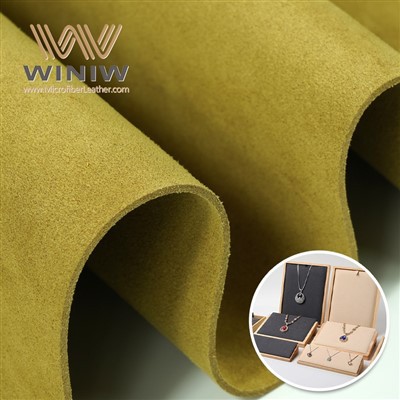
Reduce Upper Bulk Without Treating Thinness as the Only Goal
We supply this lightweight microfiber suede for footwear uppers where buyers want a soft suede surface and reduced material bulk while still controlling cutting, stitching, vamp flexing and finished-shoe construction.
The material uses a sea-island microfiber substrate combined with a microporous polyurethane structure. For new footwear programs, the production gauge and GSM should be locked through the approved sample and TDS rather than selected from appearance alone.
Developed for shoe panels where material mass matters.
Sea-island microfiber with a microporous PU structure.
Evaluate cutting, sewing, lasting and flexing together.


Match the Substrate, Nap and Backing to the Shoe Design
A lightweight upper should not be selected only by GSM. The microfiber substrate, PU impregnation, suede nap and any additional backing or lamination all influence drape, seam bulk and the behavior of the material after lasting.
- Approve the suede face and nap direction
- Confirm the production backing construction
- Lock nominal thickness on the approved sample
- Confirm GSM for the selected production construction
- Repeat critical tests after lamination or reinforcement
Lock These Fields Before Treating Any Number as a Product Specification
| Material Structure | Sea-island microfiber substrate with a microporous polyurethane structure |
|---|---|
| Application | Sneaker, casual-shoe and other footwear upper panels where reduced material bulk is required |
| Thickness | Confirm the selected nominal gauge and tolerance on the approved TDS and production sample |
| Basis Weight / GSM | Confirm the actual GSM for the selected thickness, backing, color and finish before comparing lightweight constructions |
| Usable Width | Confirm the minimum usable production width required by the footwear cutting plan |
| Color & Nap | Approve a physical color reference together with nap direction and acceptable shade variation |
| Backing / Lamination | State whether the shoe program requires an additional lining, reinforcement or laminated backing |
| Roll Requirement | Define roll length, allowable joins, packaging and roll identification when these affect production planning |
| MOQ & Lead Time | Confirm after thickness, color, finish, backing, quantity and destination requirements are fixed |
Lower GSM Is Useful Only If the Upper Still Passes Its Critical Tests
Reducing material mass can help a lightweight shoe program, but a thinner construction can also change tear behavior, stitch holding, crease formation and dimensional support.
Large Upper Panels
GSM reduction has a larger effect where the suede occupies a substantial portion of the complete upper.
Overlay Panels
Check whether a thinner layer reduces bulk without weakening the stitched reinforcement zone.
Tongue Construction
Evaluate the material together with foam and lining because the complete stack controls bulk and flexibility.
Quarter Panels
Compare hand feel and dimensional support after the upper has been assembled and lasted.
Define the Test Method Before Setting Footwear Acceptance Limits
| Flexing | Define the required Bally or other flex method, conditioning, temperature, cycle target and failure endpoint |
|---|---|
| Tear Strength | Define test method, specimen geometry, machine/cross direction, unit and minimum acceptance limit |
| Peel / Adhesion | Use when coating, backing or laminated layers require controlled bond strength; specify width, direction, speed and condition |
| Abrasion | Define Martindale, Taber or another relevant method together with abradant, load, cycles and visual endpoint |
| Hydrolysis | State temperature, humidity, aging duration and the required post-aging appearance or mechanical performance |
| Color Fastness | Specify dry rubbing, wet rubbing, perspiration, light or another required method for the production color |
| Breathability | Define the water-vapor method, sample construction, conditioning, unit and acceptance limit where required |
| Lasting Suitability | Validate the material after cutting, stitching, reinforcement and lasting on the actual footwear prototype |
Test the Lightweight Construction at the Real Toe-Bend Zone
A shoe vamp repeatedly bends near the forefoot. A lightweight material that performs well while flat may behave differently after the upper is stitched, lined and pulled over the last.
For that reason, we recommend using laboratory flexing together with a finished-upper trial rather than relying on a cycle number alone.
- Define the required flexing method
- Use the intended production gauge
- Check cracking and permanent crease development
- Inspect nap polishing around the bend zone
- Repeat the evaluation on the assembled upper

Check Lightweight Suede Around Eyelets and Narrow Stitched Panels
Reducing material bulk should not create weak points around eyelets, overlays or narrow stitched components. Material-level tear data can support comparison, but it does not replace a sewing trial with the actual needle, thread and stitch geometry.
Eyelet Zones
Inspect hole enlargement and local tearing around lace-loading points.
Small Overlays
Check narrow cut sections where seam allowance leaves less material around the stitch line.
Skiving
Validate edge thickness and surface stability after the selected skiving process.
Post-Flex Seams
Reinspect stitch holes after repeated vamp and quarter movement.
Where Lightweight Microfiber Suede Can Be Evaluated
Lifestyle Sneakers
Evaluate lightweight suede panels where surface appearance and reduced bulk are both design priorities.
Casual Shoes
Compare softness, drape, seam behavior and finished-shoe weight.
Athletic Uppers
Validate weight, flexing and vapor requirements with the complete upper construction.
Tongues & Overlays
Use thin suede where reducing multilayer bulk is important to the finished design.
Measure Lightweight Performance on the Finished Shoe Prototype
Material GSM alone does not tell you how much a finished shoe will weigh. Foam, lining, reinforcements, outsole components and the percentage of the upper covered by suede all contribute to the final result.
We recommend weighing and evaluating the completed prototype, then comparing the material choice against the original shoe BOM target.
Set shoe type, panel location and material-weight target.
Confirm gauge, GSM, color, nap and backing on the TDS.
Run cutting, sewing, lasting and finished-upper trials.
Lock the sample, technical limits and bulk QC requirements.

Freeze the Approved Construction Before Bulk Production
We can review thickness, GSM, width, color, nap and backing against the footwear design before bulk production. Critical physical properties should be connected to the agreed test method and acceptance limit.
For compliance requirements, provide the destination market and buyer specification so we can confirm which material documents or test reports apply to the selected construction.
- Approved physical material sample
- Applicable TDS for the selected construction
- Agreed nominal thickness and tolerance
- Agreed GSM and usable-width requirement
- Defined physical test methods and limits
- Roll packaging and identification requirements
Request a Lightweight Footwear Suede Sample
Send the shoe type, upper-panel location, target thickness, maximum GSM, usable width, color or nap reference, required physical tests, annual quantity, destination market and project schedule.
Request Footwear Uppers Material SampleLightweight Microfiber Suede Sourcing Questions
Confirm the available production gauge on the current sample, quotation and TDS. Select the final thickness around the shoe panel, lining, reinforcement, required flexing and target GSM.
State the maximum or target basis weight together with the selected thickness, backing and finish. Compare samples under the same construction because changing gauge or backing can change GSM.
Compare results only when the flex method, specimen construction, conditioning, temperature, cycle count and failure endpoint are equivalent. For footwear, also validate the assembled vamp.
It can reduce the mass contributed by that material, but the final shoe also includes lining, foam, reinforcement, sole, adhesive and other components. Measure the completed prototype against the footwear BOM target.
We can discuss color, nap, finish and backing requirements against the footwear design. A physical reference is preferred when surface appearance and hand feel are important.
Send shoe type, panel location, target thickness, maximum GSM, usable width, color or nap reference, backing, required test methods, annual volume, destination market and project schedule.
Hot Tags: lightweight microfiber suede for footwear uppers, lightweight suede for shoes, microfiber suede for sneakers, shoe upper microfiber suede, thin microfiber suede, microfiber suede manufacturer, microfiber suede supplier, microsuede upholstery fabric, microsuede upholstery, suede and microfiber, microfiber suede for shoes, microfiber suede upholstery fabric, faux microsuede fabric