How Footwear Brands Can Choose Microfiber Leather: Mechanical Testing Data
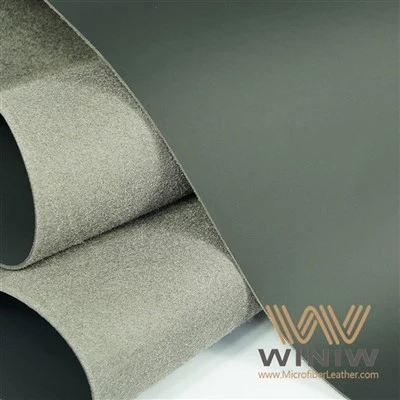
Selecting a vegan shoe material wholesale partner requires evaluating the 3D sea-island polyethylene terephthalate (PET) matrix against dynamic mechanical stress and chemical sole-bonding limits. Engineered footwear substrates must strictly pass EN ISO 5402-1 Bally flexing endurance (> 100,000 cycles) and maintain an ISO 2411 peeling strength of ≥ 30 N/3cm to physically prevent vamp cracking and sole delamination on the assembly line.
Dynamic Vamp Stress and Bally Flexing Endurance (EN ISO 5402-1)
During the human gait cycle, the shoe vamp undergoes continuous, high-angle dynamic bending. Standard ester-based polyurethane (PU) lacks a micro-fibrous network; the structural fatigue rapidly concentrates at the crease line, causing the surface resin to fracture.
By operating as a highly focused, common mid-sized facility, WINIW International Co., Limited With 15-Year Expertise precisely engineers the DMF-free aqueous coagulation process for footwear applications. We impregnate the polyether PU directly into a micro-denier PET core. This monolithic 3D architecture distributes bending stress isotropically. When subjected to EN ISO 5402-1 testing parameters, the substrate withstands > 100,000 continuous flexes at 20°C, and > 30,000 flexes at a controlled -20°C without surface crazing.
Outsole Bonding Compatibility and Peeling Strength
A critical failure point in footwear manufacturing occurs during the cementing phase. If the synthetic upper material possesses weak internal adhesion, the high-temperature hot melt adhesive used to bond the rubber or EVA outsole will pull the PU topcoat away from the backing fabric.
Our material eliminates this delamination risk. The wet-coagulation process physically locks the resin into the PET matrix, generating a continuous base that passes strict Z-axis tensile tests.
| Physical Testing Parameter | Standard Shoe PU | Engineered Footwear Microfiber | Testing Protocol |
| Bally Flexing (20°C) | 50,000 Cycles | > 100,000 Cycles | EN ISO 5402-1 |
| Cold Flexing (-20°C) | Fails (Cracking) | > 30,000 Cycles | EN ISO 5402-1 |
| Peeling Strength (Adhesion) | ≤ 15 N/3cm | ≥ 30 N/3cm | ISO 2411 |
| Water Vapor Permeability | < 1.0 mg/(cm²·h) | ≥ 3.5 mg/(cm²·h) | EN ISO 14268 |
| Tear Strength | < 40 N | ≥ 60 N | EN ISO 3377-2 |
Procurement & QA Notice: Prevent assembly line cementing failures and post-market sole detachment.
Secure your supply chain. Submit your specific sole-bonding adhesive requirements and procure our exact Breathable synthetic leather shoes lab-dips today.

Thermal Dissipation and WVP Requirements
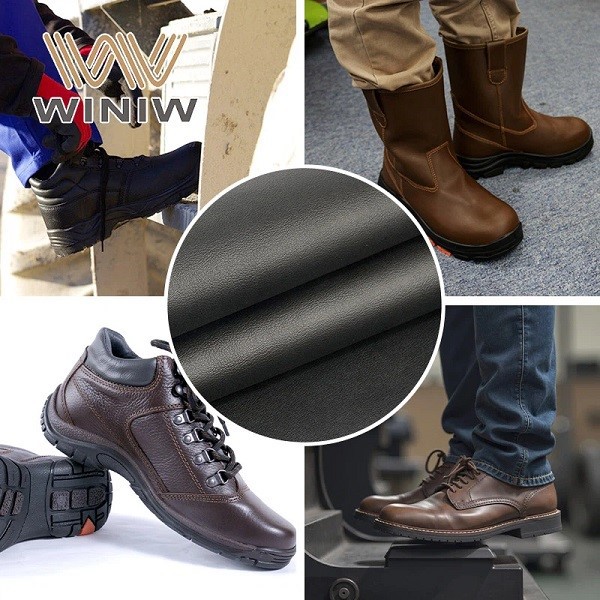
Athletic and industrial safety footwear mandate thermal regulation to prevent lactic acid and sweat accumulation. Traditional PVC and laminated PU films create an impermeable vapor barrier. By specifying a 3D microporous structure, the water vapor permeability (WVP) increases to ≥ 3.5 mg/(cm²·h). This physically vents internal thermal load, lowering the core temperature of the shoe without permitting external liquid moisture penetration.
Furthermore, maintaining this specific manufacturing rigor across continuous rolls (1.37m width, ±0.05mm gauge tolerance) allows CAD/CAM nesting software to achieve > 85% cutting yields, directly lowering the cost per finished pair.
Lock in your Bill of Materials (BOM) with verifiable destructive testing data. Send your technical packs to WINIW International Co., Limited With 15-Year Expertise, and request ISO 9001 factory metrics for our Microfiber leather for footwear formulations.
Frequently Asked Questions (FAQ)
Q: What is the required Bally flexing limit for vegan shoe material wholesale?
A: High-grade footwear substrates must strictly pass EN ISO 5402-1 Bally flexing tests. The material must withstand a minimum of 100,000 dynamic bending cycles at room temperature (20°C) and at least 30,000 cycles at -20°C without visible surface crazing or structural fracture.
Q: Why is peeling strength critical for microfiber leather for footwear?
A: Peeling strength (ISO 2411) dictates how well the synthetic upper bonds to the rubber or EVA outsole. A minimum threshold of ≥ 30 N/3cm physically prevents the hot melt adhesives from ripping the PU coating off the base fabric, eliminating catastrophic sole delamination.
Q: How do breathable synthetic leather shoes manage internal moisture?
A: They utilize a DMF-free coagulated 3D microporous structure. This architecture bypasses the thermal trapping of solid PVC films, increasing the Water Vapor Permeability (WVP) to ≥ 3.5 mg/(cm²·h) per EN ISO 14268, actively venting sweat while blocking liquid water ingress.
Selecting and Evaluating Microfiber Leather Suppliers for Footwear

Choosing the right supplier is just as important as choosing the right microfiber leather itself. A reliable supplier ensures material consistency, compliance with international standards, and a smooth production process.
Sample Testing
Reliable suppliers will often conduct relevant tests on their products. You can request reports from them to ensure the materials meet your requirements. Check supplier microfiber leather performance through:
• Appearance Inspection: Check for uniform texture, minimal color variation, and a smooth surface.
• Touch and Flexibility Test: Assess softness and resilience to ensure comfort, fit, and conformity to the intended shoe shape.
• Flexibility Test: Fold or bend the material at -20°C to check for cracks.
• Abrasion Resistance Test: Evaluate abrasion resistance using the Tiber abrasion test or Martindale abrasion test.
• Breathability and Water Resistance Test: Crucial for athletic and outdoor footwear.
• Colorfastness Test: Dry and wet rubbing tests ensure the material will not fade or discolor.
These tests help ensure that the supplier's materials meet your product specifications before placing large orders. WINIW has a series of standard quality control management measures to ensure the excellent performance of its microfiber leather.
5 Key Factors for Supplier Evaluation
• Quality Management Processes: Confirm that the supplier has standardized production control and inspection processes.
• Batch Consistency: Ensure that samples are consistent with mass-produced products in terms of thickness, texture, and color.
• Customization Capability: Ability to produce specific textures, colors, and thicknesses according to design requirements.
• Delivery and Capacity: Assess lead times, minimum order quantities (MOQ), and production capacity to ensure timely delivery.
• Compliance and Support: Verify environmental certifications (REACH, RoHS, CA65) and after-sales support services to resolve any quality issues.
Conclusion
As lightweight, sustainability, and durability become global trends in the footwear industry, high-performance microfiber leather for shoes will continue to replace a large amount of genuine leather and ordinary PU, becoming the mainstream material in multiple footwear categories, including sports, outdoor, leather shoes, and children's shoes. Brands should match microfiber leather thickness for shoes, evaluate microfiber leather performance, and select high-quality microfiber leather suppliers to ensure product quality and competitiveness.
WINIW has over 20 years of experience providing customizable microfiber leather for footwear. Contact us for solutions to find durable microfiber leather for outdoor shoes, best microfiber leather for sports shoes, and other footwear applications.