Why OEMs are Transitioning to Microfiber Leather: Yield and VOC Data
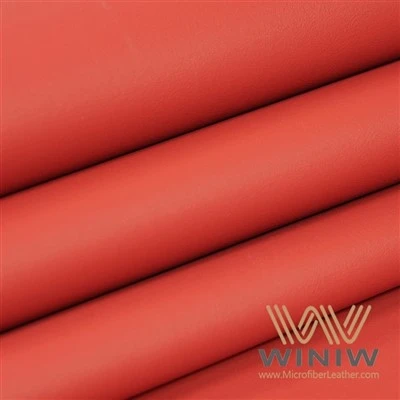
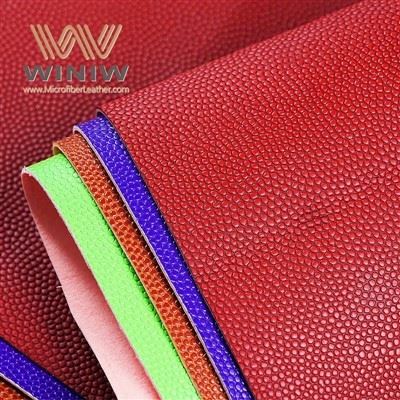
Microfiber leather replaces traditional bovine hides in OEM automotive and footwear manufacturing by providing a synthesized 3D sea-island polyethylene terephthalate (PET) matrix. This engineered continuous architecture mathematically increases automated CNC cutting yields to > 85% while strictly passing VDA 277 Volatile Organic Compound (VOC) emission limits.
Yield Economics and CAD/CAM Nesting Efficiency
The primary engineering catalyst for OEMs abandoning natural bovine leather is raw material waste. Biological hides exhibit extreme thickness variance (± 0.20mm) and inherently contain scars, bite marks, and irregular edge geometries. When feeding natural hides into automated CNC cutting lines, CAD nesting software maps around these defects, resulting in a maximum usable yield of 60% to 65%.
WINIW International Co., Limited engineers OEM synthetic leather in continuous 1.37-meter wide isotropic rolls with a strict ±0.05mm gauge tolerance. This geometric absolute allows automated cutting software to nest patterns with zero biological avoidance, immediately driving usable material yields to ≥ 85%. For Tier 1 assembly lines, this 20% yield increase directly neutralizes initial material cost deltas and accelerates continuous mass production without assembly line stalling.

Lightweighting and Mechanical Tear Strength (EN ISO 3377-2)
In the EV automotive sector, OEMs mandate extreme sprung mass reduction to extend WLTP battery range. Traditional 1.4mm automotive bovine leather averages an areal density of 850 g/m².
By impregnating polyether polyurethane into the micro-denier PET core via a water-borne coagulation process, our engineered substrates maintain identical physical volume at a reduced areal density of ≤ 600 g/m². This structural substitution achieves a 15% physical weight reduction per vehicle interior.
Procurement & QA Notice: Reducing substrate weight must not induce seam failure during automated sewing.
Secure your Bill of Materials (BOM). Submit your CAD nesting requirements and request physical lab-dips from a verified Automotive microfiber leather supplier today.
| Physical / Manufacturing Parameter | Natural Bovine Leather | WINIW Engineered Microfiber | Industrial Testing Protocol |
| CNC Automated Cutting Yield | 60% - 65% (Defect avoidance) | ≥ 85% (Continuous roll) | CAD Nesting Output |
| Areal Density (1.2mm Gauge) | > 850 g/m² | ≤ 600 g/m² (Lightweight) | Gravimetric Audit |
| Tear Strength (Z-Axis Load) | ≥ 50 N | ≥ 60 N | EN ISO 3377-2 |
| VOC Emissions (DMFa) | Variable (Tanning agents) | 0 mg/kg (Solvent-free) | VDA 277 |
| Bally Flexing Endurance (20°C) | 50,000 Cycles | > 100,000 Cycles | EN ISO 5402-1 |

Chemical Compliance (VDA 277 and REACH)
Global OEMs face severe customs rejections if sub-tier materials fail Zero Discharge of Hazardous Chemicals (ZDHC) or EU REACH Annex XVII limits. Bovine leather requires chromium tanning, which introduces heavy metal residual risks and persistent odor profiles (failing VDA 270 limits).
WINIW deploys a 100% DMF-free aqueous manufacturing baseline. The resulting vegan leather for car interiors registers 0 mg/kg of residual Dimethylformamide (DMF) and exactly 0 μgC/g in VDA 277 VOC emission tests. This absolute chemical inertness guarantees zero DIN 75201 windshield fogging under intense closed-cabin thermal loads, establishing a strict pass for global Vehicle Interior Air Quality (VIAQ) audits.
[Call to Action: Stop absorbing the cost of 35% material scrap rates. Forward your mechanical parameters to WINIW International Co., Limited, and download our ISO 9001 certified TDS documentation directly from our engineering database.]

Automotive Applications
Microfiber leather's excellent scratch resistance, and durability make it ideal for automotive interiors. Its stable structure can withstand long-term exposure to sunlight, temperature variations, and humidity while maintaining softness and aesthetics.

Footwear Industry
Microfiber leather is lightweight, breathable, highly flexible, and durable, suitable for athletic shoes, work shoes, and other footwear applications. Its flexibility allows the material to conform to complex shoe shapes while maintaining structural strength, ensuring comfort and longevity.

Furniture Applications
Microfiber leather also performs exceptionally well in the furniture industry. Its stain-resistant, mildew-resistant, and easy-to-clean properties make furniture surface maintenance easier while maintaining a premium feel. The wear-resistant and durable material properties ensure long-term stability, making it suitable for various applications such as sofas, chairs, office furniture, and public facilities. It provides OEMs with a high-quality, easy-to-maintain furniture material option.
Frequently Asked Questions (FAQ)
Q: Why does OEM synthetic leather provide higher cutting yields than genuine leather?
A: Microfiber is synthesized in continuous 1.37-meter wide rolls with absolute gauge uniformity (±0.05mm) and zero biological scars. This allows automated CAD/CAM software to nest cutting patterns mathematically, driving usable yields to ≥ 85% compared to the 65% yield of natural hides.
Q: How does an automotive microfiber leather supplier assist in EV lightweighting?
A: By engineering a 3D sea-island PET matrix, we compress the material's areal density to ≤ 600 g/m² while maintaining an EN ISO 3377-2 tear strength of ≥ 60 N. This safely reduces the total interior fabric weight by 15%, lowering sprung mass and increasing EV battery range.
Q: Does vegan leather for car interiors pass European VOC emission limits?
A: Yes. Our material is manufactured using a 100% DMF-free water-borne coagulation process. It registers 0 mg/kg of residual VOCs, strictly complying with VDA 277 emission standards and VDA 270 odor audits, ensuring safe Vehicle Interior Air Quality (VIAQ).