


UV-Resistant Microfiber Suede for Automotive Interior Trim
This microfiber suede is intended for automotive interior components where color retention, fine nap appearance, wrapping behavior and long-term light exposure need to be evaluated together.
The material uses a polyamide microfiber substrate with a polyurethane system. Selection should be based on the interior component, gauge, backing, lamination route, production color and the test requirements of the vehicle program.
What should be defined before sampling?
Identify the headliner, pillar, seat, console or other trim component together with the target gauge, color and nap reference, backing or laminate structure, lightfastness requirement and relevant automotive test methods.
For headliners, pillars, seats, consoles and other suede-finished components.
Production colors can be evaluated using the required exposure method.
Gauge and backing can be selected around wrapping and component structure.


Approve Nap, Color and Construction Together
Automotive suede is viewed across relatively large interior surfaces, so nap direction, shade, gloss and backing can influence the final appearance after wrapping or lamination.
- Approve one physical color and nap reference
- Record the production surface direction
- Identify backing, foam and lamination layers
- Review shade under relevant interior lighting
- Revalidate affected properties after construction changes
Automotive Microfiber Suede Specification
| Material Base | Polyamide microfiber substrate with a polyurethane system |
|---|---|
| Applications | Headliners, A/B/C pillars, seating inserts, consoles, dashboards and other automotive interior trim |
| Thickness | Select gauge according to wrapping radius, backing, component structure and required hand feel |
| Usable Width | Match usable width to the cutting plan, panel orientation and component size |
| Basis Weight | Specify GSM where component mass or laminate weight forms part of the customer requirement |
| Color & Nap | Use a physical color master with an agreed nap direction and appearance tolerance |
| Backing / Lamination | Identify textile backing, foam, adhesive and other layers used in the installed component |
| Lightfastness | Apply the specified exposure method and allowable color or surface change to the intended production color |
| Flammability | Apply FMVSS 302, ISO 3795 or the relevant OEM method to the material or composite construction required by the program |
| VOC / Odor / Fogging | Use the applicable OEM or Tier supplier method, specimen preparation and acceptance limit |
Automotive Interior Validation Requirements
UV resistance is only one part of automotive interior approval. Lightfastness, flammability, emissions, fogging, wear and environmental aging answer different questions and should be evaluated independently where required.
Lightfastness
Specify the exposure method, condition and acceptable color or surface change for the final production shade.
Flammability
Use FMVSS 302, ISO 3795 or the required OEM method on the material or composite construction relevant to the vehicle program.
VOC & Odor
Evaluate the material using the required automotive emission or odor method rather than relying on broad low-VOC or odorless descriptions.
Fogging
Include fogging evaluation where the component is used near glazing or the interior specification requires it.
Abrasion & Contact Wear
Seat inserts, armrests and frequently touched trim may require wear testing not needed for headliners or pillars.
Heat & Cold Aging
Where required, evaluate color, dimensional stability, flexibility, bonding and surface appearance after temperature exposure.
Choose the Construction by Interior Component
Headliners
Prioritize low bulk, surface consistency, dimensional stability, lamination and composite flammability.
A/B/C Pillars
Review curve conformity, edge wrapping, adhesive compatibility and visible color after forming.
Seats & Armrests
Add abrasion, seam behavior, cleaning, perspiration and repeated-contact requirements.
Console & Trim
Evaluate touch wear, surface friction, cleaning and color retention on visible contact areas.
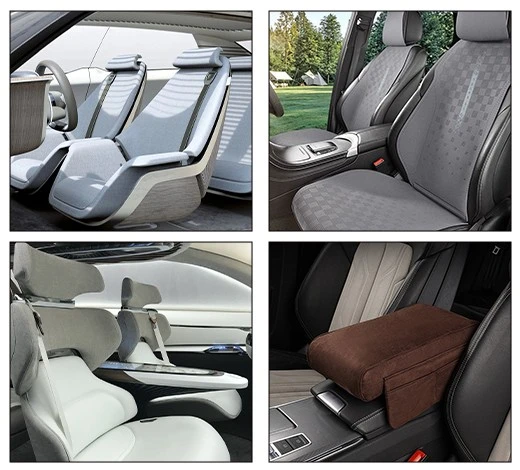
Validate Wrapping, Lamination and Production Color
A flat material swatch cannot fully reproduce performance after foam, adhesive, molded trim or another substrate is added. Heat, pressure, stretching and adhesive chemistry can change appearance, stiffness and dimensional behavior.
Identify geometry, substrate, visible area and production process.
Select gauge, color, nap direction, backing, foam and adhesive route.
Wrap, laminate or sew the material using the intended production process.
Repeat the affected light, flame, emission, wear or aging checks.

Production Color Requires Its Own Approval
Initial shade matching is only the starting point. Visible automotive trim should be reviewed after the relevant light, heat, cleaning or aging sequence.
- Provide a physical or instrument color reference
- Approve the intended nap and gloss level
- Evaluate the final production shade
- Review visible change after required conditioning
- Retain an approved master for bulk inspection
Automotive Material Matching and OEM Development
For a useful material recommendation, provide the actual component and construction rather than requesting only a general UV-resistant suede.
Headliner, pillar, seat insert, console, dashboard or other interior trim.
Target gauge, usable width, backing, foam, adhesive and lamination route.
Physical color reference, nap direction, gloss and surface feel.
Lightfastness, flammability, VOC, odor, fogging, wear and aging methods.
Prototype quantity, annual demand, color split and repeat-order expectations.
Destination market, validation schedule and target production date.
Request Microfiber Suede for Your Automotive Interior Project
Share the interior component, target gauge and usable width, color or nap reference, backing or laminate construction, required lightfastness, flammability, VOC, odor, fogging and wear tests, annual volume, destination and program timing.
Request Automotive Material SampleUV-Resistant Automotive Microfiber Suede FAQs
What lightfastness test should be used for automotive microfiber suede?
Use the method required by the vehicle manufacturer or Tier supplier. Where ISO 105-B02 is specified, the applicable exposure condition and acceptance rating should also be defined for the production color.
Does the material automatically meet FMVSS 302?
No universal result should be assumed. Review the applicable FMVSS 302 or ISO 3795 evidence for the material or composite construction required by the specific vehicle program.
Which thickness is suitable for headliners, pillars or seating?
The appropriate gauge depends on the component, backing, foam, wrapping radius, abrasion requirement and desired hand feel. Approve the final construction rather than selecting thickness alone.
How should VOC, odor and fogging requirements be specified?
Use the automotive OEM or customer method applicable to the program, including the required specimen preparation, conditioning and acceptance limit.
Can the color, nap and backing be customized?
Color, nap, surface feel, gauge and backing can be reviewed against the component and physical reference. Properties affected by a construction change should be revalidated before bulk approval.
What information should be included in an automotive microfiber suede RFQ?
Include the interior component, target gauge and width, color or nap reference, backing or laminate construction, required automotive tests, annual volume, destination and project schedule.
Hot Tags: uv-resistant microfiber suede for automotive interiors, automotive microfiber suede, UV resistant faux suede, car interior suede material, automotive suede supplier, custom microfiber suede, microfiber suede manufacturer, microfiber suede upholstery fabric, microsuede fabric by the yard, microsuede, red microsuede couch, microsuede upholstery fabric, microfiber suede fabric


