Why More Bag Manufacturers Choose PVC Leather: Rigidity and Cost Data
When engineering structured tote bags and heavy-duty luggage, standard soft polyurethane (PU) often lacks the necessary mechanical support, requiring expensive backing materials. Modified polyvinyl chloride (PVC) leather provides absolute structural rigidity and a 100% waterproof barrier. As a core PVC bag leather supplier, WINIW International Co., Limited utilizes a strict phthalate-free formulation, drastically lowering Bill of Materials (BOM) costs while immediately passing EU REACH chemical compliance audits.
Structural Rigidity and CAD/CAM Nesting Efficiency
Natural hides and soft PU exhibit physical thickness inconsistencies and loose edges, dropping automated CNC cutting yields below 70%. High-quality structured bags demand extreme geometric symmetry.
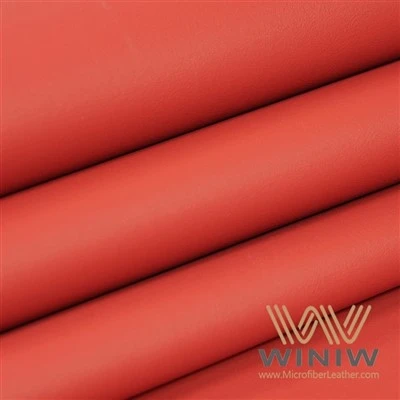
WINIW manufactures wholesale PVC faux leather via precision calendering, strictly locking the gauge tolerance of continuous 1.37-meter rolls to ±0.05mm. This high-density isotropic substrate not only provides perfect 3D support for bags but also allows CAD nesting software to execute zero-blind-spot cutting. With zero biological scars, the usable cutting yield directly accelerates to ≥ 85%, mathematically reducing costs on mass production assembly lines.
Procurement & QA Notice: Stop wasting margins on inefficient cutting scrap. Submit your CAD nesting parameters to our engineering division and request physical lab-dips specifically engineered for Bags & Leather Goods today.

Phthalate-Free Chemistry and REACH Annex XVII Compliance
Historically, low-end PVC faced severe customs rejections due to toxic plasticizers like DOP (Dioctyl phthalate). To eliminate this supply chain blind spot, WINIW R&D engineers fundamentally replaced the polymer formulation.
We exclusively specify high-molecular eco-friendly plasticizers like DOTP or DINP. This custom PVC leather for handbags is audited via third-party Gas Chromatography-Mass Spectrometry (GC-MS), guaranteeing a restricted phthalate residue of 0 mg/kg. The material directly passes California Proposition 65 (Prop 65) and EU REACH Annex XVII limits, ensuring your finished bags enter global premium retail networks without regulatory barriers.
| Physical / Chemical Parameter | Standard Low-End PVC | WINIW Eco-Modified PVC | Industrial Testing Protocol |
| CNC Automated Cutting Yield | ~75% (Gauge variation) | ≥ 85% (Absolute consistency) | CAD Output Metric |
| Phthalate Plasticizers | > 1000 ppm (Fails limits) | 0 ppm (Phthalate-free) | REACH Annex XVII |
| Peeling Strength (Adhesion) | ≤ 15 N/3cm (Delaminates) | ≥ 30 N/3cm (Structurally intact) | ISO 2411 |
| Tear Strength (Z-Axis Load) | < 30 N | ≥ 50 N | EN ISO 3377-2 |
| Hydrostatic Waterproofing | Leaks under pressure | 100% Closed Barrier | ISO 811 |

Peeling Strength and Mechanical Load Bearing
Bag handles and strap anchor points are highly susceptible to substrate delamination under continuous physical load. WINIW deploys a specialized cross-linked adhesion promoter between the PVC resin topcoat and the high-tenacity warp-knitted polyester backing.
At standard gauges, this maintains an ISO 2411 peeling strength of ≥ 30 N/3cm and an EN ISO 3377-2 tear strength of ≥ 50 N, mechanically preventing seam tearing and surface peeling under heavy cargo loads.
Ensure your bags feature both sharp silhouettes and absolute chemical safety. Contact WINIW International Co., Limited to secure wholesale pricing and third-party testing certifications for your next heavy-duty project.
Why Bag Manufacturers Are Switching to PVC Leather
Global consumer demand for "eco-friendly and affordable" bags
Modern consumers not only seek design and functionality, but also price and environmental sustainability. PVC leather, which doesn't use animal skins, is considered an environmentally friendly bag material. Its relatively low cost also allows for the production of affordable bags that meet the demands of modern consumers.
Stable Supply Chain
The supply of genuine leather is often limited by the livestock industry and subject to significant volatility. However, as a synthetic material, PVC leather boasts abundant raw materials, controlled production, and mature processing, ensuring large-scale demand in the luggage market.
Brands' Marketing Demand for Sustainable Materials
As more and more brands prioritize sustainability and environmental imagery, using animal-free materials like PVC leather for promotional purposes effectively enhances brand image and facilitates entry into the sustainable product market.
Easy to Scale Production
PVC leather is easy to process, enabling rapid trial runs of various styles and small batches, as well as large-scale production. This allows luggage OEM/ODM manufacturers to quickly respond to brand design and production needs, improve production efficiency, and reduce process complexity and production risks.
Applications of PVC Leather in Bag Industry

Handbags
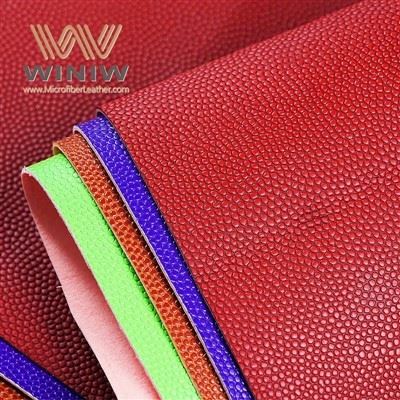
PVC leather can be processed through a variety of processes, including embossing, printing, and dyeing, enabling the production of stylish, versatile handbags that adapt to market trends.

Backpacks
Backpacks prioritize functionality and require high wear resistance and water resistance. PVC leather is waterproof and scratch-resistant, lightweight, and affordable, making it suitable for a variety of uses, including student backpacks and outdoor casual backpacks.

Wallets & Accessories
PVC leather can create exquisite embossing effects and a smooth texture, good for low-priced accessories such as wallets, card holders, and key holders.

Luggage
Luggage is subject to long periods of transportation and frequent handling, requiring extremely high levels of material strength and durability. PVC leather's toughness and impact resistance make it an ideal material for rigid and semi-rigid luggage, and its price is competitive with genuine leather and some high-end synthetic materials.
How to Choose the Right PVC Leather Supplier for Bags
In the luggage manufacturing industry, PVC leather has become a mainstream material due to its cost-effectiveness and processing advantages. However, for wholesale buyers, choosing the right PVC leather supplier directly impacts product quality, cost control, and market competitiveness.
Supplier Strength
A trustworthy supplier must possess sufficient production scale and technological R&D capabilities. Partnering with a supplier with a complete production system effectively reduces supply risk.
01
Customized Services
Different brands and markets have varying requirements for PVC leather color, texture, and thickness. Suppliers who can offer diverse customization services and flexibly adapt to customer needs are crucial.
02
International Certifications
With global consumers increasingly focused on environmentally friendly and sustainable materials, compliance with various certifications, such as REACH, RoHS, and ISO9001, has become a crucial selection criterion for manufacturers.
03
Volume Delivery and Price Advantages
Choosing a supplier with strengths in raw material sourcing, production efficiency, and logistics management can ensure delivery timelines while effectively reducing costs, giving customers a greater competitive advantage in the market.
04
WINIW: Your Reliable PVC Leather Manufacturer
As a leading PVC leather supplier and manufacturer in China, WINIW boasts over 20 years of industry experience and extensive R&D and production capabilities in synthetic leather. Equipped with over 30 modern production lines and a factory area exceeding 100,000 square meters, we are able to efficiently support our customers' large-volume orders and offer our partners highly competitive pricing.
In terms of production processes, we utilize advanced coating, embossing, and slitting equipment, allowing us to flexibly customize the color, texture, finish, and thickness of our PVC leather to meet customer needs, providing highly customized solutions.
In terms of quality and compliance, our PVC leather products have obtained multiple international certifications, including REACH SVHC, EN ISO 20345, and GRS, meeting the stringent environmental and safety requirements of the global market. Furthermore, we utilize specialized testing equipment to rigorously inspect each batch of products to ensure that our PVC leather meets customer standards for abrasion resistance, water resistance, stretch resistance, and appearance stability.
WINIW is committed to providing global customers with a stable, sustainable and cost-effective supply of PVC leather, helping partners gain an advantage in the fierce market competition.
Frequently Asked Questions (FAQ)
Q: Why do factories prefer a PVC bag leather supplier for structured totes?
A: Calendered PVC offers superior structural rigidity and gauge consistency (±0.05mm). This eliminates the need for expensive stiffening backers and drives automated cutting yields above 85%, making it the mathematical choice for rigid handbags.
Q: Is custom PVC leather for handbags compliant with environmental standards?
A: Yes. WINIW utilizes 100% DOP-free (phthalate-free) eco-plasticizers. Our PVC substrates are third-party audited for zero toxic chemical residue, immediately satisfying EU REACH Annex XVII and California Proposition 65 limits.
Q: Can wholesale PVC faux leather support heavy loads on bag handles?
A: Engineered with a high-tenacity knitted backing and cross-linked adhesion promoters, our PVC rolls maintain an ISO 2411 peeling strength of ≥ 30 N/3cm. This physically prevents handle detachment and seam fracture under mechanical stress.