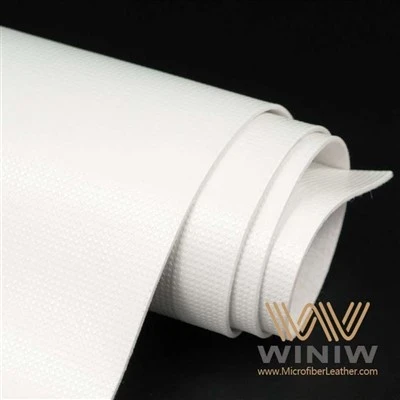
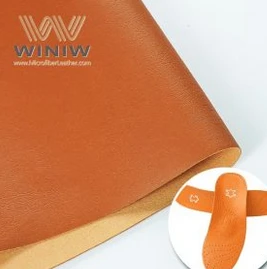
Natural suede relies on surface-level anionic dyes that chemically decouple upon exposure to moisture, causing severe dye bleeding and cross-staining in footwear. Engineering-grade vegan microfiber suede prevents this migration through deep-vat disperse dyeing within its sea-island polyurethane matrix, consistently achieving Grade 4-5 colorfastness ratings under ISO 11640 dry and wet rubbing protocols.
The Chemistry of Dye Migration: Protein Fibers vs. Synthetic Matrix
The structural failure of natural split suede in high-moisture environments originates from its tanning and dyeing chemistry. Chrome-tanned animal hides utilize acid dyes that form weak ionic bonds with collagen protein fibers. When subjected to liquid water, lactic acid (human sweat), or basic alkaline solutions, these bonds break. The detached dye molecules act as free radicals, migrating outward and permanently staining adjacent light-colored meshes, laces, or consumer socks.
Microfiber suede eliminates this defect through its polymer architecture. Manufactured via an alkaline reduction process, the resulting ultra-fine polyethylene terephthalate (PET) fibers (≤ 0.02 denier) are impregnated with a polyurethane (PU) resin. During high-temperature dyeing (≥ 130°C), disperse dyes penetrate the microscopic fiber matrix, locking the colorant structurally within the synthetic material rather than coating the surface.
As a direct vegan suede supplier, our production lines utilize controlled-tension dyeing vats to guarantee uniform color penetration, ensuring batch-to-batch consistency for Tier 1 OEM production.
Procurement & QA Notice: Need to validate dye migration resistance for multi-color sneaker panels? Request a physical swatch book and the complete laboratory Technical Data Sheet (TDS).
Request Physical Swatches & Lab TDS Report
Laboratory Benchmarks: ISO Colorfastness Testing Data
For footwear QA/QC managers, specifying materials requires quantitative verification against international standards. The Veslic rubbing test (ISO 11640) measures exact dye transfer under mechanical friction.
The following matrix contrasts the laboratory testing results of standard natural pig/cow suede against WINIW microfiber suede.
| Physical Property / Metric | Standard Natural Suede | WINIW Microfiber Suede | Testing Protocol |
| Colorfastness to Rubbing (Dry) | Grade 3 | Grade 4 - 5 | ISO 11640 (500 cycles) |
| Colorfastness to Rubbing (Wet) | Grade 1 - 2 (Severe Transfer) | Grade 4 | ISO 11640 (250 cycles) |
| Colorfastness to Perspiration | Grade 2 | Grade 4 - 5 | ISO 11641 |
| Colorfastness to Light | Grade 3 | Grade 4 - 5 | ISO 105-B02 (Xenon Arc) |
| Color Migration into PVC/PU | High Risk | Zero Transfer | ISO 15701 |
| Hydrolysis Resistance | N/A (Organic decay) | > 5 Weeks | Jungle Test (70°C, 95% RH) |
Specifying Linings for Athletic and Casual Footwear
When designing multi-material uppers, preventing color bleeding is mandatory to avoid high factory rejection rates. Applying a chemical top-coat fixative to natural suede alters the nap (surface texture) and only provides temporary resistance. Once mechanical friction degrades the top-coat, bleeding resumes.
Integrating a colorfast faux suede substrate ensures permanent resistance without sacrificing the tactile writing effect (the finger-tracking nap). Furthermore, utilizing a non-bleeding shoe lining manufactured from DMF-free microfiber protects the internal footbed. It rapidly absorbs and transmits moisture (vapor permeability > 400 g/m²/24h) while strictly containing the dye structure, keeping consumer socks entirely clean even during peak athletic exertion.
Initiate Custom Color Matching & Request Wholesale Quotation
Frequently Asked Questions (FAQ)
Q: How do you test colorfastness to rubbing in suede footwear?
A: Laboratories utilize the ISO 11640 Veslic rub tester. A standardized wool felt pad applies 9N of downward pressure onto the material during mechanical oscillation. The felt pad is subsequently evaluated against a standard greyscale, scoring from Grade 1 (severe bleeding) to Grade 5 (no transfer).
Q: Why does natural suede bleed when exposed to water?
A: Natural suede utilizes anionic dyes that form weak ionic bonds with the hide's protein fibers. Water or sweat acts as a solvent, severing these unstable bonds and causing unattached dye molecules to migrate rapidly onto adjacent materials like shoe linings or socks.
Q: Is vegan microfiber suede resistant to color migration?
A: Yes. Engineering-grade microfiber suede employs high-temperature disperse dyeing. The colorant structurally bonds with the synthetic polyester and polyurethane sea-island matrix, achieving Grade 4-5 wet rubbing colorfastness and completely eliminating cross-staining in multi-material footwear assemblies.