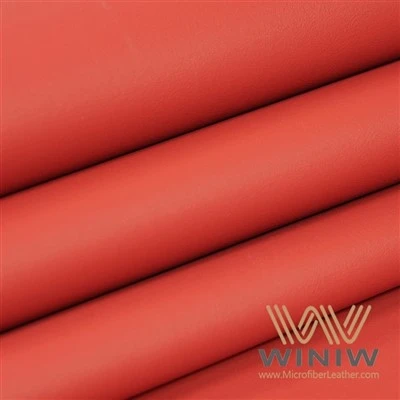
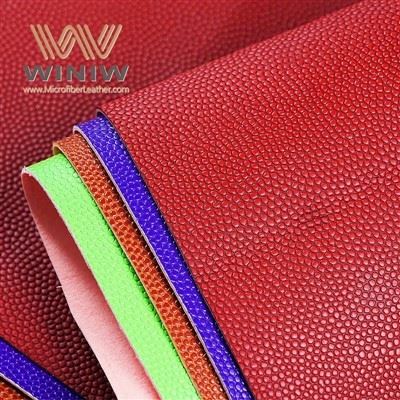
When sourcing microfiber leather China, the Ex-Works (EXW) per-meter quote typically represents only 70-85% of the true landed cost. Procurement managers must factor in hidden financial leaks including dimensional instability, high defect rates, CBM (Cubic Meter) inefficiencies, and substandard sea-island architectures, which collectively dictate the final manufacturing yield.
The Thickness Tolerance Trap and CNC Yields
A strict thickness tolerance of ±0.05mm is mandatory for automated multi-layer CAD/CAM cutting. Substandard factories frequently allow ±0.15mm variations to accelerate their coagulation line speeds. This physical variance causes mechanical skiving failures, blade deflection, and pattern distortion during die-cutting, dropping the usable material yield from an expected 100% down to 80-85%.
Substrate Adulteration: The Sea-Island Deficit
Engineering-grade microfiber requires a high-density, alkali-reduced sea-island non-woven matrix. To manipulate per-meter pricing, lower-tier suppliers reduce the ratio of ultra-fine fibers (≤ 0.02 denier) or substitute them entirely with coarse, needle-punched polyester. This directly degrades the substrate's mechanical bonding with the polyurethane resin, dropping ISO 2411 peeling strength from ≥ 30 N/3cm to ≤ 15 N/3cm, resulting in catastrophic field failures for footwear and auto interior brands.
Procurement & QA Notice: Validating substrate architecture requires strict supply chain auditing. Review our ISO 9001 facility credentials, automated production lines, and direct manufacturing capabilities on our About Us page.
Download Our Lab TDS Report & Request Factory Audit Documentation
Color Delta (ΔE) and Batch Consistency
Without tension-controlled, high-temperature dyeing vats, manufacturers cannot guarantee lot-to-lot color stability. Industrial QA standards require a Delta E (ΔE) variance of ≤ 0.82, measured via spectrophotometer under D65 standard illuminant. Unverified suppliers routinely ship rolls with a ΔE > 1.5. This forces secondary sorting at the receiving facility and causes unacceptable shading mismatches across assembled multi-panel products.
Packaging Density and Transit Deformation
Ocean freight logistics dictate that volume often costs more than weight. Standard microfiber leather is shipped in 30 to 50-meter rolls. Cheap suppliers utilize 3mm recycled cardboard cores that crush under stacking weight inside a 40HQ container. A qualified wholesale synthetic leather factory employs 5mm+ heavy-duty PVC or reinforced paper cores. This prevents irreversible edge curling, eliminates material creasing (dead folds), and increases loading efficiency by up to 12% per container.
Products Description
Utilizing outdated DMF-based polyurethane coagulation rather than modern water-borne, DMF-free systems poses severe regulatory and financial risks. Materials failing VDA 277 VOC emission tests or EU REACH Annex XVII limits face immediate customs impoundment, resulting in complete total-loss write-offs for the importing brand.
Landed Cost Variance Matrix
The following matrix quantifies the financial and physical impacts of standard market sourcing versus engineering-grade procurement.
| Cost Variable | Standard Market Sourcing | Engineering-Grade Source Factory | Financial Impact / Testing Protocol |
| Thickness Tolerance | ± 0.15 mm | ± 0.05 mm | 10-15% Cutting Yield Loss |
| Peeling Strength | 15 - 20 N/3cm | ≥ 30 N/3cm | ISO 2411 (Warranty Claim Risk) |
| Color Consistency | ΔE > 1.5 | ΔE ≤ 0.82 | ISO 105-J03 (Assembly Rejection Rate) |
| Core Packaging | 3mm Cardboard | 5mm Reinforced/PVC | 5-12% CBM Loss + Material Deformation |
| VOC Emissions | > 30 ppm DMF | ≤ 10 ppm (DMF-free) | REACH / VDA 277 Impoundment Risk |
Request a Free Physical Swatch Book & Initiate Bulk Sampling Today
Frequently Asked Questions (FAQ)
Q: How do I verify the quality of microfiber leather from China?
A: Request an A4 physical sample alongside a laboratory Technical Data Sheet (TDS). Conduct independent testing for EN ISO 12947-2 (abrasion resistance) and ISO 2411 (peeling strength) to verify the sea-island structure density and polyurethane impregnation quality.
Q: What is the standard packaging method for shipping microfiber leather rolls?
A: Industrial standard packaging requires rolling the material on a 5mm rigid core, wrapping it in a primary PE waterproof film, followed by an external woven PP bag. This prevents moisture ingress and core crushing during 40HQ container transit.
Q: Why does thickness tolerance matter in synthetic leather procurement?
A: Thickness variations exceeding ±0.05mm cause alignment failures in automated multi-layer CNC cutting machines. This leads to component distortion, increased blade wear, and significantly reduces the total usable square meter yield per roll.