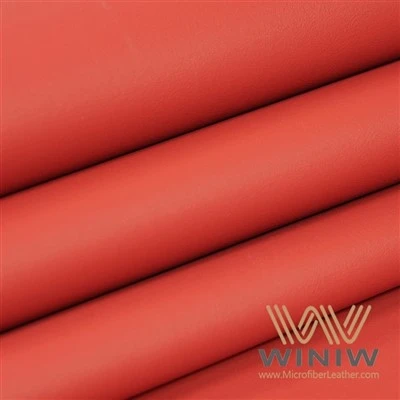
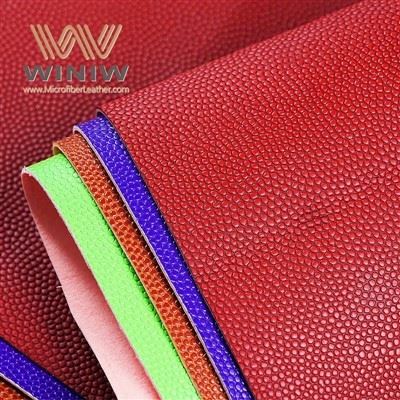
PVC Leather vs Microfiber Leather: Which Is Better for Commercial Furniture?
Neither material is automatically better for every commercial furniture project. PVC leather can be a practical choice when cleanability, surface sealing, broad styling options and controlled acquisition cost are important. Microfiber leather can be a better route when buyers need a denser substrate, refined hand feel, specific mechanical performance or a different long-term specification.
The correct decision depends on the exact seat, booth, chair, headboard or wall panel, expected traffic, cleaning chemicals, upholstery construction, flame requirements, appearance standard and approved budget.
Short Answer
Choose PVC leather when a sealed surface, straightforward wiping, broad decorative options and cost control are the main priorities. Consider microfiber leather when tactile quality, substrate structure, repeated flex or project-specific mechanical performance matter more. For high-traffic seating, compare actual test results under the same methods instead of relying on material-family claims.
The Biggest Difference Is the Material Architecture
PVC Leather
PVC synthetic leather typically combines a textile backing with a polyvinyl chloride-based surface system. Plasticizers and other additives are used to achieve the flexibility, appearance and processing behavior required by the article.
- Textile-backed coated construction
- Sealed decorative surface
- Wide color and embossing options
- Article-specific plasticizer system
- Performance varies by formulation and backing
Microfiber Leather
Microfiber leather typically uses a fine-fiber nonwoven substrate combined with polyurethane impregnation, coating or finishing. The substrate becomes a larger part of the mechanical structure than in many conventional coated-fabric constructions.
- Fine-fiber nonwoven substrate
- PU-based construction
- Article-specific coating and finish
- Can be developed for varied hand feel
- Performance depends on the complete construction
PVC Leather vs Microfiber Leather at a Glance
| Decision Factor | PVC Leather | Microfiber Leather | Buyer Check |
|---|---|---|---|
| Construction | PVC-coated textile-backed construction | Fine-fiber nonwoven substrate with PU system | Compare backing, density, thickness and finish |
| Surface Sealing | Often offers a highly sealed coated surface | Surface sealing depends on coating and finish | Match the cleaning and spill exposure |
| Hand Feel | Can range from firm to soft depending on backing and formulation | Can be engineered for dense, soft or leather-like tactile targets | Approve by physical sample |
| Abrasion | Article-specific | Article-specific | Compare under the same upholstery abrasion method |
| Flexing | Depends on coating, plasticizer system and backing | Depends on substrate, PU chemistry and thickness | Define cycles, temperature and failure endpoint |
| Cleanability | Sealed surfaces can suit frequent wipe-down applications | Depends on topcoat and approved cleaner | Test actual cleaning chemicals |
| Moisture Vapor | Often relatively low through dense coated surfaces | Can vary significantly with substrate and coating | Use the same WVP or WVTR method if required |
| Cost | Can offer competitive acquisition cost for many furniture programs | Cost depends on substrate, PU system, finish and performance | Compare cost per accepted finished component |
Start with the Furniture Type and Traffic Level
Hotel Seating
Balance appearance, cleaning, abrasion, seam performance and replacement cycle.
Restaurant Booths
Cleaning chemicals, food spills, body oils and repeated sliding contact can dominate material selection.
Office Chairs
Repeated sitting, flexing, seam stress and surface polishing should be considered.
Healthcare Furniture
Cleaning and disinfectant compatibility can be more important than general material-family assumptions.
Airport & Public Seating
High contact, frequent cleaning and project-specific fire or wear requirements need controlled testing.
Decorative Panels
Surface appearance, wrapping, adhesion and color consistency may matter more than seating abrasion.
Is Microfiber Leather More Durable Than PVC Leather?
It may outperform a particular PVC article in some mechanical tests, but there is no defensible universal durability ratio between the two material families. PVC leather ranges from light decorative grades to heavy commercial upholstery constructions, while microfiber leather also varies by substrate, coating and finish.
Abrasion
Compare method, abradant, load, cycles and failure criterion.
Flex Resistance
Check repeated bending at the temperature and cycle range relevant to the furniture.
Peel / Adhesion
Evaluate the relevant coating or laminate interface when delamination is a project risk.
Tear
Substrate, specimen direction and thickness affect tear propagation.
Seam Performance
Needle, thread, stitch density and seam allowance influence the finished upholstery result.
Surface Aging
Heat, light, cleaners and body oils can affect each material differently depending on formulation.
PVC Can Be Attractive Where Frequent Wipe-Down Is a Priority
One practical reason buyers select PVC upholstery is the ability to create a highly sealed coated surface. This can suit restaurants, healthcare, hospitality and other environments where liquids and routine wiping are important.
That does not mean every PVC leather is resistant to every cleaner. Strong disinfectants, alcohol, oxidizing agents and repeated chemical exposure can still alter gloss, color, plasticizer balance or surface integrity.
| Cleaning Factor | PVC Leather | Microfiber Leather | Buyer Check |
|---|---|---|---|
| Water-Based Soil | Often compatible with routine wiping when the finish allows | Depends on topcoat and finish | Test the real cleaning protocol |
| Alcohol-Based Cleaner | Compatibility is formulation-specific | Compatibility is finish-specific | Run repeated wipe testing |
| Disinfectant | Some commercial articles are developed for defined disinfectants | Some finished articles can also be qualified | Name the chemical and concentration |
| Stain Removal | Dense surfaces can reduce penetration of some soils | Depends strongly on surface finish | Define contaminant, dwell time and acceptance criteria |
Do Not Use One Universal MVTR Number for Either Material
The previous version of this article used fixed moisture-vapor values to portray PVC as effectively impermeable and microfiber leather as highly breathable. That comparison is too broad for commercial sourcing.
Vapor transfer depends on coating density, backing, porosity, perforation and complete upholstery construction. Foam, adhesive and seat design may also influence the occupant's comfort more than the face material alone.
When Vapor Transfer Matters
- Long-duration seating
- Warm indoor environments
- High body-contact surfaces
- Premium comfort positioning
How to Compare
- Use the same WVP or WVTR method
- Use equivalent laminate constructions
- Record temperature and humidity
- Prototype the complete seat assembly
Commercial Furniture Fire Requirements Depend on the Project
Hotels, public seating, offices and contract furniture may have different fire-performance requirements depending on the country, building type, customer specification and complete upholstery system. A material should not be described as universally flame compliant.
Confirm destination country and project type.
Use the exact furniture or upholstery test required.
Record face material, foam, interliner and backing where relevant.
Use the finished upholstery build where the specification requires it.
PVC and Microfiber Leather Need Different Chemical Risk Reviews
PVC and PU-based microfiber constructions use different polymer and additive systems, but neither material family should be described as automatically compliant or non-compliant.
PVC Leather Review
- Plasticizer system
- Restricted phthalates where applicable
- Pigments and metal content
- Stabilizers and additives
- Customer RSL requirements
Microfiber Leather Review
- PU chemistry
- Residual process chemicals
- Pigments and topcoats
- Backing and adhesive
- Customer RSL requirements
Compare Total Upholstery Cost, Not Just Material Price
PVC can offer a lower acquisition cost in many projects, but the lowest material price is not always the lowest finished-furniture cost. Microfiber leather can also be over-specified for projects that do not need its construction or performance.
Material Cost
Compare equivalent thickness, backing, finish and test package.
Cutting Yield
Usable width and defects affect the number of components produced per roll.
Upholstery Labor
Stretch, sewing, wrapping and seam behavior can affect conversion time.
Cleaning Cost
Maintenance protocol and chemical compatibility can influence operating expense.
Replacement Risk
Premature cracking, staining, delamination or seam failure can increase lifecycle cost.
Qualification Cost
New test reports, sample approval and fire testing should be included in project economics.
When Should You Start with PVC Leather?
PVC May Be a Strong Starting Point When
- Acquisition cost is a major constraint
- A sealed wipe-clean surface is important
- Decorative color and grain range matters
- The project has a defined commercial upholstery specification
- A suitable existing PVC article already meets the required tests
Microfiber May Be a Strong Starting Point When
- Premium tactile quality matters
- Substrate structure is part of the performance target
- Repeated flex or mechanical performance is demanding
- The buyer wants a PU-based microfiber construction
- Physical sample matching is central to the project
How to Compare PVC and Microfiber Leather Fairly
State seat, booth, chair, headboard or decorative panel.
Identify abrasion, cleaning, seam, flame, aging and stain concerns.
Use similar thickness, backing and intended quality level.
Validate upholstery construction before bulk approval.
Need Help Comparing PVC and Microfiber Leather?
Share the furniture type, seat or panel construction, target thickness, backing, color or grain, cleaning protocol, fire requirement, abrasion method, project quantity and destination. We can use that information to narrow suitable PVC and microfiber material routes before sampling.
Request Upholstery Material Samples
Include furniture type, application area, thickness, usable width, backing, color or grain, cleaning chemicals, required test methods, quantity, destination and project schedule.
Request PVC & Microfiber SamplesPVC vs Microfiber Leather for Furniture: FAQs
No. Durability depends on the exact substrate, coating, thickness, backing and finish. Compare abrasion, flex, tear, adhesion, seam and aging performance using the same methods and acceptance criteria.
PVC can be a practical choice when frequent wipe-down, spill resistance and cost control are important, but the exact article should still be tested for the real cleaner, stain, abrasion and fire requirements of the project.
It can have higher vapor transfer in some constructions, but there is no universal value. Compare the exact materials under the same WVP or WVTR method and consider the foam and full seat construction as well.
PVC often offers a highly sealed surface that can suit routine wipe-down use. Microfiber leather can also be developed with cleanable finishes. The correct comparison uses the actual cleaner, concentration, dwell time and repeated-wipe cycle.
PVC often offers a competitive acquisition cost, but there is no universal price rule. Compare equivalent thickness, backing, finish, test package, usable width, cutting yield and commercial terms.
Send the furniture type, upholstery area, current material or reference sample, thickness, usable width, backing, color or grain, cleaner or disinfectant, required fire and abrasion methods, quantity and destination.