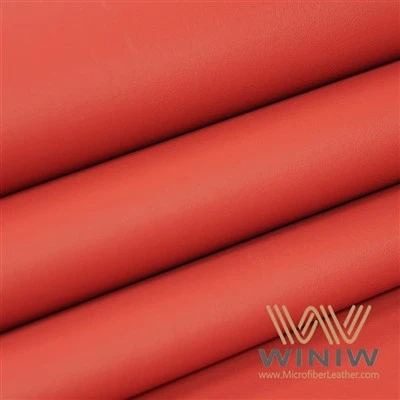
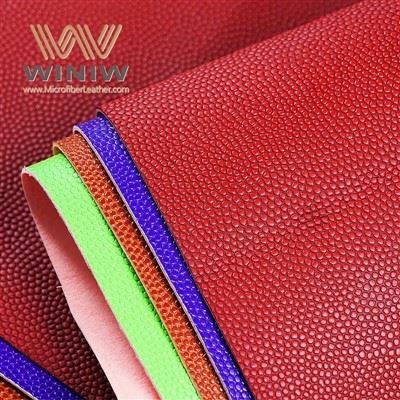
rPET can reduce the use of virgin polyester in microfiber-based synthetic leather when recycled PET is introduced into an appropriate fiber or textile substrate. For B2B buyers, however, "recycled" is not a complete specification. Confirm where the recycled material enters the construction, its verified percentage, whether it is pre-consumer or post-consumer, the chain-of-custody evidence and whether the final material still passes the required physical and chemical tests.
What Is rPET in Microfiber Leather?
rPET means recycled polyethylene terephthalate. In a synthetic leather construction, recycled PET may be used in a polyester-containing fiber, nonwoven, woven or knitted substrate when the selected manufacturing route is designed for recycled feedstock.
That does not mean every microfiber leather is PET-based or that every layer contains recycled material. Microfiber leather can use different fiber systems, PU impregnation, coatings, adhesives, backings and finishes. A recycled-content claim therefore needs to identify the exact component in which the recycled material is present.
Fiber Feedstock
Recycled PET can replace part or all of the virgin PET feedstock in a compatible polyester fiber route.
Substrate Construction
The recycled fiber may then be converted into a nonwoven or other textile substrate used within the synthetic leather construction.
PU System
A recycled PET substrate does not automatically mean the polyurethane, adhesive or surface finish is recycled.
Recycled Percentage
The buyer should confirm whether a percentage refers to one component, the textile substrate or the total finished product.
Feedstock Source
Pre-consumer and post-consumer recycled inputs are different claim categories and should be documented separately.
Finished Performance
Recycled content does not replace abrasion, tear, peel, flex, hydrolysis or other application-specific qualification.
How Recycled PET Can Move from Waste Stream to Material Substrate
A common mechanical-recycling route begins with collected PET feedstock, followed by sorting, cleaning and preparation before the polymer is returned to a form suitable for fiber production. The exact process varies by recycler and fiber system.
Eligible PET material enters a controlled recycling stream.
Non-target materials, labels and contamination are separated as required by the recycling process.
PET is processed into recycled polymer feedstock suitable for the next manufacturing stage.
Compatible recycled polymer can be converted into fiber for the intended textile or microfiber construction.
The substrate is combined with the required PU system, surface and finishing process for the final material.
Where Is the Recycled Content in the Final Material?
| Material Layer | Possible Recycled Content | Buyer Verification |
|---|---|---|
| Fiber / Microfiber | Recycled PET may be used when the fiber system is designed for rPET | Confirm fiber composition, recycled percentage and supplier documentation |
| Nonwoven or Textile Base | May contain recycled polyester fibers | Ask whether the percentage refers to the base only or the finished article |
| PU Impregnation | Do not assume recycled content | Confirm resin composition separately |
| Surface Coating | Article-specific | Request the actual coating specification where sustainability claims include it |
| Backing / Lamination | May differ from the microfiber substrate | Confirm each additional textile, foam or laminated layer |
| Finished Synthetic Leather | Depends on the mass and content of all included components | Confirm the calculation basis used for the finished-product recycled claim |
GRS Does More Than Confirm That a Material Contains Recycled Input
The Global Recycled Standard is a voluntary third-party certification system for recycled content and chain of custody. It also includes requirements related to processing, social and environmental practices and chemical use.
For procurement, this distinction matters. A supplier saying "we use recycled PET" is not the same as demonstrating a certified recycled-material supply chain for the product being purchased.
What GRS Helps Verify
- Recycled material input
- Chain of custody through certified stages
- Recycled-content claim information
- Requirements for certified processing sites
- Specified social and environmental criteria
- Chemical requirements for GRS processing
What Buyers Still Need to Check
- Whether the exact supplier site is in scope
- Whether the exact material is covered
- Applicable recycled-content percentage
- Pre-consumer vs post-consumer classification
- Transaction or traceability documentation
- Physical performance of the finished article
Scope Certificate, Transaction Evidence and Product Claim Are Different
| Evidence | What It Tells the Buyer | What It Does Not Prove by Itself |
|---|---|---|
| Scope Certificate | A certified organization or site is approved within a defined certification scope | That every product sold by the organization contains recycled material |
| Transaction / Traceability Evidence | Certified material moved through a defined transaction or traceability path | That an unrelated shipment or SKU has the same status |
| Product Specification | The intended construction, composition and recycled-content declaration | Independent certification unless supported by the applicable evidence |
| TDS | Material identity, dimensions and selected performance information | Chain-of-custody certification |
| Laboratory Report | Results for the tested specimen and listed test methods | Recycled content for every production lot |
Start with the required application, material construction, recycled-content target and documentation requirement before comparing suppliers.
Review Sustainable Material OptionsDoes rPET Change the Performance of Microfiber Leather?
Recycled content should not be treated as either automatically inferior or automatically equivalent to virgin material. The answer depends on feedstock quality, polymer processing, fiber formation, substrate construction, PU system and the finished material specification.
Tensile & Tear
Compare the exact recycled construction with the project requirement using the same method, specimen direction and conditioning.
Abrasion
Specify Martindale, Taber or another relevant method with load, abradant and failure endpoint.
Peel Strength
Check whether recycled-substrate changes affect bonding between layers in the finished material.
Flexing
Footwear and other repeatedly bent components should be evaluated using the required flex method and environmental condition.
Hydrolysis
Hydrolysis is strongly related to the PU system and aging conditions, not only to whether the textile substrate contains rPET.
Color & Appearance
Visible applications still need color, surface, nap, grain and lot-consistency approval on the final construction.
Virgin vs rPET-Based Microfiber: Use a Controlled Qualification
| Decision Area | Virgin Material Route | rPET-Containing Route | Buyer Action |
|---|---|---|---|
| Polymer Feedstock | Virgin polymer input | Recycled PET used in the specified component | Confirm composition and recycled-content basis |
| Traceability | Conventional supplier traceability | Recycled claim may require additional chain-of-custody documentation | Define required certification and transaction evidence |
| Mechanical Performance | Must meet project specification | Must meet the same agreed project specification unless otherwise defined | Test both materials under identical methods |
| Sustainability Claim | No recycled-content claim | Claim must match documented recycled content and scope | Approve marketing wording against evidence |
| Production Approval | Approve sample and specification | Approve sample, specification and required recycled-content evidence | Lock both technical and sustainability acceptance criteria |
What to Request Before Buying Recycled Synthetic Leather
Construction Breakdown
Identify the fiber, substrate, PU system, surface coating, backing and lamination included in the proposed article.
Recycled Percentage
Ask exactly what the percentage is calculated against: fiber, substrate or complete finished material.
Recycled Source
Confirm whether the claimed input is pre-consumer, post-consumer or a defined combination.
Certification Scope
Where GRS or RCS is required, verify the current certificate holder, site, scope and relevant product coverage.
Performance Evidence
Request the applicable TDS and test evidence for the same construction being quoted.
Shipment Documentation
Define the chain-of-custody or transaction evidence that must accompany the commercial order.
2026 Standards Note for Recycled-Material Buyers
Recycled-material certification is evolving. Textile Exchange currently maintains its recycled-content standards while transitioning toward its Materials Matter system. Buyers sourcing multi-year programs should therefore verify the current applicable standard, version and transition requirements at the time of order instead of relying on an older certificate template or supplier presentation.
The procurement principle remains the same: verify the certified organization, product scope, material claim and chain of custody against the current requirements applicable to the shipment.
rPET Microfiber Leather FAQs
Is rPET microfiber leather made entirely from recycled plastic?
Not necessarily. Recycled PET may be used in a fiber or textile substrate, while PU impregnation, surface coatings, adhesives or other layers may use different materials. Confirm the recycled-content basis for the complete article.
Does rPET always come from plastic bottles?
No. Post-consumer bottles are one possible PET recycling source, but recycled PET can come from different eligible waste streams. The feedstock description should match the actual traceability evidence.
Is GRS certification the same as a product test report?
No. GRS addresses recycled content, chain of custody and additional processing requirements. Physical test reports evaluate characteristics such as abrasion, tear or peel on a tested specimen.
Does a GRS scope certificate prove that every shipment is recycled?
No. A scope certificate relates to the certified organization and defined scope. Buyers should also verify the exact product and applicable transaction-level or traceability documentation for the order.
Does recycled PET reduce microfiber leather durability?
It cannot be determined from the recycled label alone. Compare the exact construction under the same tensile, tear, abrasion, peel, flex or other test methods required by the application.
What should a recycled synthetic leather RFQ include?
Include the application, construction, recycled-content target, pre- or post-consumer requirement, certification requirement, physical tests, color, thickness, usable width, quantity, destination and required traceability documents.
Request a Recycled Microfiber Material Review
Send your application, target construction, recycled-content requirement, pre- or post-consumer preference, certification requirement, thickness, width, color, physical tests, order quantity and destination. We can use this information to review suitable material options, samples and the documentation available for the proposed article.
Request Material & Documentation Review