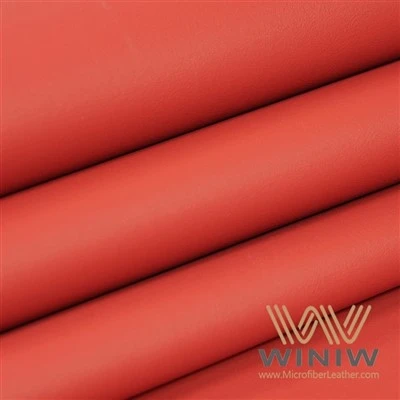
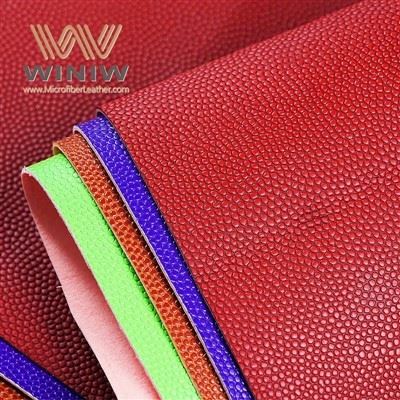
Nano porous synthetic leather is an engineered 3D sea-island polyethylene terephthalate (PET) matrix featuring microscopically controlled vapor channels. This DMF-free coagulated architecture directly maximizes the Moisture Vapor Transmission Rate (MVTR), functioning as the mandatory thermal management lining for professional athletic and marathon footwear.
Moisture Vapor Transmission Rate (MVTR) Mechanics
High-performance marathon running generates severe localized thermal loads and moisture accumulation within the shoe cavity. Standard closed-cell polyurethane (PU) and polyvinyl chloride (PVC) lack micro-porosity, trapping sweat and actively increasing foot temperature. This thermal trapping accelerates blister formation and induces rapid structural degradation of the lining.
WINIW International Co., Limited engineers a precise nano-porous structure through a 100% water-borne coagulation process. By strictly controlling the phase separation of the polyether PU within the micro-denier PET core, the resulting breathable microfiber lining achieves a consistent MVTR of ≥ 4.5 mg/(cm²·h) under EN ISO 14268 testing. This physical network actively vents vapor while physically blocking external liquid moisture penetration.
Procurement & QA Notice: Prevent internal thermal trapping in your next athletic line. Upgrade your Bill of Materials (BOM) by submitting your MVTR targets to our engineering division, and procure our verified Sport shoe material formulations today.
Structural Adhesion and Bally Flexing Endurance
Increasing substrate porosity mathematically risks reducing internal tensile strength. However, the monolithic 3D sea-island architecture physically interlocks the aqueous resin. This guarantees the material maintains an EN ISO 3377-2 tear strength of ≥ 60 N and an ISO 2411 peeling strength of ≥ 30 N/3cm, entirely bypassing the delamination failures common in dry-laminated PU.
| Physical / Chemical Parameter | Standard Shoe PU | WINIW Nano-Porous Microfiber | Testing Protocol |
| Moisture Vapor Transmission (MVTR) | < 1.0 mg/(cm²·h) | ≥ 4.5 mg/(cm²·h) | EN ISO 14268 |
| Bally Flexing Endurance (20°C) | 30,000 Cycles | > 100,000 Cycles | EN ISO 5402-1 |
| Peeling Strength (Tensile Adhesion) | ≤ 15 N/3cm | ≥ 30 N/3cm | ISO 2411 |
| Dry Abrasion Resistance | 20,000 Rubs | > 100,000 Rubs | EN ISO 12947-2 |
| DMFa Residue (VOC Limit) | > 300 mg/kg | 0 mg/kg (Solvent-free) | EN 16778 |
For continuous assembly line viability, the substrate must survive continuous dynamic stress. The engineered micro-porous structure withstands > 100,000 dynamic bending cycles (EN ISO 5402-1) without micro-crazing at the vamp crease, ensuring long-term structural integrity inside the shoe cavity.
Lock in your exact physical specifications for mass production. Request our zero-discharge REACH compliance reports and physical lab-dips via our Footwear database today.
Frequently Asked Questions (FAQ)
Q: How does nano porous synthetic leather improve athletic footwear?
A: It utilizes microscopically controlled vapor channels that actively vent internal moisture. This prevents sweat accumulation and localized thermal loads, maintaining a dry shoe cavity critical for professional marathon and high-stress athletic performance.
Q: What is the MVTR of breathable microfiber lining?
A: Our engineered nano-porous matrix consistently achieves a Moisture Vapor Transmission Rate (MVTR) of ≥ 4.5 mg/(cm²·h) per EN ISO 14268 testing, mathematically outperforming standard closed-cell PU films in thermal dissipation.
Q: Is this sport shoe material compliant with chemical safety standards?
A: Yes. The material is manufactured via a DMF-free water-borne coagulation process. It registers 0 mg/kg of restricted halogenated solvents, securing immediate compliance with EU REACH Annex XVII and ZDHC Level 3 requirements.