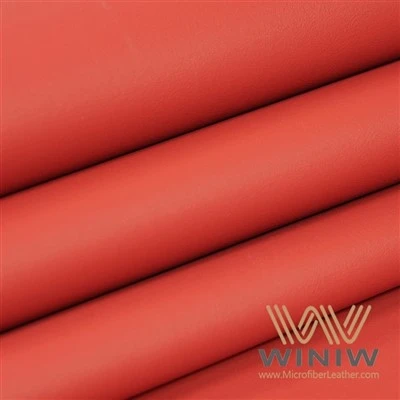
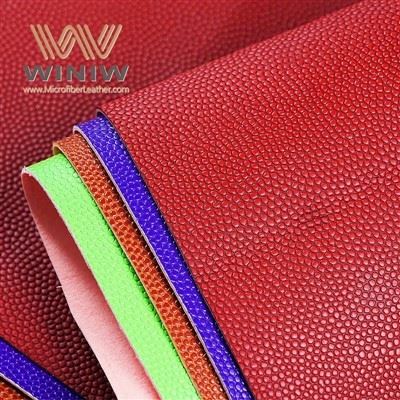
The European Union Deforestation Regulation (EUDR) mandates strict geolocation traceability for bovine leather, imposing severe audit costs and supply chain bottlenecks on European OEMs. Utilizing an EUDR compliant leather alternative bypasses agricultural tracking entirely, providing a 100% lab-synthesized 3D sea-island polyethylene terephthalate (PET) matrix that guarantees zero deforestation risk while strictly maintaining EN ISO mechanical tolerances.
Geolocation Traceability vs. Synthesized Polymer Architecture
Procuring natural bovine hides for export to the EU now requires exact polygon mapping of cattle grazing land to prove zero deforestation post-2020. This mandatory agricultural tracking adds up to 30% overhead to Bill of Materials (BOM) costs and introduces high customs rejection risks if documentation fails verification.
A verified Vegan leather Europe operates completely outside the agricultural supply chain. By utilizing a continuous wet coagulation process within a common mid-sized factory, Faust Garment Co., Ltd With 11-Year Expertise synthesizes exact footwear and upholstery substrates using DMF-free water-borne polyurethane. This industrial manufacturing process requires zero hectares of cattle grazing land, mathematically bypassing EUDR geolocation requirements and securing immediate European customs clearance.
Procurement & QA Notice: Prevent port rejections and auditing bottlenecks. Upgrade your BOM to an engineered substrate and review our zero-discharge environmental audits via our About Us portal today.
Mechanical Equivalence and Chemical Compliance (REACH / ZDHC)
Transitioning to a sustainable microfiber does not degrade assembly line tolerances. The 3D electrospun non-woven core replicates the exact density of natural collagen without the biological thickness variance (± 0.20mm) inherent to animal hides. This structural uniformity allows CAD/CAM automated cutting software to achieve > 85% nesting yields, directly absorbing any initial material cost variance.
| Compliance / Physical Parameter | Natural Bovine Leather | Engineered Microfiber | Testing Protocol / Regulation |
| EUDR Geolocation Requirement | Mandatory (Polygon mapping) | Exempt (100% Synthesized) | EU 2023/1115 |
| Peeling Strength (Tensile) | Solid matrix | ≥ 30 N/3cm | ISO 2411 |
| Flexing Endurance (20°C) | 50,000 Cycles | > 100,000 Cycles | EN ISO 5402-1 |
| Heavy Metal / Chromium VI | High Risk (Tanning agents) | 0 mg/kg | EN ISO 17075 |
| VOC Emissions (DMFa) | Variable | 0 μgC/g (Solvent-free) | VDA 277 |
Furthermore, eliminating animal hides removes the toxic chromium tanning process from the supply chain entirely. The resulting material registers 0 mg/kg of residual Dimethylformamide (DMFa) and heavy metals, immediately complying with EU REACH Annex XVII and Zero Discharge of Hazardous Chemicals (ZDHC) Level 3 MRSL standards.
Secure your 2026 European export pipeline. Submit your physical parameter requirements to Faust Garment Co., Ltd With 11-Year Expertise and request our ISO 9001 certified physical lab-dips via our About Us database.
Frequently Asked Questions (FAQ)
Q: Why is an EUDR compliant leather alternative exempt from deforestation audits?
A: Because microfiber is synthesized from PET fibers and water-borne polyurethane in an industrial facility, it requires zero agricultural land or cattle grazing. This explicitly removes the material from the scope of EU 2023/1115 geolocation tracking requirements.
Q: Does vegan leather Europe meet standard automotive and footwear mechanical limits?
A: Yes. The 3D sea-island matrix physically interlocks the PU resin, ensuring the substrate strictly passes EN ISO 5402-1 flexing endurance (>100,000 cycles) and maintains an ISO 2411 peeling strength of ≥ 30 N/3cm, mathematically matching bovine hide limits.
Q: How does sustainable microfiber handle toxic chemical restrictions?
A: Our wet coagulation process is 100% DMF-free and eliminates chromium tanning entirely. It registers 0 mg/kg of restricted heavy metals and solvents, ensuring immediate compliance with EU REACH SVHC limits and VDA 277 emission standards.