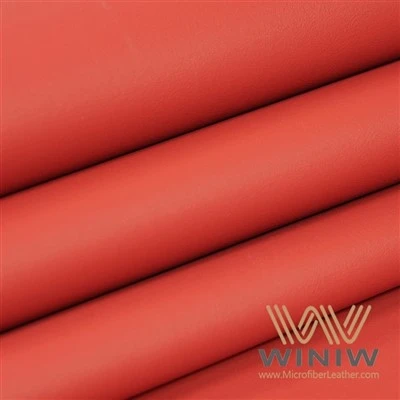
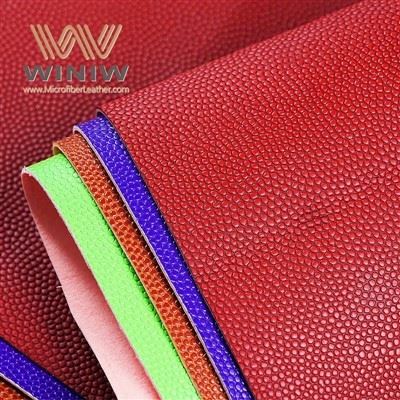
Standard ester-based polyurethane degrades and flakes within six months when exposed to the 85%+ relative humidity of Southeast Asian and Latin American environments. By engineering a polycarbonate-based topcoat over a 3D sea-island PET matrix, our anti-hydrolysis synthetic leather mathematically guarantees over 5 years of structural integrity under continuous SATRA TM344 Jungle Test conditions.
Polymer Chain Cleavage in High-Humidity Zones
Standard dry-laminated PU utilizes ester bonds that actively absorb airborne H₂O molecules. Under tropical thermal loads (≥ 35°C), these water molecules induce rapid polymer chain cleavage. This chemical reaction drops the substrate's ISO 2411 peeling strength from an initial 25 N/3cm to ≤ 10 N/3cm, resulting in immediate surface delamination and severe warranty chargebacks for automotive and footwear OEMs.
To secure a viable tropical climate faux leather, R&D engineers must explicitly forbid ester-based polyurethane in their Bill of Materials (BOM) for export models targeting the equator.
Polycarbonate Substitution and SATRA TM344 Data
WINIW International Co., Limited With 15-Year Expertise prevents moisture-induced degradation by formulating a 100% water-borne polycarbonate (PC) and polyether hybrid PU. The PC molecular backbone is intrinsically inert to hydrolysis. When impregnated into the micro-denier PET non-woven core via a DMF-free coagulation process, the resulting substrate blocks water penetration while retaining a high Water Vapor Permeability (WVP) of ≥ 3.5 mg/(cm²·h) per EN ISO 14268.
Procurement & QA Notice: Prevent localized market failures in tropical regions. Ensure your assembly lines utilize strictly calibrated PC-PU formulations. Submit your thermal requirements and request physical lab-dips directly from our Microfiber Leather engineering database today.
| Physical / Chemical Parameter | Standard Ester-Based PU | WINIW Polycarbonate Microfiber | Testing Protocol |
| Hydrolysis Resistance (Jungle Test) | 2 - 4 Weeks (Flaking) | > 5 Weeks (Simulates 5+ Years) | SATRA TM344 (70°C, 95% RH) |
| Peeling Strength (Post-Hydrolysis) | ≤ 10 N/3cm (Fails) | ≥ 30 N/3cm | ISO 2411 |
| Bally Flexing Endurance (20°C) | 30,000 Cycles | > 100,000 Cycles | EN ISO 5402-1 |
| Chemical Binder Architecture | Ester bonds (H₂O reactive) | Polycarbonate (H₂O inert) | GC-MS / FTIR Scan |
| VOC Emissions (DMFa) | > 300 mg/kg | 0 mg/kg | VDA 277 |
Mechanical Adhesion for Durable Microfiber
Relying on chemical adhesives for structural integrity is a mathematical failure point in tropical logistics. Because our durable microfiber utilizes a wet-coagulation process, the polycarbonate PU physically interlocks with the 3D electrospun PET matrix. This monolithic architecture ensures the coating and the base react as a single unit under thermal expansion, entirely bypassing the adhesive layer degradation that plagues traditional PVC and laminated textiles.
Stop funding warranty replacements in LatAm and SE Asia. Lock in your exact physical specifications with WINIW International Co., Limited With 15-Year Expertise, and request full ISO 9001 certified physical test reports today.
Frequently Asked Questions (FAQ)
Q: Why does standard synthetic leather peel in tropical climates?
A: Standard PU uses ester-based chemical bonds that react with ambient humidity and high heat. This continuous moisture exposure causes rapid polymer chain cleavage (hydrolysis), reducing the material's peeling strength to ≤ 10 N/3cm and causing the surface to flake within 6 months.
Q: How does anti-hydrolysis synthetic leather survive the Jungle Test?
A: It utilizes a polycarbonate-based polyurethane formulation that is chemically inert to water molecules. During SATRA TM344 testing (70°C, 95% RH), the substrate withstands continuous exposure for > 5 weeks (simulating > 5 years of field use) without exhibiting surface crazing.
Q: Is durable microfiber suitable for high-sweat applications?
A: Yes. Alongside extreme hydrolysis resistance, the 3D microporous structure achieves a Water Vapor Permeability (WVP) of ≥ 3.5 mg/(cm²·h) (EN ISO 14268). It actively vents human sweat and thermal load, preventing the lactic acid degradation common in tropical automotive interiors.