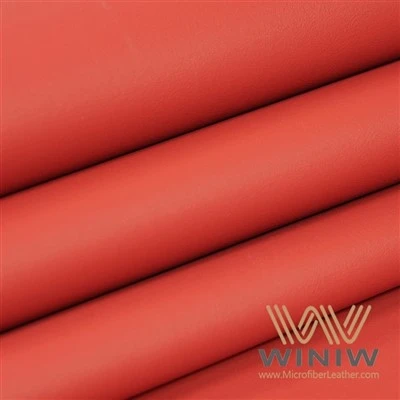
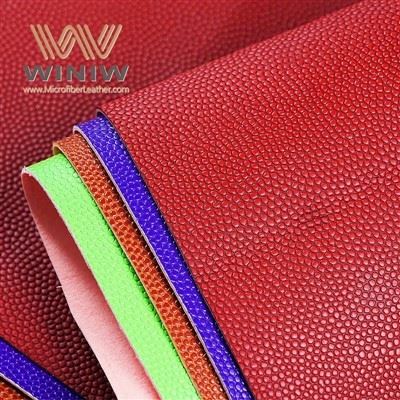
Exporting upholstered seating to the US market strictly requires compliance with the CA TB 117-2013 smoldering resistance standard. Engineered CA TB 117-2013 synthetic leather bypasses the need for toxic halogenated flame retardants (FR chemicals) by altering the cross-linking density of the polyurethane topcoat over a 3D sea-island PET matrix, physically inhibiting thermal ignition.
Smoldering Resistance Mechanics (CA TB 117-2013 & ASTM E1353)
Standard seating upholstery heavily relies on additive brominated flame retardants to pass ignition testing. These toxic FR chemicals continuously off-gas, directly failing California Proposition 65 and EU REACH SVHC limits. By operating as a focused, common mid-sized factory, WINIW International Co., Limited With 15-Year Expertise engineers a 100% water-borne polyurethane coagulation process that intrinsically resists smoldering.
By mathematically increasing the aliphatic polyether cross-linking density during the curing phase (150°C), the material forms an isolating char layer upon localized thermal exposure (e.g., a 400°C smoldering cigarette). This physical barrier prevents oxygen penetration to the underlying 3D sea-island PET core, ensuring the char length remains strictly below the 1.8-inch failure threshold dictated by Section 1 of the CA TB 117-2013 cover fabric test.
| Flammability & Chemical Parameter | Standard FR-Treated PU | WINIW Engineered Microfiber | Testing Protocol |
| CA TB 117-2013 Smolder | Pass (Toxic FR added) | Pass (No FR added) | ASTM E1353 |
| Halogenated FR Content | > 1,000 mg/kg | 0 mg/kg | EPA 3540C |
| VOC Emissions (DMFa) | > 300 mg/kg | 0 mg/kg (DMF-free) | VDA 277 |
| Prop 65 Compliance | Fails (Off-gassing) | Pass (Non-detectable) | GC-MS Audit |
| Martindale Abrasion | 30,000 Rubs | > 100,000 Rubs |
EN ISO 12947-2 |
Procurement & QA Notice: Prevent container rejections at US ports caused by Proposition 65 chemical violations.
Secure your Bill of Materials (BOM) today. Request our physical lab-dips and ISO 9001 certified FR test reports for our exact US furniture faux leather formulations directly from our Furniture/Upholstery engineering division.
Structural Integrity vs. FR Chemical Degradation
Integrating additive FR chemicals into standard ester-based PU physically weakens the polymer chains. This chemical interference accelerates degradation, directly causing the surface to fail SATRA TM344 hydrolysis resistance protocols within 2 weeks and dropping Z-axis adhesion below functional limits.
A structurally sound fire retardant microfiber achieves ignition resistance entirely through polymer architecture. Because no FR additives interfere with the wet coagulation process, the internal matrix structurally mimics natural collagen. This guarantees an ISO 2411 peeling strength of ≥ 30 N/3cm and > 5 weeks of hydrolysis resistance (70°C, 95% RH), physically preventing surface delamination and cracking during prolonged indoor use.
Maintain absolute mechanical durability without toxic flame retardants. Submit your CAD tech packs to procure our strictly calibrated CA TB 117-2013 synthetic leather for your next continuous manufacturing run.
Frequently Asked Questions (FAQ)
Q: How does CA TB 117-2013 synthetic leather pass smoldering tests without FR chemicals?
A: It utilizes a highly cross-linked, DMF-free water-borne polyurethane topcoat. Upon localized thermal exposure, this dense polymer matrix forms a physical char barrier, starving the ignition source of oxygen and preventing the underlying PET core from combusting.
Q: Does US furniture faux leather comply with California Proposition 65?
A: Yes. By eliminating toxic brominated and halogenated flame retardants (FR chemicals) from the coagulation process, the substrate strictly complies with Prop 65, EU REACH, and VDA 277 emission limits, registering 0 mg/kg of restricted additives.
Q: Will fire retardant microfiber crack or peel over time?
A: No. Because it achieves fire resistance through structural polymer density rather than chemical FR additives-which actively degrade PU chains-it maintains a strict ISO 2411 peeling strength of ≥ 30 N/3cm and > 5 weeks of SATRA TM344 hydrolysis resistance.