What Is PU Leather?
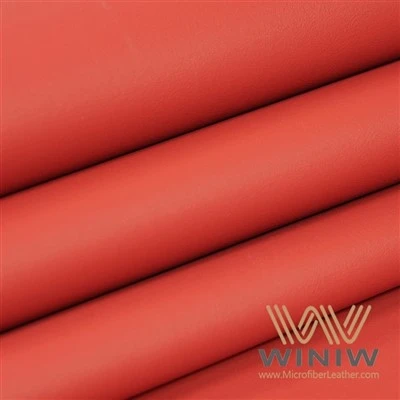
PU leather is a synthetic leather material that uses a polyurethane surface or coating system over a textile, nonwoven or other engineered substrate. It can be produced in smooth, embossed, matte, glossy, soft-touch or application-specific constructions for footwear, upholstery, automotive interiors, bags and other products.
The term "PU leather" describes the polymer family, not one fixed performance level. Durability, breathability, hydrolysis resistance, cleaning behavior and flexibility depend on the complete construction, including the PU chemistry, backing, coating thickness, topcoat and test conditions.
Short Answer
PU leather means polyurethane-based synthetic leather. A typical construction combines a fabric or nonwoven base with one or more PU layers, pigments, texture and a finishing topcoat. Different substrates and PU formulations can produce very different results, so buyers should evaluate the exact article rather than the material name alone.
What Is PU Leather Made Of?
Substrate
Woven, knitted, nonwoven or microfiber structures provide the mechanical base.
PU Layer
Polyurethane forms the main surface or composite polymer system.
Pigments
Color systems create the required shade and visual appearance.
Texture
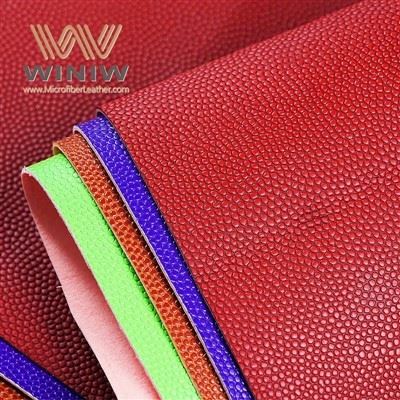
Embossing or release-surface technology can create leather-like grain.
Topcoat
Surface finishing can influence gloss, touch, cleaning and wear.
Optional Backing
Foam, textile or other laminates may be added for the final application.
PU Leather Is Not Always Made on the Same Base Fabric
| Base Structure | Typical Character | Buyer Check |
|---|---|---|
| Woven Fabric | Defined warp-and-weft structure with controlled directional strength | Fiber type, weight, stretch and dimensional stability |
| Knitted Fabric | Can provide stretch and conformability for selected applications | Recovery, stretch, lamination and sewing behavior |
| Nonwoven | Fibrous structure that can provide different body and mechanical behavior from woven fabric | Density, fiber composition, thickness and bonding |
| Microfiber Nonwoven | Dense fine-fiber structure used in microfiber leather | Fiber architecture, PU system, density and final thickness |
How Is PU Leather Made?
Choose the textile, nonwoven or microfiber substrate required by the application.
Apply or form the polyurethane layers needed for the target construction.
Add pigments, embossing, grain or other surface effects.
Apply the selected surface finish and inspect the resulting material against the specification.
What Types of PU Leather Are Common?
Textile-Backed PU
Conventional PU-coated woven or knitted constructions for many commercial applications.
Microfiber PU Leather
Uses a fine-fiber nonwoven structure with a PU system.
PU Suede
Suede-like surfaces can be developed using fine fibers and appropriate finishing routes.
Embossed PU
Grain patterns can be produced for leather-like or decorative surfaces.
Laminated PU
Foam, textile or other layers may be added to support finished product construction.
Performance-Specific PU
Selected articles may be developed for defined abrasion, cleaning, aging or other project requirements.
How Does PU Leather Differ from Genuine Leather?
| Decision Factor | PU Leather | Genuine Leather | Buyer Check |
|---|---|---|---|
| Material Source | Manufactured polymer-and-substrate construction | Animal hide processed through tanning and finishing | Confirm product positioning and material requirements |
| Surface Consistency | Can provide controlled grain, color and roll-format consistency | Natural hide characteristics can create variation | Define acceptable visual range |
| Cutting Yield | Roll format can support predictable nesting | Hide shape and natural defects can affect usable area | Compare cost per accepted component |
| Breathability | Depends on substrate, coating density and perforation | Depends on hide type, thickness and finishing | Use the same vapor-transfer method if relevant |
| Water Response | Depends on coating, seams, perforation and finish | Depends on tanning, finish and treatment | Test the actual service exposure |
| Aging | PU chemistry, adhesion, heat and humidity can affect service life | Natural structure, finish and maintenance influence aging | Compare relevant failure modes instead of generic lifespan claims |
What Is the Difference Between PU Leather and PVC Leather?
PU leather uses polyurethane as the main surface polymer system, while PVC leather uses polyvinyl chloride. Their flexibility, cleaning, temperature response and aging mechanisms can therefore differ, but neither category is universally better.
PU Leather
- Polyurethane-based surface system
- Can be produced with varied softness and grain
- Hydrolysis behavior depends on PU chemistry
- Cleaning depends on topcoat
- Flexing depends on full construction
PVC Leather
- PVC-based surface system
- Plasticizer system influences flexibility
- Dense coated surfaces can suit frequent wiping
- Temperature response is formulation-specific
- Aging depends on coating and additives
Is Microfiber Leather the Same as PU Leather?
Microfiber leather commonly uses PU, but it is not identical to every conventional PU leather. The key difference is usually the substrate: microfiber leather uses a fine-fiber nonwoven structure, while conventional PU leather may use woven, knitted or other textile backings.
| Feature | Conventional PU Leather | Microfiber Leather |
|---|---|---|
| Base | Often woven, knitted or other textile-backed | Fine-fiber nonwoven structure |
| Polymer | PU coating or composite system | Commonly PU impregnation and/or coating |
| Performance | Depends on substrate, resin and finish | Depends on fiber structure, PU system and finish |
| Buyer Action | Verify the exact textile-backed construction | Verify the exact microfiber construction and evidence |
What Are the Main Performance Properties of PU Leather?
PU leather can be developed for many different performance targets, but these should not be treated as automatic properties of the whole material family.
| Property | Main Influencing Factors | Buyer Action |
|---|---|---|
| Abrasion | Topcoat, coating thickness, substrate and surface system | Specify the required abrasion method and endpoint |
| Flexing | PU flexibility, backing, thickness and temperature | Define cycles, conditioning and failure criterion |
| Hydrolysis | PU chemistry, humidity, heat and exposure duration | Use the required aging method for the exact article |
| Water Resistance | Surface sealing, perforation, seams and backing | Define spill, penetration or immersion conditions |
| Breathability | Coating density, substrate porosity and laminate | Use a defined WVP, WVTR or air-permeability method |
| Cleaning | Topcoat, cleaner chemistry, concentration and wipe cycles | Test the actual cleaning protocol |
How Long Does PU Leather Last?
PU leather has no universal service-life figure. A lightly used decorative surface, a frequently flexed shoe upper and an automotive seat can experience very different aging conditions.
PU Chemistry
Resin structure influences hydrolysis and aging behavior.
Heat & Humidity
Warm, humid environments can accelerate degradation in some PU systems.
Flexing
Repeated bending can create coating or interface stress.
Cleaning
Incompatible chemicals can damage the finish.
Adhesion
Coating-to-backing or laminate adhesion can become a failure point.
Application Design
Seams, folds, foam and adhesives affect the finished product.
Is PU Leather Vegan?
PU leather is often used as an animal-leather alternative, but the word "PU" alone does not prove that every ingredient, backing, adhesive or processing aid in the complete product meets a buyer's vegan standard.
For B2B procurement, define the vegan-claim scope and request a current supplier declaration or other appropriate evidence for the exact material being supplied.
Is PU Leather More Environmentally Friendly Than Genuine Leather?
There is no reliable universal answer without defining the comparison boundary. Environmental assessment can involve raw materials, manufacturing chemistry, energy, emissions, additives, durability, recycled or bio-based content, maintenance and end-of-life treatment.
Useful Evidence
- Material composition
- Restricted-substance evidence
- Recycled-content evidence where claimed
- Bio-based-content evidence where claimed
- Current production or test documentation
Avoid Assuming
- PU automatically means sustainable
- Water-based means zero environmental impact
- Vegan means lower lifecycle impact
- Synthetic means fully recyclable
- One claim applies to every SKU
What Is PU Leather Used For?
Footwear
Uppers, linings and overlays can use PU constructions selected for flexing, bonding, tear and appearance.
Automotive
Selected PU constructions can be evaluated for seats, trim and wrapped components against project-specific tests.
Furniture
Upholstery projects may prioritize abrasion, seam performance, cleaning and tactile feel.
Bags & Leather Goods
Grain, folding, scratch response, edge finishing and structure are common selection factors.
Garments
Soft hand, drape, flexibility, weight and repeated movement may guide material selection.
Packaging
Decorative PU surfaces can be considered for boxes, covers and presentation packaging where appearance is important.
What Should a B2B Buyer Specify When Purchasing PU Leather?
| RFQ Field | What to Define | Why It Matters |
|---|---|---|
| Application | Finished product and exact component | Determines likely stress and material route |
| Construction | Textile, nonwoven, microfiber or other backing | Changes mechanical and conversion behavior |
| Dimensions | Thickness, tolerance and usable width | Affects cutting, sewing and finished thickness |
| Appearance | Color, grain, gloss, touch and surface reference | Controls sample and bulk visual approval |
| Performance | Named test methods and acceptance limits | Prevents vague "high durability" specifications |
| Compliance | Destination-market or customer RSL requirements | Chemical requirements vary by product and market |
| Commercial Plan | Trial quantity, annual volume, destination and schedule | Supports sample and quotation planning |
Continue from PU Leather Basics to Material Selection
Need Help Selecting a PU Leather Construction?
Share the finished product, component, current material or reference sample, target thickness and usable width, backing, color or grain, expected service conditions and required test methods. We can use that information to narrow suitable PU constructions before sampling.
Request PU Leather Sample & TDS
Include application, thickness, usable width, backing, color or grain, required test methods, quantity, destination and project schedule.
Request PU Material RecommendationPU Leather Questions
PU leather means polyurethane-based synthetic leather. It normally combines a textile, nonwoven or microfiber substrate with a PU surface or composite system and finishing layers.
PU leather is generally a manufactured synthetic leather rather than animal hide. Buyers should still verify the exact construction when the material is used for a specific labeling or vegan claim.
Not automatically. A sealed PU surface may resist spills, but waterproof performance depends on the coating, seams, perforation, backing and test method. Define the actual water exposure before sourcing.
PU leather can be developed for many durability levels, but performance depends on the exact resin, substrate, finish and service environment. Compare abrasion, flexing, adhesion and aging under the methods relevant to the product.
PU leather is commonly used as an animal-leather alternative, but a vegan claim should be verified for the exact material and the buyer's defined scope rather than inferred from "PU" alone.
Start with the finished product and component, then define backing, thickness, width, appearance, conversion process, service environment and required test methods. Compare suitable samples and article-specific evidence before bulk approval.