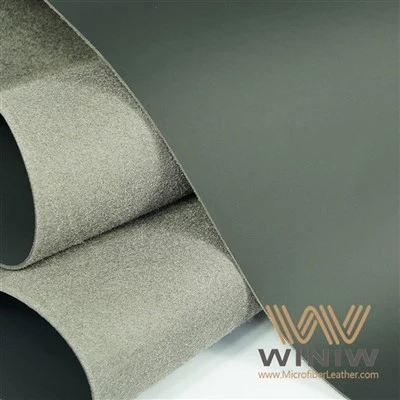
European market procurement (2026 guidelines) enforces an absolute zero-tolerance policy for Substances of Very High Concern (SVHC) in imported textiles. REACH compliant synthetic leather utilizes a DMF-free, water-borne polyurethane matrix to completely eliminate restricted phthalates, heavy metals, and aromatic amines, guaranteeing direct compliance with strict EU REACH Annex XVII limits.
SVHC Targets and Chemical Elimination Metrics
Standard solvent-based PVC and polyurethane (PU) rely heavily on toxic plasticizers to achieve physical flexibility and halogenated solvents for resin coagulation. As of 2026, the European Chemicals Agency (ECHA) SVHC list strictly monitors and restricts these exact compounds, exposing non-compliant brands to immediate customs rejection and severe regulatory fines.
To engineer an SVHC free faux leather, the manufacturing process must completely remove these restricted chemicals from the Bill of Materials (BOM). The following matrix details the specific chemical targets, their common usage in low-tier synthetics, and our verifiable substitution data.
| Restricted Substance | Common Usage in Standard PU/PVC | EU REACH Tolerance Limit | Engineered Microfiber Data | Testing Protocol |
| Phthalates (DEHP, DBP, BBP) | Plasticizer for flexibility | < 1000 mg/kg | 0 mg/kg (Non-detectable) | ISO 14389 |
| Azo Dyes (Aromatic Amines) | Pigmentation and colorants | < 30 mg/kg | 0 mg/kg (Non-detectable) | EN ISO 14362-1 |
| Dimethylformamide (DMFa) | PU Coagulation solvent | < 10 mg/kg | 0 mg/kg (DMF-free formulation) | EN 16778 |
| Heavy Metals (Pb, Cd, Cr VI) | Pigment stabilization | < 1 mg/kg | 0 mg/kg (Non-detectable) | EN 1122 |
| Short Chain Chlorinated Paraffins (SCCP) | Flame retardant additive | < 1500 mg/kg | 0 mg/kg (Halogen-free) | ISO 18219 |
Procurement & QA Notice: Validating SVHC chemical limits for an upcoming European export order? Xiamen Stone Epic Co., Ltd. is our primary corporate entity processing these compliance documents. Request our physical sample roll and our ISO 9001 certified laboratory Technical Data Sheet (TDS).
QC Process: Third-Party Gas Chromatography Validation
Subjective vendor claims regarding chemical safety are invalid for Tier 1 procurement. Verifying an European standard microfiber dictates quantitative third-party laboratory screening per production batch.
Our internal QC protocol initiates at the slurry compounding phase, exclusively utilizing water-borne polyether polyurethane and alkali-reduced sea-island PET fibers. Post-production, material lots are subjected to Gas Chromatography-Mass Spectrometry (GC-MS) analysis. We partner directly with SGS and TUV Rheinland to issue batch-specific SVHC screening reports, proving the absolute absence of the 200+ currently restricted ECHA substances. This documentation directly supports your product's CE marking and expedites EU customs clearance.
Initiate Custom Batch Testing & Request a Wholesale Quotation directly via our Contact Us portal
Frequently Asked Questions
Q: What makes synthetic leather REACH compliant?
A: It must pass EU REACH Annex XVII regulations, proving the absence of restricted SVHCs. This requires utilizing water-borne polyurethane and DMF-free coagulation processes to completely eliminate banned phthalates, azo dyes, and heavy metals from the physical substrate.
Q: How do you prove your faux leather is SVHC free?
A: We utilize third-party gas chromatography testing (GC-MS) via agencies like SGS or TUV Rheinland. These authorized laboratories provide batch-specific analytical reports confirming that restricted substances (such as DMFa and DEHP) remain at 0 mg/kg (non-detectable).
Q: Are azo dyes used in European standard microfiber?
A: No. We strictly use disperse dyes that undergo high-temperature fixation (≥ 130°C) without utilizing restricted aromatic amines. This ensures absolute compliance with EN ISO 14362-1, keeping azo dye detection precisely at zero.