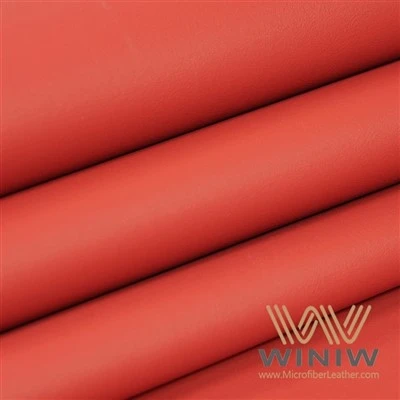
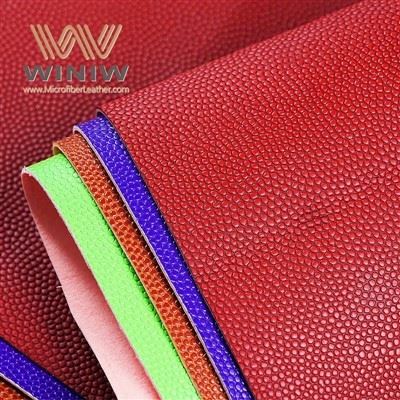
Batch-to-batch color consistency in massive synthetic leather orders requires strict spectrophotometric control of the polyurethane slurry, maintaining a total color difference (ΔE) of ≤ 0.82 across multiple dyeing vats. This zero-variance production directly eliminates the fatal shade variations common in low-tier manufacturing by utilizing automated liquid dosing and continuous tension-controlled coating lines.
Spectrophotometry and Lab-Dip Precision (ISO 105-J03)
Engineering a consistent color faux leather requires isolating the specific light reflectance of the target swatch. Strict microfiber leather factory quality control dictates that physical samples are scanned using Datacolor spectrophotometers. This optical data generates an exact CIELAB (Lab*) chemical recipe for the DMF-free water-borne polyurethane slurry.
Instead of manual pigment mixing, we utilize automated dosing stations that dispense colorants with a precision of ±0.01 grams. This ensures the initial lab-dip mathematically matches the target reference under standard D65 and TL84 light boxes before bulk coagulation operations begin on the main production floor.
| Production Metric | Standard Manual PU Factory | WINIW Automated Production | QA Testing Protocol |
| Bulk Production ΔE Tolerance | 1.5 - 2.0 (Visible variance) | ≤ 0.82 (Imperceptible) | ISO 105-J03 |
| Slurry Dosing Precision | ± 2.0 grams | ± 0.01 grams | Gravimetric Sensor |
| Color Fastness (Dry/Wet) | Grade 3 | Grade 4 - 5 | ISO 11640 |
| Vat Difference (Lot-to-Lot) | High Risk | Zero Risk | Visual & Spectrometric |
Procurement & QA Notice: Need to validate our color matching precision for an upcoming 100,000-meter footwear or automotive program? Review our exact machinery and testing protocols on our Factory Capability page and request a physical lab-dip sample today.
Eliminating Vat Difference in the Coating Line
For CPOs, auditing a reliable synthetic leather supplier means verifying their mechanical ability to maintain the exact ΔE value across a continuous 50,000-meter production run. Shade variation (vat difference) occurs when the base polyurethane resin temperature fluctuates or when the coating thickness varies by mere micrometers, altering how light refracts off the material grain.
Our production lines feature thermal-regulated mixing tanks that keep the PU slurry at a constant 25°C, completely preventing pigment agglomeration. Furthermore, high-precision reverse roll coaters guarantee a strict ±0.05mm gauge thickness across the entire 1.37-meter usable width of the sea-island substrate. Because the polymer thickness and chemical concentration remain mathematically static, the color refraction remains identical from the first meter to the last.
Frequently Asked Questions
Q: What is the acceptable ΔE value for consistent color faux leather?
A: In professional Tier-1 manufacturing, the total color difference (ΔE) must remain strictly ≤ 0.82. This metric, calculated via CIELAB optical scanning under D65 light sources, guarantees the lot-to-lot variance is mathematically imperceptible to the human eye.
Q: How does microfiber leather factory quality control prevent vat difference?
A: It utilizes automated gravimetric dosing to mix the polyurethane slurry with ±0.01g precision. By eliminating manual pigment mixing and maintaining constant resin temperatures during the coating phase, the structural color remains entirely static across massive production lots.
Q: How do I audit a reliable synthetic leather supplier for mass production?
A: QA managers must request ISO 105-J03 spectrophotometer data, verify CIELAB tracking systems, and confirm automated slurry dispensing instead of manual vat mixing for stable mass production.