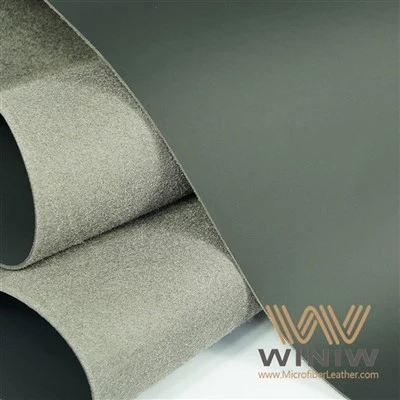
To successfully import microfiber leather USA, procurement directors must accurately classify the 3D sea-island polyethylene terephthalate (PET) substrate under the correct Harmonized System (HS) code. Proper technical classification between Chapter 56 (Non-wovens) and Chapter 39 (Plastics) directly dictates the applicable faux leather tariffs, mitigating unnecessary duties and preventing costly United States Customs and Border Protection (CBP) cargo holds.
Technical Classification: HS 5603 (Non-wovens) vs. HS 3921 (Plastics)
Determining the exact synthetic leather HS code depends entirely on the weight ratio and physical structure of the polyurethane (PU) coating relative to the PET base. CBP import specialists evaluate whether the plastic layer is visible to the naked eye or if the material retains the essential character of a textile.
Standard dry-laminated PU, where a pre-formed plastic film is glued to a woven backing, typically classifies under Heading 3921. Conversely, engineered microfiber utilizes a DMF-free wet coagulation process. The water-borne polyurethane is impregnated directly into the micro-denier (≤ 0.01 dtex) non-woven core. If the PU serves merely as a binder and the non-woven matrix dictates the material's physical properties (e.g., maintaining an EN ISO 3377-2 tear strength of ≥ 60 N), it can often be legally classified under Heading 5603.
| Material Specification | Coating Architecture | Primary HS Code Category | Standard US Import Duty (Est.) |
| Impregnated Microfiber | PU completely embedded in PET core | 5603.14 (Non-wovens, > 150 g/m²) | Free - 0% (Subject to 301) |
| Cellular Coated Faux Leather | Visible porous PU top layer | 3921.13 (Polyurethanes, cellular) | 4.2% - 6.5% |
| Non-Cellular Coated Textile | Solid PU film laminated on fabric | 5903.20 (Textile fabrics coated) | 7.5% - 8.5% |
Note: Base duty rates exclude ad valorem additions from Section 301. Always verify exact rulings with a licensed customs broker.
Procurement & Logistics Notice: Incorrect HS classification triggers immediate CBP audits and retroactive tariff bills. To secure exact material composition breakdowns (e.g., 60% PET, 40% PU) for your Commercial Invoice, validate your structural specifications with our engineering team via our Contact Us portal.
Mitigating Section 301 and Anti-Dumping Risks
When auditing the supply chain for a US import strategy, CPOs must account for Section 301 tariffs applied to Chinese-origin goods. Structuring a compliant Bill of Materials (BOM) requires absolute transparency in factory documentation. WINIW International Co., Limited provides detailed Technical Data Sheets (TDS) and Material Safety Data Sheets (MSDS) specifying exact chemical formulations, confirming the absence of restricted volatile organic compounds (≤ 10 mg/kg VOC per VDA 277).
Providing CBP with precise laboratory data-such as ISO 2411 peeling strength limits and SATRA TM344 hydrolysis resistance metrics-proves the industrial grade of the textile, preventing misclassification into higher-taxed consumer goods categories. By documenting the exact manufacturing process (e.g., automated spectrophotometric dyeing yielding ΔE ≤ 0.82), importers establish a clear, legally defensible audit trail.
Prevent container holds at US ports. Secure compliant Commercial Invoices and ISO 9001 certified physical test reports for your next bulk shipment by contacting our logistics division through the Contact Us page today.
Frequently Asked Questions (FAQ)
Q: What is the correct synthetic leather HS code for US imports?
A: It depends on the structural ratio of plastic to textile. Wet-coagulated microfiber with an impregnated core often falls under 5603.14 (Non-wovens), while materials with a distinct, visible cellular polyurethane top layer are typically classified under 3921.13 (Plastics).
Q: How do faux leather tariffs impact landed costs in the USA?
A: Classification drives the base duty (ranging from 0% to 8.5%). Additionally, materials manufactured in China are currently subject to Section 301 ad valorem tariffs (often 25%). Accurate HS coding prevents overpayment and illegal duty evasion penalties.
Q: Can I legally reduce duties when I import microfiber leather USA?
A: Yes, by providing CBP with precise technical specifications. Submitting factory TDS documents that prove the PU is merely a binder for the non-woven matrix can justify classification under Chapter 56 (Non-wovens), which frequently carries a lower baseline duty than Chapter 39 (Plastics).