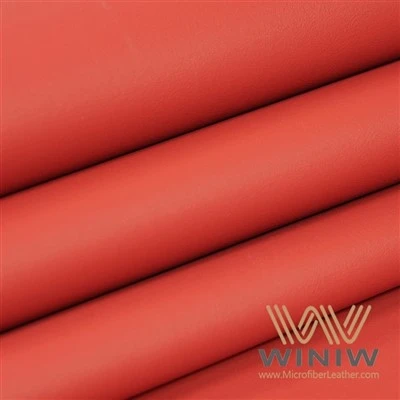
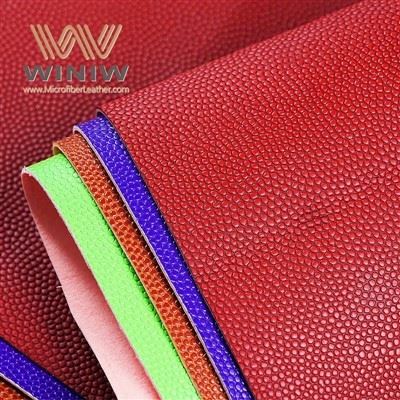
EU standard synthetic leather mandates strict adherence to both EU REACH Annex XVII restrictions and the Zero Discharge of Hazardous Chemicals (ZDHC) Manufacturing Restricted Substances List (MRSL). Utilizing a 100% water-borne coagulation process, WINIW International Co., Limited engineers 3D sea-island PET substrates that yield 0 ppm DMF residue and eliminate heavy metal contamination, ensuring immediate customs clearance for European automotive and footwear OEMs.
ZDHC MRSL and EU REACH Annex XVII Compliance
Securing European market entry requires shifting procurement from standard solvent-based polyurethane to verifiable aqueous systems. Standard PU relies on Dimethylformamide (DMFa) and toluene during the coagulation phase. While thermal curing at 150°C evaporates the bulk of these solvents, 500 to 1500 mg/kg of DMFa remains trapped within the polymer matrix, resulting in immediate failure under EU customs chemical audits.
WINIW eliminates this regulatory bottleneck by deploying a solvent-free, polyether-based aqueous dispersion. This physical replacement of halogenated solvents with pure H₂O during polymerization ensures the substrate passes all 240+ Substances of Very High Concern (SVHC) screening protocols. To guarantee structural compliance without relying on restricted plasticizers, engineering teams sourcing Eco-friendly faux leather Europe must mandate ISO 17025 documentation. You can cross-reference our zero-discharge batch testing data directly on our Certificate database.
The 3 Core Chemical Audits (EN 16778 & EN 14362-1)
European customs authorities do not accept subjective sustainability claims. A compliant Bill of Materials (BOM) strictly requires three specific laboratory reports verified by independent Gas Chromatography-Mass Spectrometry (GC-MS):
- REACH SVHC Declaration: Mathematically proves all restricted chemicals (including phthalates and organotins) remain ≤ 0.1% (w/w).
- ZDHC Level 3 MRSL Certification: Verifies the factory's chemical inventory and wastewater discharge contain zero hazardous inputs.
- EN 16778 DMFa Quantification: Confirms an absolute 0 mg/kg residual Dimethylformamide in the finished textile.
| Eco-Toxicological Parameter | Traditional Solvent PU | WINIW EU Standard Microfiber | Testing Protocol |
| DMFa Residue | 500 - 1500 mg/kg | 0 mg/kg (Non-detectable) | EN 16778 |
| Total Phthalates (SVHC) | > 0.1% by weight | < 0.005% | ISO 14389 |
| Restricted Azo Colorants | Risk of > 30 ppm | 0 ppm | EN 14362-1 |
| Total Heavy Metals (Pb, Cd) | Variable | < 10 mg/kg | EN 16711-1 |
| ZDHC MRSL Conformance | Level 0 | Level 3 | Wastewater Audit |
Eliminating these toxic binders does not degrade mechanical integrity. The 3D electrospun non-woven core maintains an ISO 2411 peeling strength of ≥ 30 N/3cm and withstands > 100,000 Martindale abrasion rubs (EN ISO 12947-2), mathematically matching natural calfskin.
Procurement & QA Notice: Prevent port rejections and container holds across European borders. Upgrade your BOM to a verified REACH microfiber today by submitting your structural specifications and downloading our ISO 9001 factory TDS via our Certificate portal.
Frequently Asked Questions
Q: What makes EU standard synthetic leather different from standard PU?
A: EU-compliant material utilizes DMF-free water-borne polyurethane, guaranteeing non-detectable levels (0 mg/kg) of SVHCs per EU REACH limits. Standard PU relies on toxic halogenated solvents that remain trapped inside the material matrix and continuously off-gas.
Q: Why is ZDHC compliance required alongside REACH for eco-friendly faux leather Europe?
A: REACH regulates the final chemical residue present in the end product, while ZDHC controls the entire manufacturing facility. ZDHC compliance ensures zero discharge of hazardous chemicals into wastewater during the 3D sea-island PET fiber coagulation process.
Q: What chemical test proves REACH microfiber compliance?
A: QA managers must request third-party Gas Chromatography-Mass Spectrometry (GC-MS) audits, specifically referencing EN 16778 for DMFa residue limits and EN 14362-1 for the absence of restricted azo colorants, ensuring total chemical compliance before export.