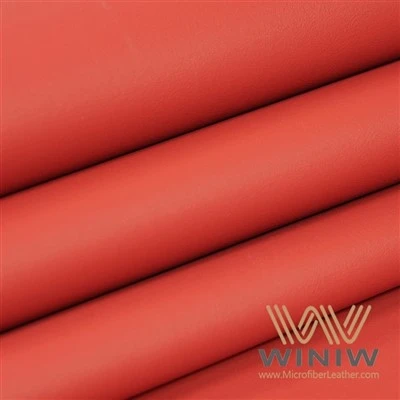
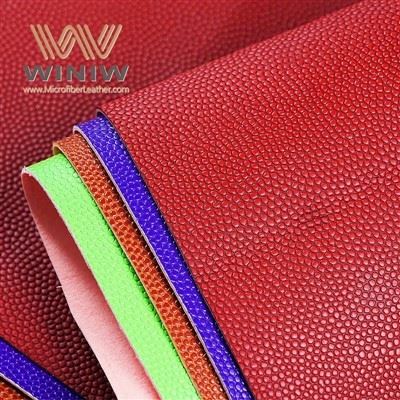
Upper materials for occupational safety footwear must withstand severe mechanical stress, requiring strict adherence to EN ISO 20345 testing protocols. Engineering-grade microfiber synthetic leather structurally exceeds these minimum requirements, achieving a tear strength of ≥ 120 N and a tensile strength exceeding 1000 N through its high-density sea-island fiber architecture.
EN ISO 20345 Tensile and Tear Mechanics
The structural integrity of a safety boot upper directly dictates its field survival under extreme mechanical impact, torsion, and puncture forces. Standard woven PU leather fails rapidly under severe tension due to its linear and flat fiber alignment. Microfiber leather prevents catastrophic structural failure by utilizing a three-dimensional electrospun polyethylene terephthalate (PET) matrix deeply impregnated with polyether-based polyurethane.
This random, interlocking fiber geometry distributes applied mechanical stress uniformly across both the warp and weft axes, ensuring the material will not tear even when breached by sharp industrial debris.
Procurement & QA Notice: Need to validate physical stress parameters for your next safety boot production line? Request a physical sample roll and our ISO 9001 certified laboratory Technical Data Sheet (TDS).
Request Physical Swatches & Lab TDS Report tear strength synthetic leather
Physical Property Matrix: Standard Requirements vs. WINIW Microfiber
Sourcing from a direct, verified EN ISO 20345 leather supplier guarantees substrate compliance before CAD/CAM cutting begins. The following matrix compares the baseline EN ISO 20345 upper material physical requirements against the engineered specifications of WINIW 1.8mm safety shoe microfiber.
| Metric | Testing Protocol | EN ISO 20345 Baseline | WINIW Microfiber (1.8mm) |
| Tear Strength (Warp/Weft) | EN ISO 3377-2 | ≥ 60 N | ≥ 120 N |
| Tensile Strength | EN ISO 3376 | ≥ 15 N/mm² | ≥ 25 N/mm² |
| Peeling Strength | ISO 2411 | N/A | ≥ 40 N/3cm |
| Bally Flexing Resistance | EN ISO 5402-1 | 100,000 cycles (Dry) | > 150,000 cycles (Dry) |
| Water Vapor Permeability | EN ISO 20344 | ≥ 0.8 mg/(cm²·h) | ≥ 2.5 mg/(cm²·h) |
| Hydrolysis Resistance | SATRA TM344 | Baseline | > 5 Weeks (70°C, 95% RH) |
Eliminating Delamination in Occupational Footwear
Beyond raw tear data (N values), the adhesion between the base substrate and the surface resin is strictly regulated for high-stress applications. Safety footwear operates in high-moisture, abrasive, and chemically compromised environments.
WINIW microfiber leather achieves an ISO 2411 peeling strength of ≥ 40 N/3cm, far exceeding the delamination thresholds of standard split leather or low-grade synthetics. The DMF-free coagulation process eliminates chemical weak points within the polymer matrix, ensuring high resistance to oil, acid, and alkali exposure common in heavy industrial workplaces. The continuous roll format (1.37m width) maintains a rigid thickness tolerance of ±0.05mm, guaranteeing identical tensile performance across every die-cut vamp and quarter component.
Initiate Custom Thickness Engineering & Request Wholesale Quotation for Safety Shoes materials
Frequently Asked Questions (FAQ)
Q: What is the EN ISO 3377-2 requirement for safety shoe tear strength?
A: Under EN ISO 3377-2, safety footwear upper materials must achieve a minimum tear strength of 60 N. Engineering-grade microfiber leather easily surpasses this threshold, consistently recording ≥ 120 N due to its highly dense, three-dimensional sea-island non-woven structure.
Q: Why does microfiber leather have higher tensile strength than standard PU?
A: Standard PU uses a flat woven or knitted polyester backing. Microfiber utilizes an electrospun, interlocking 3D fiber matrix deeply coagulated with polyurethane resin. This volumetric structural integration evenly distributes mechanical stress, drastically increasing overall tensile capacity.
Q: Does tear strength synthetic leather pass EN ISO 20345 water vapor tests?
A: Yes. The alkaline reduction process during microfiber manufacturing creates millions of microscopic pores throughout the polyurethane matrix. This guarantees a water vapor permeability exceeding 2.5 mg/(cm²·h), strictly conforming to EN ISO 20344 thermal regulation mandates.