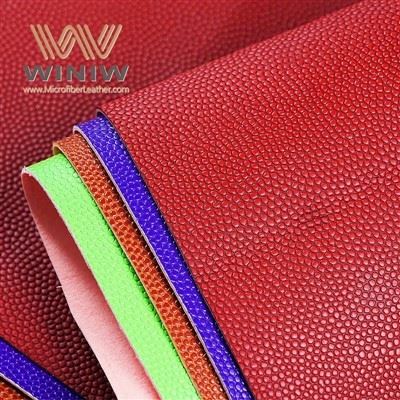
Multi-colored sneaker assemblies suffer from catastrophic dye migration (cross-staining) when adjacent panels are exposed to moisture, lactic acid from human sweat, or mechanical friction. Engineering-grade non-bleeding microfiber leather eliminates this structural defect via high-temperature disperse dyeing, locking colorants directly into the polyurethane matrix to consistently achieve ISO 105 Grade 4-5 color fastness.
The Chemistry of High-Temperature Dye Fixation
The structural failure of natural split suede and standard PU leather in high-moisture environments originates from surface-level dyeing chemistry. Chrome-tanned hides utilize acid dyes that form weak ionic bonds with collagen fibers. When subjected to liquid water or alkaline solutions, these bonds sever. The detached dye molecules act as free radicals, migrating outward and permanently staining adjacent white meshes, laces, or EVA midsoles.
Microfiber suede prevents this migration through its three-dimensional sea-island polymer architecture. During the manufacturing process, ultra-fine polyethylene terephthalate (PET) fibers (≤ 0.02 denier) are coagulated with a DMF-free polyurethane (PU) resin. Using high-temperature, tension-controlled dyeing vats operating at ≥ 130°C, disperse dyes are forced deep into the microporous network of the substrate. The pigment chemically bonds within the synthetic matrix rather than superficially coating the surface, ensuring permanent color retention regardless of external solvent exposure.
Procurement & QA Notice: Validating dye migration resistance for a new multi-color sneaker prototype? Request a physical swatch book and our complete laboratory Technical Data Sheet (TDS).
Request Physical Swatches & Lab TDS Report for colorfast faux suede
ISO 105 and ISO 11640 Testing Data: Quantitative Benchmarks
For QA/QC managers evaluating upper materials, subjective visual inspections are invalid. Material specification requires quantitative verification against international mechanical friction and chemical exposure standards.
The following matrix contrasts the laboratory testing results of standard natural dyed suede against engineering-grade microfiber suede.
| Physical Property / Metric | Standard Natural Suede | Premium Microfiber Suede | Testing Protocol |
| Color Fastness to Rubbing (Dry) | Grade 2 - 3 | Grade 4 - 5 | ISO 11640 (Veslic, 500 cycles) |
| Color Fastness to Rubbing (Wet) | Grade 1 - 2 (Severe Bleed) | Grade 4 - 5 | ISO 11640 (Veslic, 250 cycles) |
| Color Fastness to Perspiration | Grade 2 | Grade 4 - 5 | ISO 105-E04 |
| Color Fastness to Water | Grade 2 | Grade 4 - 5 | ISO 105-E01 |
| Color Migration into PVC/PU | High Risk | Zero Transfer | ISO 15701 |
| Peeling Strength | N/A (Solid hide) | ≥ 30 N/3cm | ISO 2411 |
Engineering Zero-Defect Multi-Panel Uppers
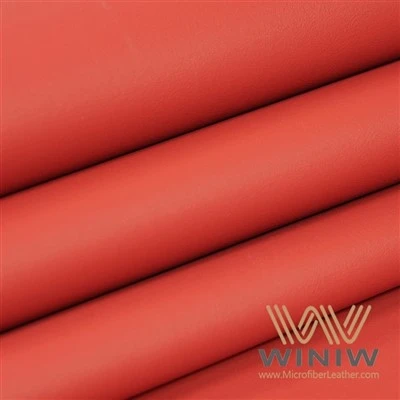
Integrating high-contrast colorways (e.g., a deep red suede quarter panel stitched directly over a white textile vamp) dictates a zero-tolerance policy for color transfer. Applying chemical top-coat fixatives to standard suede alters the tactile nap and only delays migration until the coating degrades under physical flexing (EN ISO 5402-1).
By sourcing a certified non-bleeding microfiber leather directly from the manufacturing line, footwear R&D engineers secure permanent structural colorfastness. The material rapidly absorbs and transmits moisture (water vapor permeability > 400 g/m²/24h) while strictly containing its internal dye structure, maintaining absolute color boundary integrity during both transit in high-humidity shipping containers and peak athletic use.
Initiate Custom Color Matching & Request Wholesale Quotation
Frequently Asked Questions (FAQ)
Q: What causes dye migration in multi-colored sneakers?
A: Dye migration occurs when materials utilize weak anionic surface dyes. Upon exposure to moisture, heat, or lactic acid from sweat, these chemical bonds break. The unattached dye molecules dissolve and migrate rapidly into adjacent light-colored meshes, foams, or lining fabrics.
Q: How is ISO 105 color fastness tested for footwear materials?
A: Laboratories utilize tests like ISO 11640 (Veslic rubbing) and ISO 105-E04 (perspiration). A standardized felt pad or multifiber fabric is rubbed against the material or soaked in artificial sweat under specific pressure. The resulting color transfer is graded against a standard greyscale from 1 to 5.
Q: Why does high-temperature disperse dyeing prevent color bleeding?
A: At temperatures exceeding 130°C, disperse dyes fully penetrate the three-dimensional sea-island PET and polyurethane matrix. The colorant structurally bonds with the core synthetic fibers rather than sitting on the surface, making it impervious to water or sweat-induced separation.