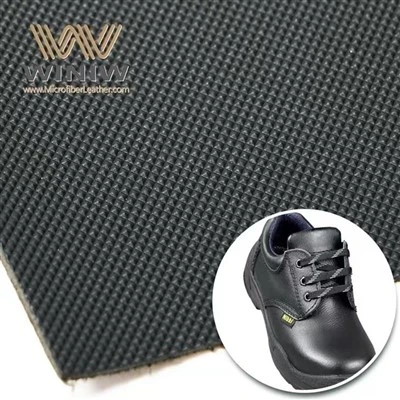
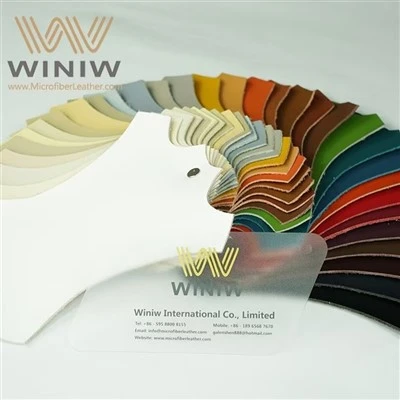
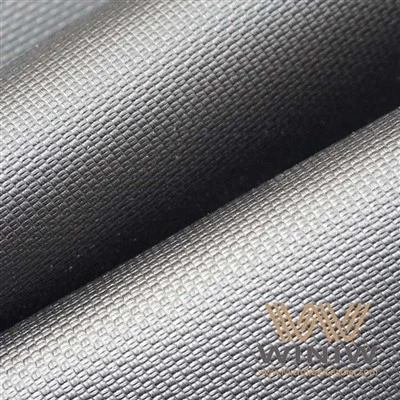
At continuous -20°C exposure, standard polyester-based polyurethane undergoes structural crystallization, leading to catastrophic surface rupture under mechanical load. Engineering-grade microfiber synthetic leather prevents this thermodynamic failure via a polyether-based sea-island matrix, maintaining a glass transition temperature (Tg) below -35°C to guarantee zero flexural cracking in extreme winter environments.
Polymer Mechanics at Sub-Zero Temperatures
The primary failure mode of synthetic textiles in arctic climates is the embrittlement of the surface coating layer. Standard commercial PU utilizes ester-linked resins applied to a flat knitted backing. As ambient temperatures drop below 0°C, these polymer chains rigidly align, drastically reducing the material's elastic modulus. When subjected to sudden compressive force-such as an occupant entering a frozen vehicle cabin or a worker flexing a safety boot-the hardened surface shears away from the base fabric.
WINIW microfiber leather solves this through the volumetric integration of polyether polyurethane into a 3D electrospun polyethylene terephthalate (PET) core. Polyether molecular chains inherently resist low-temperature crystallization. Because the resin fully impregnates the dense non-woven core, the composite acts as a unified monolithic substrate. It distributes mechanical stress across millions of micropores rather than localizing tension on a rigid, frozen surface film.
Procurement & QA Notice: Validating sub-zero flexural endurance for your upcoming winter footwear or cabin trim? Request a physical sample roll and our ISO 9001 certified laboratory Technical Data Sheet (TDS).
Request Physical Swatches & Lab TDS Report for Low temperature faux leather
Quantitative Data: Sub-Zero Bally Flex Testing
Subjective cold weather claims are invalid in Tier 1 automotive and footwear QA. Material specifications dictate quantitative measurement inside calibrated environmental test chambers. The CFFA-6a (Cold Crack Resistance) and modified EN ISO 5402-1 (Bally Flexing at -20°C) protocols establish the industrial safety benchmark.
| Substrate Thickness | SAC at 1000 Hz (Engine/Road) | SAC at 2000 Hz (Wind) | SAC at 4000 Hz (High-Frequency) | Optimal Structural Application |
| 0.6mm Micro Suede | 0.15 | 0.35 | 0.55 | Sun visors, A/B/C pillar trim |
| 0.8mm Micro Suede | 0.22 | 0.45 | 0.65 | Standard headliners, Door panels |
| 1.2mm Micro Suede | 0.30 | 0.55 | 0.75 | Premium acoustic ceiling arrays |
| Standard PVC (1.2mm) | < 0.05 | < 0.05 | < 0.10 | Highly reflective (Acoustic failure) |
Structural Integrity for Winter Automotive Applications
Specifying materials for continuous winter operation requires strict adherence to these thermal thresholds. For commercial automotive procurement, standard PVC and PU fail immediately when an occupant exerts point-load pressure on a frozen seat bolster.
Utilizing an engineered Auto upholstery for cold weather ensures the substrate flexes synchronously with the underlying acoustic foam, eliminating warranty claims for cracked side bolsters and fractured steering wheel covers. The DMF-free formulation also ensures that continuous thermal cycling (from -20°C overnight freezing to +25°C active cabin heating) will not induce VOC off-gassing or structural delamination.
Frequently Asked Questions (FAQ)
Q: How is cold crack resistance tested in synthetic leather?
A: Laboratories utilize CFFA-6a or ASTM D2097 protocols. The material is conditioned in an environmental chamber at -20°C (or lower) for 24 hours. A mechanical roller or flexometer then subjects the frozen substrate to continuous bending to check for surface rupture or structural delamination.
Q: Why does regular PU leather crack in the winter?
A: Standard PU leather uses polyester-based resins that crystallize and harden below 0°C. When this rigid polymer is subjected to physical stress, it lacks the elasticity to absorb the mechanical load, causing the superficial coating to fracture and separate from its base fabric.
Q: At what temperature does microfiber leather begin to crack?
A: Engineering-grade microfiber utilizes polyether-based polyurethane, pushing its glass transition temperature (Tg) below -35°C. In standardized testing, it successfully endures over 80,000 Bally flexing cycles at -20°C without exhibiting any micro-cracking, structural degradation, or loss of peeling strength.