Microfiber suede is an engineered acoustic textile utilizing an alkali-reduced sea-island microporous architecture that actively dissipates high-frequency acoustic waves. When applied as an automotive headliner, this porous network achieves a Sound Absorption Coefficient (SAC) > 0.65 at 4000 Hz, directly reducing cabin Noise, Vibration, and Harshness (NVH) metrics without requiring excessive mass.
Products Description
The structural mechanics of an acoustic faux leather directly dictate its NVH damping capacity. Standard PVC or solid PU interior materials reflect acoustic energy, exacerbating cabin reverberation and amplifying road noise. Conversely, microfiber suede relies on an electrospun polyethylene terephthalate (PET) matrix.
Following the alkaline reduction of the "sea" polymer during production, millions of interconnected micropores remain within the polyurethane core. When acoustic waves penetrate this matrix, frictional resistance between the vibrating air molecules and the ultra-fine "island" fibers (≤ 0.02 denier) converts acoustic energy into trace thermal energy. This physical mechanism effectively attenuates high-frequency wind and tire noise before it reaches the occupant's ear.
Procurement & QA Notice: Validating NVH parameters for a Tier 1 interior assembly? Request a physical sample roll and our certified laboratory Technical Data Sheet (TDS).
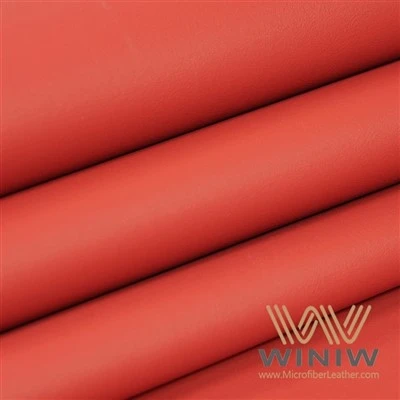
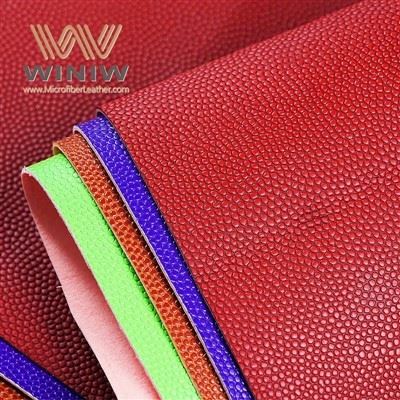
Physical Swatches & Lab TDS Report for Sound absorbing automotive suede
NVH Data: Thickness vs. Sound Absorption Coefficient (SAC)
For automotive NVH engineers specifying continuous roll goods for Headliner material wholesale, material thickness directly correlates with acoustic attenuation at specific frequency bands. Acoustic impedance testing (ISO 10534-2 impedance tube method) quantifies this absorption efficiency.
The following matrix plots the acoustic absorption capacity of engineering-grade micro suede across critical automotive frequency bands.
| Substrate Thickness | SAC at 1000 Hz (Engine/Road) | SAC at 2000 Hz (Wind) | SAC at 4000 Hz (High-Frequency) | Optimal Structural Application |
| 0.6mm Micro Suede | 0.15 | 0.35 | 0.55 | Sun visors, A/B/C pillar trim |
| 0.8mm Micro Suede | 0.22 | 0.45 | 0.65 | Standard headliners, Door panels |
| 1.2mm Micro Suede | 0.30 | 0.55 | 0.75 | Premium acoustic ceiling arrays |
| Standard PVC (1.2mm) | < 0.05 | < 0.05 | < 0.10 | Highly reflective (Acoustic failure) |
Physical Stability and Chemical Compliance
Integrating acoustic materials into the vehicle ceiling requires strict adherence to thermal, flammability, and chemical regulations. Standard open-cell acoustic foams degrade under continuous thermal load (frequently exceeding 80°C on roof panels) and off-gas volatile organic compounds.
Our acoustic microfiber operates as a stable, single-layer composite. Manufactured using DMF-free water-borne polyurethane, it guarantees VDA 277 VOC emissions remain ≤ 10 mg/kg. Furthermore, the high-density PET core inherently passes FMVSS 302 horizontal burn rate requirements (≤ 102 mm/min) while maintaining a strict ±0.05mm gauge tolerance. This exact dimensional stability prevents structural sagging or delamination during high-temperature vacuum forming and continuous field vibration.
Frequently Asked Questions (FAQ)
Q: Does microfiber suede absorb sound better than genuine leather?
A: Yes. Genuine leather possesses a dense, solid grain surface that reflects acoustic energy, increasing cabin echo. Microfiber suede features millions of interconnected micropores derived from its sea-island structure, physically trapping air to convert high-frequency sound waves into thermal energy.
Q: What is the optimal microfiber thickness for an automotive headliner?
A: For optimal NVH sound absorption and vacuum forming stability, a 0.8mm to 1.2mm thickness is structurally specified. This gauge provides a Sound Absorption Coefficient (SAC) exceeding 0.65 at 4000 Hz without adding excessive weight to the vehicle roof.
Q: Is acoustic faux leather compliant with VDA 277 emission standards?
A: Yes. Engineering-grade acoustic microfiber utilizes DMF-free, water-borne polyurethane coagulation. This eliminates residual solvents, ensuring total VOC emissions remain strictly ≤ 10 mg/kg, passing VDA 277 limits and preventing interior windshield fogging (DIN 75201).