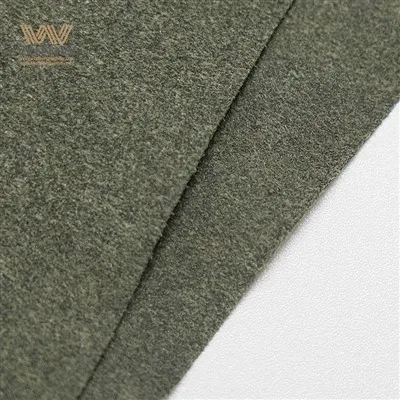
Microfiber Suede Built Around Safety Shoe Upper Construction
Our 1.8–2.0 mm microfiber synthetic suede is positioned for safety shoe uppers that need enough body around reinforced footwear structures while remaining workable through cutting, stitching, lasting and repeated forefoot movement.
Intended for structured safety-footwear upper development.
Current page lists 55% nylon and 45% polyurethane.
Provides a defined basis for upper-panel cutting plans.


Balance Upper Support with Forefoot Flexibility
A safety shoe upper cannot be selected only for softness. Material around the toe, quarters and lacing structure needs enough body to work with reinforced components, but it must also tolerate repeated movement at the forefoot without creating excessive stiffness.
The current product is specifically marketed around the 1.8–2.0 mm range for safety-shoe upper construction. We recommend confirming the final gauge on a prototype because toe caps, foam, lining and reinforcement layers affect the finished upper.
- Check folding at the main toe-bend line
- Evaluate fit around the safety toe structure
- Review seam bulk where panels overlap
- Check the material after lasting
- Compare upper shape before and after flexing
Construction, Gauge, Width and Commercial Reference
The current online product page lists the following information. Because several legacy fields contain broader generic ranges, the approved sample and TDS should be used to establish the final order specification.
| Material | Microfiber suede leather |
|---|---|
| Listed Composition | 55% Nylon + 45% Polyurethane |
| Product Target Gauge | 1.8–2.0 mm for safety-shoe upper applications |
| Legacy Parameter Range | Current page also lists 0.8–2.0 mm; confirm the ordered gauge before production |
| Usable Width | 137 cm / 54 inches |
| Listed Colors | Yellow, green, pink, black and customized colors |
| Surface | Suede / microsuede surface for footwear-upper evaluation |
| Customization | Custom color and project-specific requirements can be discussed |
| Listed MOQ | 300 linear meters |
| Listed Lead Time | 10–20 days; reconfirm for color and construction requirements |
Define the Test Method Before Making Durability Claims
The legacy page describes the material as breathable, waterproof, highly durable, anti-mildew and resistant to oils, sweat and some industrial contaminants. Those descriptions should not be converted into guaranteed performance without matching them to the exact SKU, test method, limit and applicable report.
Bally Flexing
Specify test temperature, cycle count and failure criterion for repeated toe-bend evaluation.
Abrasion
State whether Martindale, Taber or another method is required, together with load and endpoint.
Tear & Tensile
Confirm method, direction and minimum acceptance limits based on the upper construction.
Peel Strength
Use the required specimen width, direction and test speed when evaluating layer adhesion.
Hydrolysis
Define temperature, humidity and conditioning duration if aging resistance is required.
Oil & Chemical Contact
Identify the actual chemical, concentration, exposure time and visual or mechanical acceptance criteria.
Inspect Both the Suede Face and the Structural Base
A safety-shoe upper is affected by more than the visible suede nap. Surface uniformity influences appearance, while the underlying microfiber structure influences cutting, stitching, flexing and dimensional behavior.
During sampling, evaluate the material from both sides. Check nap consistency, thickness, edge behavior and backing structure before approving the material for bulk upper production.
- Compare nap direction and surface density
- Check shade from different viewing directions
- Inspect the microfiber base after cutting
- Review edge stability around small panels
- Confirm the same construction on the bulk sample


Approve Color on the Final Suede Nap
Microsuede changes visually as the nap direction moves. This is important for safety-shoe factories cutting multiple upper panels from the same roll: pieces cut in different orientations may appear lighter or darker even when the material comes from one dye lot.
We recommend controlling cutting direction for highly visible upper sections and approving color on the same surface construction planned for production.
- Approve color with controlled nap direction
- Define panel orientation before bulk cutting
- Compare center and edge shade consistency
- Use a physical reference for custom colors
- Retain an approved swatch for incoming QC
Run Cutting, Stitching and Lasting Tests Before Bulk Approval
A small material swatch cannot reproduce the stress created by a complete safety-shoe upper. Narrow eyelet pieces, reinforcement overlaps, curved quarters and the safety-toe transition can all change how the suede behaves during production.
Check panel dimensions, cut edges and nap orientation.
Test needle, thread, seam allowance and stitch density.
Review stretch around the toe cap and curved upper zones.
Inspect toe creasing, seams and surface appearance after movement.
Use the Material According to the Finished Shoe Structure
This microfiber suede is intended primarily for safety-shoe upper development. Its suitability still depends on the finished footwear design, required protection level, reinforcement system and customer-specific material tests.
Industrial Safety Shoes
Evaluate 1.8–2.0 mm suede for structured upper panels and repeated forefoot movement.
Work Boots
Review panel support, seam construction and environmental exposure for heavier footwear.
Protective Trainers
Balance upper body with lower-profile construction and walking flexibility.
Reinforced Upper Panels
Use prototype trials for toe, quarter and lacing-zone material selection.
OEM Footwear Programs
We can review gauge, color, surface and required test methods around the buyer's shoe design.

Lock the Approved Sample to the Production Specification
For safety-footwear sourcing, the approved swatch should be connected to the product specification rather than treated as a color reference only. Important fields may include composition, thickness and tolerance, usable width, weight, color or nap, backing, roll length and the application-specific physical tests agreed for the program.
We recommend defining the test method, unit, sample condition and acceptance limit before bulk production. This makes supplier inspection and incoming QC easier to compare.
From Safety-Shoe Brief to Approved Upper Material
Tell us how the suede will be used rather than sending only a product name. A clearer footwear brief helps us review the most relevant construction for your prototype.
- Safety-shoe or work-boot type
- Upper panel location and construction
- Target thickness and tolerance
- Usable width and estimated annual volume
- Color or physical reference
- Required flex, abrasion, tear or peel method
- Oil, hydrolysis or cold-flex requirement if applicable
- Destination market and project schedule
Request Safety Footwear Material Samples
Send us the footwear application, target gauge, color or nap, width, required test methods, estimated annual volume and project schedule. We can review the relevant sample, TDS and available test evidence for your safety-footwear program.
Request Safety Footwear Material SampleQuestions About 1.8–2.0 mm Safety Footwear Microfiber Suede
This product is specifically positioned around a 1.8–2.0 mm gauge for structured safety-shoe uppers. Final suitability should still be checked with the toe-cap structure, lining, reinforcement, panel pattern and required flex performance of the finished shoe.
The current product page lists 55% nylon and 45% polyurethane. For an OEM program, confirm the composition and construction on the applicable TDS for the exact sample being approved.
Yes, but the required method, temperature, cycle count and failure criterion should be specified by the buyer. Avoid comparing cycle figures from different methods as though they were equivalent.
Include the exact chemical or aging method, concentration, exposure conditions and acceptance limit in your RFQ. We can then check whether the proposed sample and available evidence match that requirement.
Yes. The current page lists yellow, green, pink, black and customized colors. A physical reference is preferred when a specific production shade is required. Color should be approved on the final suede surface with a controlled nap direction.
Please provide the footwear type, upper-panel application, target thickness, width, color or nap, required test methods, estimated annual volume, destination market and expected production schedule.
Hot Tags: application-specific microfiber suede for safety footwear, microfiber suede for safety shoes, safety shoe upper material, 1.8mm microfiber suede, 2.0mm synthetic suede, work boot suede material, microfiber suede supplier, microsuede fabric, microsuede furniture, microfiber microsuede, microsuede upholstery fabric, microfiber microsuede fabric, microsuede upholstery