


Ball Cover Material for Humid Conditions
Mildew-Resistant Microfiber Leather for Sports Balls
Mildew-resistant microfiber leather for sports balls is intended for cover panels exposed to wet fields, perspiration, repeated cleaning and enclosed equipment storage. Material approval should combine fungal-resistance evidence with water absorption, coating adhesion, panel conversion and finished-ball testing.
- Soccer and training footballs
- Indoor and outdoor basketballs
- Volleyball and rugby covers
- Medicine and weighted training balls

Approve surface grain, color, tactile feel and panel-forming behavior using the intended ball construction.
Moisture Exposure Chain
Control the Conditions That Allow Mildew to Develop
A laboratory fungal-resistance result does not remove the need for drying, cleaning and ventilated storage after wet use.
Moisture reaches the surface
Rain, wet grass, sweat, mud and wash water create repeated surface exposure.
Organic soil remains
Dirt and body residue can remain in texture valleys, seams and valve areas.
Drying is incomplete
Closed bags, cartons or lockers can retain humidity around the finished ball.
Appearance and odor change
Surface growth, staining or odor can become visible before the next use cycle.
Different Performance Questions
Mildew Resistance, Water Absorption and Cleaning Are Not Interchangeable
Fungal resistance
Examines fungal growth or material deterioration under a named laboratory method and defined incubation conditions.
Water absorption
Measures weight gain or moisture uptake after a stated exposure and finished-ball preparation.
Antibacterial activity
Requires a different test scope; an anti-mildew result should not be presented as proof of antibacterial performance.
Cleaning compatibility
Checks whether a named cleaner changes color, grip, tack, coating adhesion or surface appearance.
Storage control
Reduces residual moisture through drying time, ventilation, clean packaging and warehouse humidity management.
Qualification Baseline
Listed Specifications and the Evidence Needed for Approval
| Selection field | Current product listing | Buyer approval check |
|---|---|---|
| Material construction | Microfiber base with PU surface construction | Composition, backing, coating and finish for the exact offered SKU |
| Thickness | 1.2 mm, 1.4 mm and 1.6 mm; ±0.05 mm listed tolerance | Nominal thickness, tolerance, measuring method and panel-conversion target |
| Roll width | 137 cm listed | Total width, usable width, edge allowance and grain direction |
| Mildew resistance | ASTM G21 and ISO 846 references appear in the current listing | Exact standard and version, test method, organisms, incubation conditions, duration, rating and sample identity |
| Peel or coating adhesion | Performance claim listed, but values differ within the existing page | One agreed method, direction, conditioning, units, minimum limit and current result |
| Impact endurance | Pneumatic impact-cycle claim listed | Fixture, pressure, cycle rate, specimen or ball construction and failure criteria |
| Chemical requirements | REACH and heavy-metal claims listed | Buyer RSL, destination market, laboratory, tested construction, detection limits and report date |
| Commercial terms | Specification-dependent | Sample terms, MOQ, lead time, roll packing and shipment requirements in the quotation |
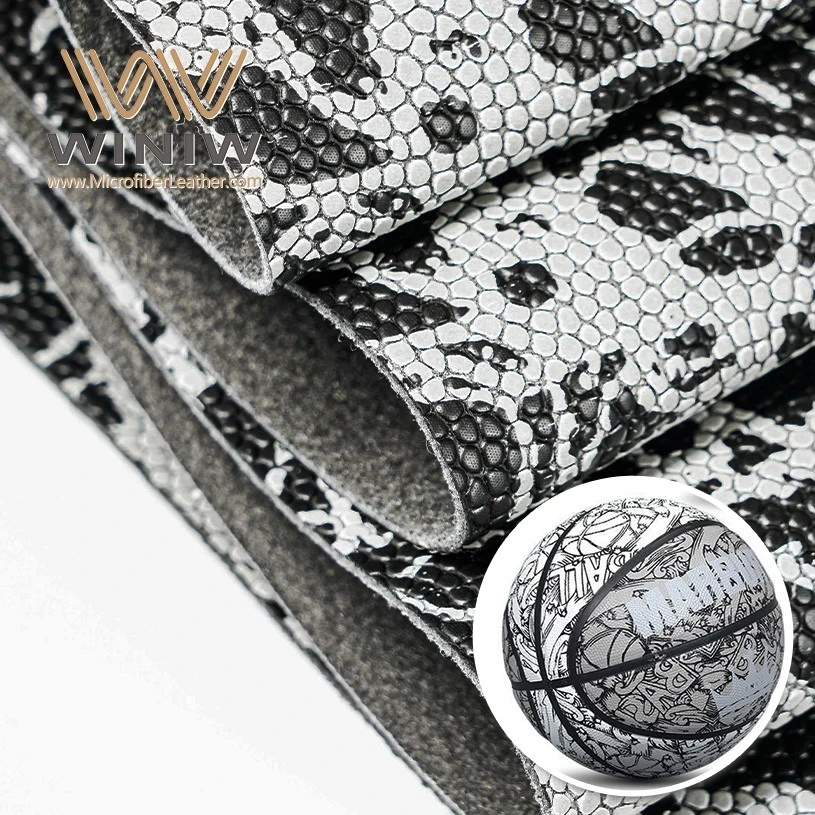
Check grain depth and friction with dry hands, perspiration simulation and the specified cleaner.

Review cutting edges, thickness consistency and surface recovery before panel assembly.
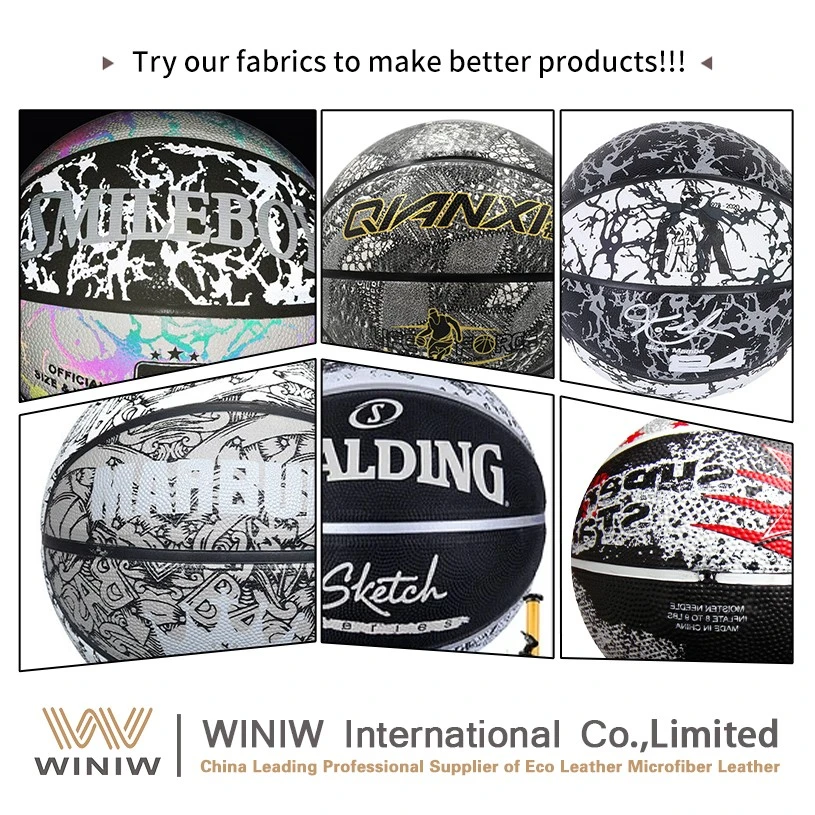
Retain a signed master sample for shade, gloss, texture and tactile comparison.
Sports Ball Construction
Match the Material to the Panel and Assembly Method
- Machine-stitched panels: check needle-hole growth, seam allowance, thread interaction and edge tearing.
- Hand-stitched panels: verify fold behavior, stitch tension and thickness at multi-layer junctions.
- Thermally bonded panels: confirm surface, backing and lamination compatibility with the actual bonding cycle.
- Laminated cover systems: test adhesion after water exposure, inflation cycles and temperature conditioning.
- Deep embossing: assess whether grain depth changes panel thickness, grip, cleaning and print registration.

Use the production foam, backing, adhesive, ink and bonding method when approving the complete cover system.
Ball-Type Selection
Prioritize Different Properties for Each Sports Ball
Wet-field weight and panel bond
Evaluate water absorption, seam or bond integrity, shape retention, rebound and surface change after wet conditioning.
Grip under perspiration
Choose embossing and finish through dry and damp handling tests, abrasion review and repeated cleaner exposure.
Touch, flex and scuffing
Balance soft impact feel with flex recovery, coating adhesion, print durability and outdoor contamination resistance.
Heavy loading and seams
Assess cover stretch, tear propagation, seam strength and adhesion using the intended fill weight and drop cycle.
Conversion Trial
Move from Roll Material to Finished-Ball Approval
Specify
Define ball type, panel build and target market.
Select
Lock thickness, backing, grain, color and finish.
Cut
Check edge quality, direction and panel dimensions.
Assemble
Use production stitching, lamination or bonding.
Condition
Apply wet, humid and cleaner exposures.
Cycle
Test inflation, impact, rebound and shape retention.
Release
Sign the standard and bulk inspection limits.
Request a Sports Ball Material Sample
Send the ball type, panel construction, thickness, grain, color, assembly method, required standards, annual volume and destination market.

Compare custom grain and color on a converted panel because curvature changes reflected color and texture appearance.
OEM Development Inputs
Provide the Variables That Control Sampling
- Ball type, size, use level and indoor or outdoor environment.
- Panel count, cutting direction and assembly process.
- Nominal thickness, usable width, backing and lamination structure.
- Grain reference, tactile target, gloss and physical color standard.
- Logo-printing ink, transfer process and curing conditions.
- Fungal-resistance method, water-absorption target and finished-ball tests.
- Annual volume, first-order quantity, destination and target delivery date.
Quality and Packing
Protect the Approved Material Through Storage and Shipment
Roll inspection
Define usable width, thickness sampling, shade grouping, grain consistency, visible defects, joints and edge condition.
Test traceability
Link the TDS or report to the material code, construction, color, sample date and relevant production or order record.
Moisture-safe packing
Confirm dry roll condition, core, protective wrapping, labels, pallet method and warehouse humidity expectations.
Bulk color control
Use a signed swatch, agreed lighting and lot-separation rules when multiple production batches enter one ball program.
Commercial confirmation
Put MOQ, sample charges, production lead time, packing, shipping mark and required documents in the quotation.
Finished-ball validation
Confirm that roll-material approval is followed by testing on the final laminated, stitched or bonded ball construction.
Standards Scope
Read the Fungal-Resistance Report Before Using the Claim
ASTM G21 determines the effect of fungi on synthetic polymeric materials, while ISO 846 evaluates deterioration of plastics caused by fungi, bacteria or soil microorganisms through specified methods. Test conditioning, organisms, duration and the exact material construction affect how a result should be interpreted.
Technical references: ASTM G21 scope for synthetic polymeric materials, ISO 846:2019 microorganism evaluation, and the FIFA football performance test overview.
Related Material Paths
Compare Ball Cover Performance and Supplier Evidence
Procurement Questions
FAQ for Mildew-Resistant Microfiber Ball Leather
What does an anti-mildew result confirm?
It confirms the tested sample's result under the named fungal-resistance method and conditions. Check the standard version, organisms, incubation period, rating, sample construction and report date before applying the claim.
Does mildew resistance mean the material is waterproof?
No. Fungal resistance and water absorption answer different questions. A sports ball program should specify both properties separately and test water uptake on the intended panel or finished-ball construction.
Which thicknesses are currently listed?
The current listing identifies 1.2 mm, 1.4 mm and 1.6 mm options with a 137 cm roll width. Confirm tolerance, usable width and the selected backing on the quotation and TDS.
How should peel strength be approved?
Agree one test method, specimen direction, conditioning, units and minimum limit. The report should identify the exact coating, microfiber base and lamination structure offered for the ball program.
Can custom colors and ball grains be requested?
Provide a physical color and grain reference together with target gloss, tactile feel, thickness, backing, printing process and quantity. Feasibility, sampling rounds, MOQ and lead time require written confirmation.
What should a ball factory test on the sample?
Test cutting, printing, lamination, stitching or thermal bonding, inflation, rebound, shape retention, water absorption, cleaner exposure and the required fungal-resistance method on a production-representative construction.
How should finished balls be stored after wet use?
Remove visible soil using the approved cleaning method, dry the ball fully and avoid immediate storage in sealed, humid containers. The final maintenance instruction should match the coating and printed finish.
What information is needed for a quotation?
Send the ball type, panel build, thickness, usable width, grain, color, assembly process, performance standards, annual volume, first-order quantity, destination and required delivery date.
Get TDS, Test Scope and a Conversion Sample
Include the intended ball construction and required fungal, water-absorption, adhesion and finished-ball tests for a focused material recommendation.
Hot Tags: mildew-resistant microfiber leather, microfiber ball leather, sports ball leather material, anti-mildew synthetic leather, custom ball leather, microfiber leather supplier, microfiber nappa, winiw microfiber leather, microfiber pu leather, microfiber leather, microfiber leather bags, micro suede leather


