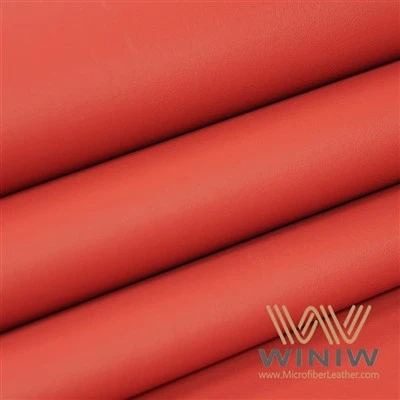
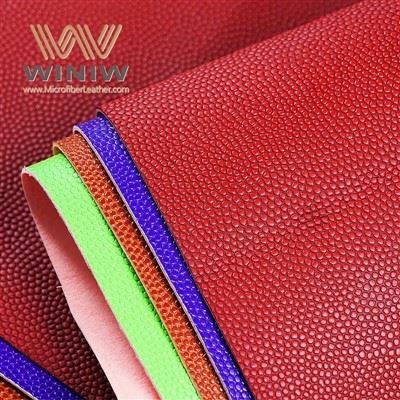
Water-borne microfiber leather uses water-dispersed polyurethane in its synthetic leather construction. It can reduce reliance on organic solvents and eliminate intentionally added DMF from selected manufacturing steps. However, a water-borne coating alone does not establish that the complete material is DMF-free or that the factory has zero DMF emissions.
For footwear, automotive and upholstery applications, material approval must consider chemical requirements alongside abrasion resistance, hydrolysis resistance, coating adhesion and processing performance.
WINIW supplies microfiber leather and PU leather materials for different manufacturing applications. Material construction and chemical requirements should be confirmed before sample approval.
How Water-Borne Microfiber Leather Is Made
Conventional synthetic leather may use solvent-based polyurethane during impregnation or coating. Water-borne polyurethane uses water as its principal dispersion medium, reducing the need for organic solvents in the applicable process.
The finished material can include a microfiber nonwoven substrate, polyurethane impregnation, surface coating, pigments and finishing treatments. The chemical profile depends on the complete construction rather than the surface coating alone.
Microfiber Substrate
The fiber structure and impregnating system influence tear strength, flexibility, thickness stability and handling during manufacturing.
Water-Borne PU Coating
The coating contributes to surface appearance, touch, adhesion and resistance to wear. Its performance depends on resin chemistry, formulation and curing.
Buyers requiring a DMF-free manufacturing route should confirm whether the claim covers both the substrate treatment and the surface coating.
Water-Borne PU vs. Solvent-Based PU Leather
Water-borne and solvent-based polyurethane systems differ in their processing chemistry. Their finished performance depends on the formulation, substrate and production conditions.
| Factor | Water-Borne PU | Solvent-Based PU |
|---|---|---|
| Dispersion medium | Water is the principal dispersion medium. | An organic solvent system is used. |
| DMF use | DMF may be eliminated from selected processes. | Certain conventional PU processes use DMF. |
| Drying | Requires controlled water removal and film formation. | Requires solvent removal and appropriate emission controls. |
| Abrasion resistance | Depends on coating chemistry and construction. | Depends on coating chemistry and construction. |
| Hydrolysis resistance | Requires formulation-specific testing. | Requires formulation-specific testing. |
| Chemical verification | Review chemical inputs and finished-material test results. | Review solvent inputs, emissions controls and finished-material test results. |
Performance comparisons should use materials with equivalent thickness, backing, surface finish and test conditions.
DMF Control and Chemical Compliance
DMF control involves three separate requirements: chemical inputs, finished-material residues and manufacturing emissions. Each requires different supporting evidence.
Chemical Inputs
Formulation records and supplier declarations identify whether DMF is intentionally used in the specified manufacturing process.
Finished-Material Residues
Laboratory testing determines the DMF concentration in a tested material sample. The report should identify the test method, result and reporting limit.
Manufacturing Emissions
Process or facility monitoring is required to support emissions claims within a defined production boundary.
ZDHC MRSL
Applicable chemical inputs must be assessed against the relevant Manufacturing Restricted Substances List requirements.
Water-borne chemistry does not automatically establish ZDHC MRSL conformance or compliance with a buyer's finished-product Restricted Substances List.
For manufacturing chemical requirements, consult the ZDHC Manufacturing Restricted Substances List.
Performance Testing for Water-Borne Microfiber Leather
A suitable material must meet the physical and chemical requirements of its intended application. The polyurethane system, microfiber substrate and finishing process all influence the final result.
| Property | Evaluation | Buyer Requirement |
|---|---|---|
| Abrasion resistance | Applicable Martindale, Taber or customer-specific testing. | Specify test conditions and acceptable wear or appearance changes. |
| Hydrolysis resistance | Specified humidity and temperature aging procedure. | Check cracking, adhesion and other post-aging acceptance criteria. |
| Coating adhesion | Applicable peel or adhesion test. | Confirm the required strength and test conditions. |
| Flex resistance | Specified repeated-flexing procedure. | Check cracking and delamination after the required cycles. |
| DMF residue | Appropriate laboratory chemical analysis. | Confirm the result against the applicable material specification. |
Abrasion and hydrolysis results should not be compared across different test methods or conditioning procedures.
Our quality control process supports material inspection and project-specific specification review.
Applications of Water-Borne PU Leather
Footwear Uppers
Evaluate flexibility, repeated flexing, tear strength, coating adhesion and compatibility with stitching and bonding.
Automotive Interiors
Review abrasion, heat and humidity aging, applicable emissions requirements and compatibility with forming or lamination.
Furniture Upholstery
Specify abrasion resistance, seam performance, cleaning requirements and applicable flame performance.
Bags and Leather Goods
Check surface finish, folding performance, color transfer, edge finishing and sewing compatibility.
Production approval should include testing of the finished material and validation in the intended manufacturing process.
Water-Borne Microfiber Leather Buying Checklist
Before ordering, confirm the material construction, chemical requirements and performance specifications.
- Material: Microfiber substrate, PU system, backing and surface finish.
- Dimensions: Thickness, usable width and required tolerances.
- Chemical requirements: DMF limits, applicable RSL and MRSL requirements.
- Physical performance: Abrasion, hydrolysis, adhesion and flex resistance.
- Appearance: Color reference, texture and approved sample.
- Order requirements: Trial quantity, estimated volume, packaging and destination.
Sample approval: Match the production material to the approved construction, color, finish and applicable test requirements.
Frequently Asked Questions
Not automatically. The substrate, polyurethane formulation and auxiliary chemicals must be reviewed. Finished-material testing is required when a specific DMF residue limit applies.
Water-borne chemistry alone does not establish conformance. The applicable chemical inputs and formulations must be assessed against the relevant ZDHC MRSL requirements.
Durability depends on the formulation, substrate and manufacturing process. Compare abrasion, hydrolysis and adhesion results obtained under equivalent test conditions.
Request relevant chemical-input documentation and finished-material test results. Manufacturing emissions claims require separate process or facility monitoring evidence.
Material development can address application-specific thickness, backing, color, finish and performance requirements. The available construction and test specifications should be confirmed during sample evaluation.
Related Materials and Quality Resources
Explore our material ranges and quality information for your sourcing project.
Request Water-Borne PU Leather Material Support
Tell us your intended application, material construction, required test methods, chemical restrictions and estimated order quantity. Our team can discuss material options, sample evaluation and quotation requirements.
Get Material Support & Quote