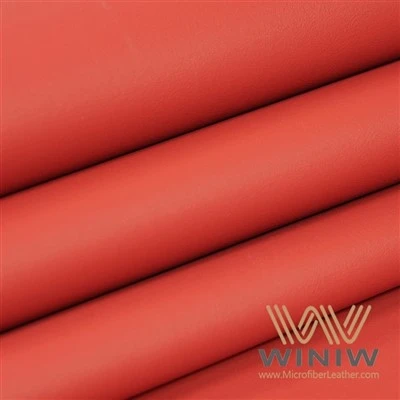
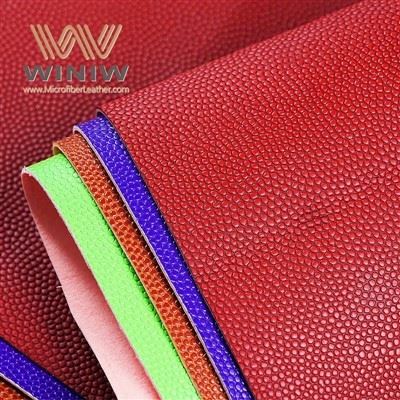
Synthetic leather for structured bags utilizes a high-density 3D sea-island polyethylene terephthalate (PET) matrix that provides exact geometric stiffness and high elastic recovery. For box calf or structured tote applications, this engineered architecture prevents permanent creases and edge collapse, maintaining strict CAD/CAM design tolerances without requiring heavy internal cardboard reinforcements.
Elastic Recovery and Crease Resistance in Assembly
Standard knitted polyurethane (PU) substrates lack Z-axis rigidity. When subjected to the severe mechanical stress of the turn-out process (inverting the bag after internal stitching), knitted PU develops irreversible wrinkles and dead creases.
By utilizing DMF-free polyether polyurethane coagulated within a dense PET matrix, our microfiber achieves a Bally Flexing endurance of > 100,000 cycles (EN ISO 5402-1). The non-woven core distributes mechanical stress circumferentially. This specific structural dynamic delivers a rapid elastic rebound that mirrors natural 1.4mm box calfskin, ensuring the exterior grain returns to a perfectly smooth topography immediately after high-tension folding.
Procurement & QA Notice: Validating structural stiffness for an upcoming box bag prototype? Request a physical sample roll and our ISO 9001 certified laboratory Technical Data Sheet (TDS).
Request Physical Swatches & Lab TDS Report for Shapeable faux leather
Specifying Areal Density (g/m²) for CAD Geometry
To eliminate excessive Bill of Materials (BOM) costs associated with internal EVA foams or resin stiffeners, R&D engineers must align the material's areal density with the target silhouette. The matrix below defines the standard industrial parameters for microfiber substrates across specific handbag categories.
| Areal Density (Weight) | Thickness | Target Bag Silhouette | Structural Yield (EN ISO 3376) |
| 400 - 450 g/m² | 0.8mm - 1.0mm | Soft Hobos, Ruched Clutches | High drape, low resistance |
| 550 - 600 g/m² | 1.2mm - 1.4mm | Totes, Crossbody Bags | Moderate stiffness, self-supporting |
| 700 - 750 g/m² | 1.6mm - 1.8mm | Box Bags, Hard Cases | Maximum rigidity, zero edge collapse |
Skiving and Edge Processing Mechanics
Structured bags require precise edge skiving (mechanically thinning the material edge to ≤ 0.4mm for folding and stitching). Standard PVC and basic woven PU frequently crack, fray, or delaminate when skived because the polyurethane coating separates from the thin base fabric.
Because the sea-island microfiber core is a monolithic block of non-woven PET fibers fully impregnated with polyurethane resin, it maintains absolute structural integrity even when CNC skived. It retains an ISO 2411 peeling strength of ≥ 30 N/3cm. This dimensional stability directly prevents needle deflection and stitch tearing during heavy-duty edge binding, guaranteeing an EN ISO 3377-2 tear strength of ≥ 60 N along the structural seams.
Manufacturing Yield vs. Genuine Leather
Box bags and geometric totes demand large, flawless panels to maintain visual symmetry. Natural calfskin suffers from belly stretch, grain variations, and biological scars, regularly restricting the usable cutting yield to < 65%.
Commercial Synthetic leather for structured bags is supplied in continuous 1.37-meter wide rolls with zero surface defects and uniform tension across the warp and weft. This exact geometric consistency increases automated CNC die-cutting yield to 100%, drastically reducing per-unit material waste for Tier 1 mass production assembly lines.
Frequently Asked Questions
Q: Why is microfiber preferred for structured box bags?
A: Microfiber features a dense 3D sea-island PET matrix. This non-woven architecture provides inherent geometric stiffness and high elastic recovery, preventing edge collapse and irreversible creases when the bag is inverted during manufacturing.
Q: How do I select the correct GSM for a handbag?
A: Specify 400-450 g/m² for soft, draped hobos. For self-supporting totes, utilize 550-600 g/m². For maximum rigidity in hard cases and box bags without internal cardboard stiffeners, specify 700-750 g/m².
Q: Does shapeable faux leather crack during the skiving process?
A: No. The monolithic non-woven core prevents structural delamination when the edge is thinned. Saturated with polyether polyurethane, it maintains an ISO 2411 peeling strength of ≥ 30 N/3cm, ensuring stability for edge binding and consistent finishing.