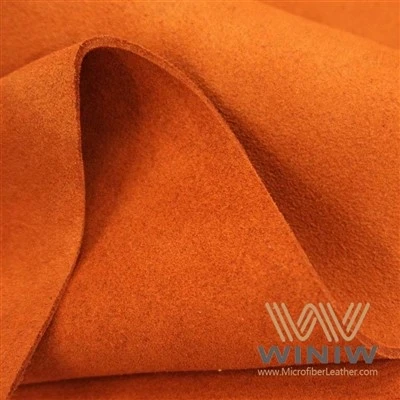
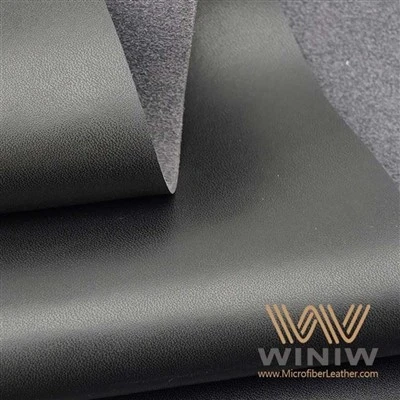
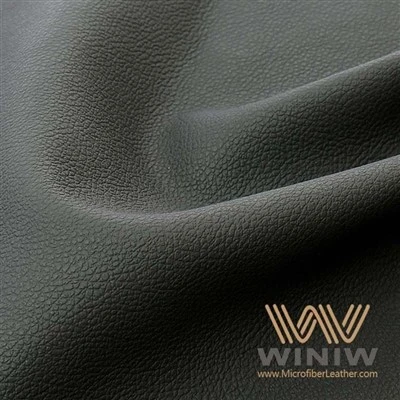
Odorless synthetic leather utilizes a DMF-free, water-borne or 100% solid polyurethane matrix to completely eliminate volatile organic compound (VOC) off-gassing. By replacing traditional halogenated solvents with aqueous dispersions, WINIW International Co., Limited guarantees a strict VDA 270 odor rating of ≤ Grade 2.0, physically preventing pungent chemical emissions in enclosed automotive and indoor environments.
Products Description
Standard solvent-based polyurethane (PU) relies heavily on Dimethylformamide (DMF) and toluene to dissolve the polymer resin before coating the polyethylene terephthalate (PET) fiber base. During the 150°C thermal curing phase, these solvents vaporize, but 500-1500 ppm of DMF inevitably remains trapped within the micropores of the substrate. This residue causes the distinct chemical smell faux leather exhibits upon unboxing, actively releasing hazardous air pollutants (HAPs) when exposed to UV radiation or cabin temperatures exceeding 50°C.
To neutralize this chemical reaction, QA managers evaluating our Special Properties] material lines leverage our strict aqueous coagulation process. This method replaces toxic solvents with pure H₂O during the primary reaction phase. The result drops residual DMF to a non-detectable 0 ppm, ensuring direct compliance with EU REACH Annex XVII SVHC restrictions without degrading the ISO 2411 peeling strength (≥ 30 N/3cm).
VDA 277 Emission Benchmarks for Indoor and Auto Applications
Transitioning to a solvent-free microfiber prevents olfactory failure in high-end commercial applications. In enclosed spaces, particularly within the automotive sector, residual VOCs outgas and condense on glass surfaces, creating severe interior windshield fogging (DIN 75201) and inducing human respiratory irritation.
Evaluating OEM compliance requires destructive thermal emission testing. The matrix below quantifies the specific outgassing profiles of standard solvent-based PU against our engineered water-borne architecture.
| Testing Protocol | Solvent-Based PU | Water-Borne Microfiber | Automotive Standard |
| Odor Evaluation (VDA 270, 80°C) | Grade 4.5 (Strong, disturbing) | Grade 2.0 (Perceptible) | ≤ Grade 3.0 |
| Total VOC Emissions (VDA 277) | > 300 μgC/g | ≤ 10 μgC/g | ≤ 50 μgC/g |
| DMF Residue (EN 16778) | > 500 mg/kg | 0 mg/kg | Non-detectable |
| Fogging Test (DIN 75201-B) | > 2.5 mg (Severe) | < 0.5 mg (Clear) | ≤ 1.0 mg |
| Peeling Strength (ISO 2411) | ≤ 15 N/3cm | ≥ 30 N/3cm | ≥ 25 N/3cm |
This structural purity maintains the 3D sea-island PET matrix intact while strictly adhering to Vehicle Interior Air Quality (VIAQ) limits. For continuous OEM procurement, review our specific structural and emission control parameters directly on our Automotive materials technical hub.
Frequently Asked Questions
Q: Why does standard synthetic leather smell bad?
A: Standard PU utilizes halogenated solvents like Dimethylformamide (DMF) and toluene for resin coagulation. Incomplete thermal curing traps these volatile organic compounds (VOCs) inside the material matrix, causing them to continuously off-gas a pungent chemical odor at room temperature.
Q: How does solvent-free microfiber eliminate odor?
A: It replaces toxic solvents with water-borne polyurethane dispersions. By utilizing H₂O as the coagulation medium during manufacturing, it leaves zero residual DMF (0 ppm), ensuring the substrate directly passes strict VDA 270 odor tests (≤ Grade 2.0).
Q: Is odorless synthetic leather suitable for car interiors?
A: Yes. Eliminating VOCs ensures the material passes DIN 75201 fogging tests (< 0.5 mg) and VDA 277 emission limits (≤ 10 μgC/g). This prevents windshield condensation and maintains safe Vehicle Interior Air Quality (VIAQ) in high-temperature cabins.