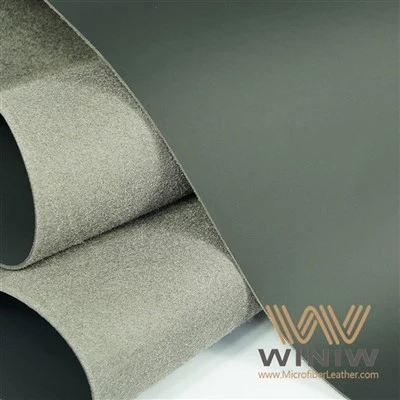
Distinguishing a direct source factory from a trading intermediary requires auditing physical production assets: in-house polyurethane (PU) coagulation lines, independent ISO-certified testing laboratories, and precise custom color-matching capabilities (ΔE ≤ 0.82). Trading companies typically inject a 15-30% margin markup while structurally removing the buyer's ability to enforce batch-to-batch QA consistency or engineer material specifications at the polymer level.
Technical Audit: Identifying a Direct Faux Leather Manufacturer
Procurement directors (CPOs) can verify a supplier's true operational status by evaluating compliance documentation and engineering flexibility. A standard commercial license is insufficient. You must request the ISO 9001 Quality Management System certificate; if the "Scope of Certification" lists "sales" or "export" rather than "manufacturing," the entity is a trading company.
Furthermore, intermediaries source rolls from multiple disparate mills to fill 40HQ containers. This fractures batch consistency, causing thickness variations exceeding ±0.15mm and failing standard automotive and footwear multi-layer CNC nesting requirements. A verified source factory controls the sea-island electrospinning and alkaline reduction processes in-house, guaranteeing a strict ±0.05mm tolerance.
Procurement & QA Notice: Validating infrastructure is mandatory before executing bulk contracts. Review our 50,000 sqm production facility, automated PU lines, and direct R&D laboratory directly via our Factory Capability page.
Request Factory Audit Documentation & Lab TDS Report
Supplier Capability Matrix: Manufacturing vs. Intermediary
The following matrix quantifies the operational and financial differences when sourcing material compliant with EN ISO and REACH standards.
| Operational Metric | Verified Source Factory | Trading Company | QA / Financial Impact |
| ISO 9001 Scope | "Manufacturing and Production" | "Sales and Export" | Legal accountability |
| Base Cost Structure | EXW Base (+0% markup) | Base + 15% to 30% Margin | Direct financial loss |
| Thickness Tolerance | ± 0.05 mm | ± 0.15 mm | 10-15% CNC cutting yield loss |
| Color Consistency (ΔE) | ≤ 0.82 (Single VAT control) | > 1.5 (Mixed mill sourcing) | Assembly shading rejection |
| R&D Prototyping | Yes (Lab-scale pilot lines) | No (Relies on standard stock) | Inability to engineer physicals |
| Chemical Compliance | Direct control (DMF-free, VDA 277) | Unverified supply chain | High risk of customs impoundment |
The WINIW Infrastructure Benchmark
To guarantee physical parameters such as ≥ 30 N/3cm peeling strength (ISO 2411) and > 100,000 Martindale rubs (EN ISO 12947-2), physical control over the raw chemistry is required.
As a leading micro suede factory China, our production infrastructure spans 50,000 square meters, integrating complete vertical manufacturing. We operate dedicated DMF-free water-borne polyurethane impregnation lines, high-temperature disperse dyeing vats, and an in-house QA laboratory equipped with spectrophotometers, Veslic rubbing testers (ISO 11640), and environmental chambers for hydrolysis testing (70°C, 95% RH). This infrastructure allows us to bypass intermediaries, delivering engineered substrates directly to Tier 1 OEM assembly lines globally.
Initiate Custom Material Engineering & Request a Direct Wholesale Quotation
Frequently Asked Questions (FAQ)
Q: How can I verify if a supplier is a direct faux leather manufacturer?
A: Request their ISO 9001 certificate and review the "Scope of Certification." It must explicitly state manufacturing and production. Additionally, demand a live video tour of their active polyurethane coagulation lines and in-house physical testing laboratory.
Q: Why do trading companies fail at color consistency for micro suede?
A: Intermediaries frequently source materials from multiple different factories to fulfill large volume orders quickly. This mixes different chemical dye batches, resulting in Delta E (ΔE) color variations exceeding 1.5, which fails standard commercial assembly tolerances.
Q: Can a direct factory provide custom thickness and peeling strength?
A: Yes. A direct factory controls the polymer matrix. By adjusting the sea-island fiber density and the polyurethane resin formulation during the coagulation phase, engineers can calibrate the material to meet exact mechanical requirements, such as specific peeling strengths or targeted thickness tolerances.