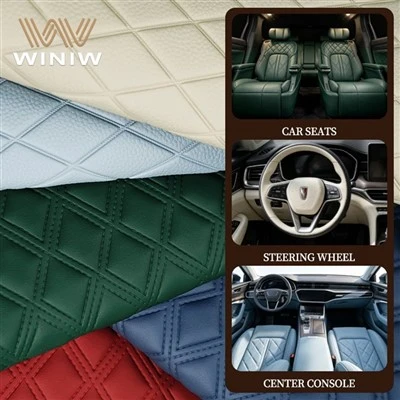
Marine grade faux leather is an engineered polyurethane substrate specifically synthesized for yacht exteriors and pontoon seating, integrating hindered amine light stabilizers (HALS) and hydrophobic fluorocarbon treatments over a 3D sea-island PET matrix. This formulation actively prevents UV-induced polymer cleavage and saltwater hydrolysis, maintaining a strict ISO 2411 peeling strength of ≥ 30 N/3cm in severe maritime environments.
UV Degradation and QUV Accelerated Weathering (ASTM G154)
Standard PVC and ester-based polyurethane rapidly embrittle under continuous ultraviolet radiation and alkaline salt spray. High-energy UV photons break the polymer chains, causing plasticizer migration, irreversible surface crazing (cracking), and severe pigment fading. To engineer a resilient Boat upholstery microfiber, WINIW International Co., Limited incorporates HALS and nanoscale UV absorbers directly into the DMF-free water-borne polyurethane slurry prior to the coagulation phase.
When evaluating materials under ASTM G154 (QUV accelerated weathering) testing parameters, this specific aliphatic formulation withstands > 1,000 hours of continuous UVA/UVB exposure. The total color difference (ΔE) remains mathematically ≤ 1.5, preventing the yellowing common in low-tier marine seating. To audit the exact chemical additives and stabilization protocols utilized in this process, review our Special Properties technical database.
Hydrophobic Surface Modification and Salt Spray Resistance
Beyond photon degradation, marine environments subject textiles to continuous moisture and saline exposure. A true Waterproof synthetic leather requires a structurally modified surface tension profile. By applying a highly cross-linked fluorocarbon nano-coating during the final thermal curing phase (150°C), the surface contact angle increases to > 110°. This forces corrosive saltwater and morning dew to bead up and roll off entirely without penetrating the microporous core.
This hydrophobic blockade works in tandem with polyether-based polyurethane resins to eliminate chemical cleavage caused by stagnant water. The following matrix details the performance of WINIW marine microfiber against standard commercial PU.
| Testing Parameter | Standard Commercial PU | WINIW Marine Microfiber | Testing Protocol |
| Accelerated UV Weathering | Surface crazing at 300h | Intact > 1,000h (ΔE ≤ 1.5) | ASTM G154 |
| Salt Spray Resistance | Blistering / Delamination | Zero degradation at 500h | ASTM B117 |
| Hydrolysis Resistance | < 2 Weeks | > 5 Weeks (70°C, 95% RH) | SATRA TM344 |
| Mildew Resistance | Grade 3 (Heavy growth) | Grade 0 (No growth) | ASTM G21 |
| Cold Fold Resistance | Cracking at -10°C | No cracking at -20°C | ISO 17233 |
Specifying structurally sound textiles prevents costly warranty replacements for yacht builders and aftermarket refitters. Because the internal architecture mimics natural collagen, it intrinsically passes EN ISO 3377-2 tear strength (≥ 60 N), preventing stitched seams from pulling apart under heavy passenger load and dynamic wave impacts. Submit your CAD tech packs and evaluate our Marine grade faux leather lab-dip samples to lock in your BOM specifications.
Frequently Asked Questions (FAQ)
Q: What makes marine grade faux leather resistant to UV rays?
A: It utilizes aliphatic polyether polyurethane compounded with hindered amine light stabilizers (HALS). This chemical structure prevents photon-induced polymer cleavage, allowing the material to pass >1,000 hours of ASTM G154 QUV testing without cracking or severe color fading (ΔE ≤ 1.5).
Q: How does boat upholstery microfiber handle saltwater exposure?
A: The substrate receives a fluorocarbon nano-coating that alters the surface contact angle to > 110°, rendering it strictly hydrophobic. This physically blocks alkaline salt penetration and subsequent hydrolysis, ensuring the ISO 2411 peeling strength remains ≥ 30 N/3cm in maritime conditions.
Q: Is waterproof synthetic leather safe against mold and mildew?
A: Yes. In addition to surface waterproofing, ASTM G21 compliant antimicrobial additives are integrated directly into the polyurethane resin. This effectively inhibits the growth of mold, mildew, and marine pink staining bacteria within the 3D sea-island non-woven core.