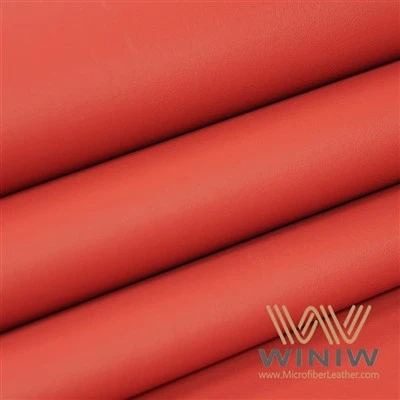
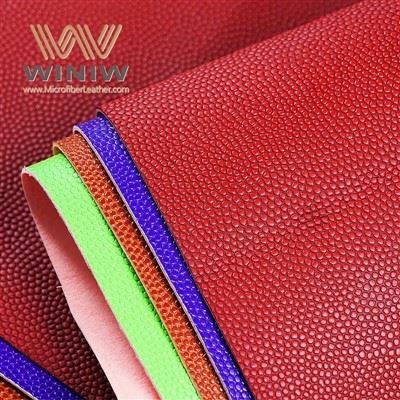
Natural bovine leather exhibits biological scarring and geometric irregularities that mathematically limit automated cutting yields to approximately 65%. By deploying WINIW's 1.37-meter continuous microfiber rolls, this luxury tote manufacturer achieved a 100% usable surface area, driving CNC nesting efficiency to > 85% and directly reducing the single-bag Bill of Materials (BOM) cost by 22%.
Biological Defects vs. CAD/CAM Nesting Efficiency
When auditing assembly lines as a primary handbag leather supplier, WINIW engineers consistently identify natural defects-such as insect bites, stretch marks, and gauge inconsistencies-as the primary bottleneck in automated manufacturing. CAD/CAM nesting software must calculate avoidance pathways around these biological scars, leaving up to 35% of the raw material as industrial scrap.
Transitioning to our engineered high yield synthetic leather eliminates these physical variables. Manufactured as continuous rolls with a locked 1.37-meter width and a strict ±0.05mm gauge tolerance, the 3D sea-island polyethylene terephthalate (PET) matrix presents zero surface defects. This isotropic architecture allows multi-ply CNC cutters to execute high-density nesting without human-guided defect mapping, instantly accelerating throughput.
Procurement & QA Notice: Stop absorbing the financial loss of 35% scrap rates. Submit your CAD nesting parameters to WINIW International Co., Limited, and request physical lab-dips specifically calibrated for Bags & Leather Goods today.
Mechanical Durability and BOM Cost Reduction (TCO)
Achieving a 22% reduction in the total BOM cost through yield optimization does not degrade the final product's mechanical integrity. In this luxury bag microfiber case, WINIW impregnated polyether polyurethane into the micro-denier PET core via a 100% DMF-free aqueous coagulation process.
| Physical / Manufacturing Parameter | Traditional Calfskin (1.2mm) | WINIW Engineered Microfiber (1.2mm) | Industrial Testing Protocol |
| Defect-Free Surface Area | 60% - 65% (Scars present) | 100% (Continuous roll) | Optical Surface Scan |
| Automated CAD Nesting Yield | Low (Irregular edges) | ≥ 85% (High-density) | CNC Output Metric |
| Single-Bag BOM Cost | Baseline | 22% Reduction | Total Cost of Ownership |
| Tear Strength (Z-Axis Load) | ≥ 40 N | ≥ 60 N | EN ISO 3377-2 |
| Peeling Strength (Adhesion) | Solid matrix | ≥ 30 N/3cm | ISO 2411 |
| VOC Emissions (DMFa Limit) | Variable (Tanning residue) | 0 mg/kg (Solvent-free) | VDA 277 / REACH |
The resulting substrate maintains a strict ISO 2411 peeling strength of ≥ 30 N/3cm and an EN ISO 3377-2 tear strength of ≥ 60 N. This continuous 3D interlock physically prevents strap delamination and seam fracture under dynamic load. Furthermore, registering 0 mg/kg in VOC emissions secures an immediate pass for EU REACH Annex XVII customs audits.
Lock in your production yields and profit margins. Send your mechanical stress requirements to WINIW International Co., Limited and review our continuous roll data for your next Bags & Leather Goods] mass production run.
Frequently Asked Questions (FAQ)
Q: How does high yield synthetic leather reduce manufacturing costs?
A: Delivered in continuous 1.37-meter isotropic rolls with zero biological scars, it allows CAD/CAM software to execute high-density nesting without defect avoidance. This increases usable cutting yields from 65% to > 85%, mathematically reducing the total BOM cost by up to 22%.
Q: Is the material in this luxury bag microfiber case strong enough for load-bearing straps?
A: Yes. The 1.2mm 3D sea-island PET matrix provides a mechanical interlock that strictly maintains an EN ISO 3377-2 tear strength of ≥ 60 N and a peeling strength of ≥ 30 N/3cm, physically preventing seam tearing and strap detachment under heavy loads.
Q: Does a handbag leather supplier like WINIW comply with EU environmental standards?
A: Absolutely. The manufacturing utilizes a 100% DMF-free water-borne coagulation process. Registering 0 mg/kg of VOCs and heavy metals, the substrate immediately passes EU REACH Annex XVII and ZDHC Level 3 compliance audits.