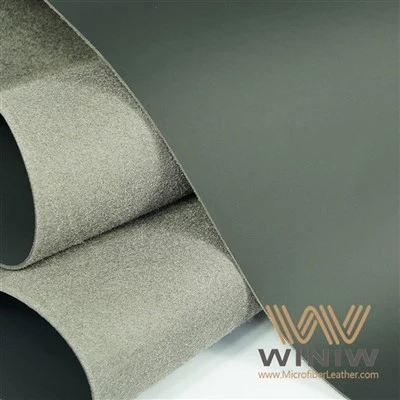
Optimizing wholesale synthetic leather shipping requires strict volumetric calculations to eliminate dead space within TEU and FEU containers. By standardizing roll dimensions and utilizing rigid suspension packaging, procurement directors can mathematically maximize a faux leather container load, directly amortizing oceanic freight expenses and reducing the landed cost per meter.
Roll Volumetrics and Packing Efficiency Parameters
Standard 3D sea-island polyethylene terephthalate (PET) microfiber is extruded and coated to a continuous usable width of 1.37 meters (54 inches). For standard 1.2mm gauge material, winding 50 meters onto a heavy-duty 8mm rigid paper core yields an outer roll diameter of approximately 0.25 meters.
This cylindrical geometry creates inherent dead space when stacked inside an ISO shipping container. Effective microfiber logistics algorithms account for an 80% volumetric packing efficiency. Utilizing this metric, OEMs can calculate exact load limits to avoid paying for empty container volume (shipping air) or causing structural Z-axis compression that leads to irreversible dead creases.
To review the specific load-bearing tolerances of our rigid polymer end-caps and resolve common shipping inquiries for your upcoming wholesale synthetic leather shipping order, consult the operational data housed directly within our FAQ portal.
20GP vs. 40HQ Container Load Algorithms
Procurement teams must align their Bill of Materials (BOM) volume with exact container capacities. A standard 20-foot General Purpose (20GP) container offers approximately 33 CBM of internal volume, while a 40-foot High Cube (40HQ) provides 68 CBM.
The matrix below quantifies the theoretical and operational capacity for standard 1.2mm microfiber leather wound in 50-meter rolls.
| Container Specification | Internal Volume | Operational Capacity (80%) | Est. Roll Count | Total Output (Meters) | Quality Assurance Limit |
| 20GP (TEU) | 33 CBM | 26.4 CBM | ~390 Rolls | ~19,500 m | Max 5-tier vertical stack |
| 40GP (FEU) | 67 CBM | 53.6 CBM | ~800 Rolls | ~40,000 m | Max 5-tier vertical stack |
| 40HQ (High Cube) | 68 CBM | 54.4 CBM | ~850 Rolls | ~42,500 m | Max 6-tier vertical stack |
When executing a faux leather container load, adhering to these tier limits ensures the basal weight does not crush the underlying PET fibers. Maintaining this strict vertical load limit ensures the material consistently retains an ISO 2411 peeling strength of ≥ 30 N/3cm upon unpacking, completely preventing surface delamination caused by transit pressure.
Procurement & Logistics Notice: Stop losing margin to inefficient freight consolidation. Standardize your order volumes to match exact TEU or FEU multiples.
Frequently Asked Questions
Q: How is a faux leather container load calculated?
A: Calculations utilize a base roll dimension of 1.37m width and 0.25m diameter (for 50m of 1.2mm material). Applying an 80% cylindrical packing efficiency, a 20GP container holds approximately 19,500 meters, while a 40HQ accommodates roughly 42,500 meters.
Q: How does rigid packaging affect wholesale synthetic leather shipping?
A: We use 8mm thick paper cores and rigid polymer end-caps. This suspends the rolls, absorbing horizontal stack pressure. It physically prevents Z-axis compression, ensuring the material maintains its structural EN ISO 3377-2 tear strength (≥ 60 N) during long-haul transit.
Q: Why is adjusting my order volume to match container sizes important?
A: Consolidating your order to exactly fill a 20GP or 40HQ maximizes the 80% packing efficiency threshold. This mathematically distributes the fixed oceanic freight cost across the maximum number of meters, directly lowering your final landed material cost.