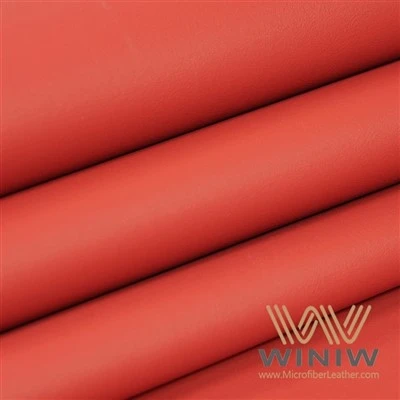
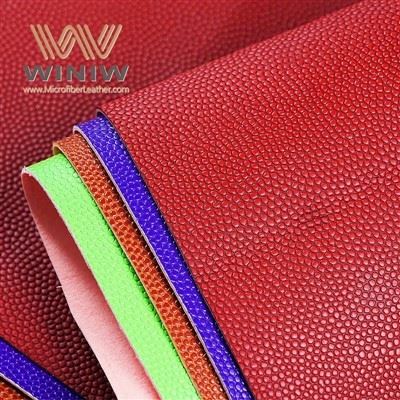
Evaluating silicone leather vs microfiber requires matching polymer architecture directly to physical stress environments. Silicone utilizes an inorganic siloxane (Si-O) bond, providing absolute UV and weather resistance for marine and infant applications, whereas microfiber utilizes a 3D sea-island polyethylene terephthalate (PET) matrix coated in water-borne polyurethane to maximize EN ISO 3377-2 tear strength for automotive seating and industrial footwear.
Inorganic Weathering Limits: Silicone Faux Leather Architecture
When engineering substrates for marine yacht seating or infant strollers, the primary failure modes are photochemical degradation (UV crazing) and volatile organic compound (VOC) toxicity. Standard ester-based polyurethane relies on carbon-carbon (C-C) bonds that rapidly cleave under ultraviolet radiation.
Silicone faux leather completely bypasses this limitation. WINIW International Co., Limited engineers a 100% solid liquid silicone rubber (LSR) coating system. The inorganic silicon-oxygen (Si-O) backbone inherently requires higher photon energy to break. Under continuous ASTM G154 accelerated weathering testing, silicone substrates withstand > 1,000 hours of UVA/UVB exposure with a mathematical color variance (ΔE) of ≤ 0.82. Furthermore, the platinum-catalyzed curing process utilizes zero solvents, emitting exactly 0 μgC/g of VOCs (VDA 277) and achieving a Grade 0 (non-cytotoxic) rating under ISO 10993-5 in vitro cytotoxicity tests.
Procurement & QA Notice: Prevent UV-induced warranty chargebacks and strictly meet hospital-grade or infant safety regulations.
Secure a zero-emission Bill of Materials (BOM). Submit your toxicity requirements and request physical lab-dips from our Silicone Leather engineering database today.
Mechanical Stress and Isotropic Strength: Engineered Microfiber
For applications subjecting the material to continuous dynamic bending and heavy structural loading (e.g., automated footwear cementing, CAD/CAM automotive upholstery), the substrate must exhibit extreme Z-axis adhesion and tear resistance.
While silicone excels in chemical inertness, engineered microfiber replicates the exact 3D microporous structure of natural bovine collagen. By impregnating a DMF-free water-borne polyurethane directly into an electrospun sea-island PET core, WINIW guarantees a minimum EN ISO 3377-2 tear strength of ≥ 60 N and an ISO 2411 peeling adhesion of ≥ 30 N/3cm. This monolithic construction allows the material to survive > 100,000 dynamic bending cycles (EN ISO 5402-1) without fracture.
| Engineering Parameter | WINIW Silicone Leather | WINIW Engineered Microfiber | Primary Testing Protocol |
| Core Structural Architecture | LSR on Woven/Knit Base | Polyether PU on 3D PET Matrix | Microscopic / FTIR Scan |
| Tear Strength | ≥ 30 N (Moderate) | ≥ 60 N (High structural load) | EN ISO 3377-2 |
| Accelerated UV Weathering | > 1,000 Hours (Immune) | 500 Hours (Highly resistant) | ASTM G154 |
| Total VOC Emissions (DMFa) | 0 μgC/g (100% Solid) | < 10 μgC/g (Aqueous coagulated) | VDA 277 / EN 16778 |
| Bally Flexing Endurance (20°C) | 80,000 Cycles | > 100,000 Cycles | EN ISO 5402-1 |
| Target OEM Application | Marine, Strollers, Medical | Footwear, Automotive, Bags | Application Matrix |
Sourcing eco-friendly upholstery requires isolating the exact physical demands of your product lifecycle. Microfiber provides the highest physical durability and automated CNC cutting yield (> 85%), while silicone offers unmatched environmental stability.
Stop over-engineering your supply chain. Send your exact ISO mechanical testing requirements to WINIW International Co., Limited, and request our third-party SGS certified data matrices to finalize your production run.
Frequently Asked Questions
Q: How do I choose between silicone leather vs microfiber for OEM production?
A: Specify silicone for extreme UV exposure (marine yachting) and zero-toxicity environments (infant strollers, medical beds). Specify microfiber for high mechanical stress applications (automotive seats, safety footwear) requiring an EN ISO 3377-2 tear strength of ≥ 60 N.
Q: Why does silicone faux leather excel in outdoor environments?
A: It utilizes an inorganic silicon-oxygen (Si-O) molecular bond. This structure physically resists high-energy UV photons, passing > 1,000 hours of ASTM G154 testing with zero surface crazing and maintaining absolute thermal stability up to 200°C.
Q: Is eco-friendly upholstery based on microfiber durable enough for industrial shoes?
A: Yes. Engineered microfiber features a 3D sea-island PET matrix that acts mechanically identically to natural collagen. It easily exceeds 100,000 continuous dynamic bending cycles at 20°C (EN ISO 5402-1) without structural fracture or topcoat delamination.