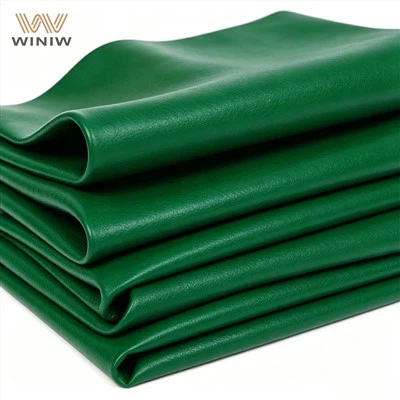
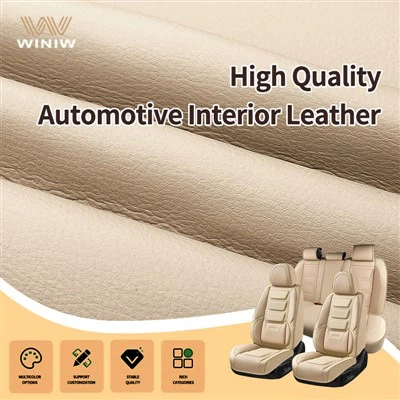
Microfiber leather peeling occurs when the Z-axis adhesion between the polyurethane (PU) surface layer and the polyethylene terephthalate (PET) base fabric fails under mechanical or environmental stress. Preventing this structural failure requires replacing outdated dry lamination methods with DMF-free wet coagulation, physically locking the polyether PU resin directly into the micropores of the 3D sea-island non-woven matrix.
Root Cause Analysis: Dry vs. Wet Lamination Temperature Control
Standard low-tier manufacturing frequently suffers from synthetic leather delamination because it relies on dry lamination. This process glues a pre-formed PU film onto a standard 2D woven backing using unstable chemical adhesives. When exposed to ambient humidity and UV radiation, these adhesives undergo rapid hydrolysis, completely degrading within 1 to 2 weeks under SATRA TM344 testing conditions.
WINIW International Co., Limited engineers materials utilizing a high-density wet coagulation process. Liquid water-borne polyurethane is directly impregnated into the sea-island fiber core. To prevent microfiber leather peeling, thermal curing ovens must maintain a strict 150°C (±2°C) continuous temperature profile. If the temperature drops below 145°C, the PU cross-linking remains incomplete; if it exceeds 152°C, the PET base fibers experience thermal degradation. Exact thermal calibration generates a monolithic structure that physically cannot delaminate.
Procurement & QA Notice: Mitigating surface failures requires upgrading your Bill of Materials (BOM). Specifying advanced PU Leather formulations engineered through controlled aqueous coagulation directly guarantees the necessary Z-axis tensile adhesion for high-stress footwear and automotive applications.
ISO 2411 Peel Strength Testing Parameters
To objectively define a durable faux leather, R&D engineers must analyze destructive physical testing data. Subjective tactile assessments cannot predict long-term structural integrity.
Before any lot is cleared for export, it must mathematically exceed the baseline for peel adhesion as defined by ISO 2411. The matrix below quantifies the exact performance differential between standard dry-glued substrates and engineered microfiber.
| Physical Parameter | Standard Dry-Laminated PU | WINIW Wet-Coagulated Microfiber | Industrial Standard |
| Peeling Strength (Tensile) | < 15 N/3cm | ≥ 30 N/3cm | ISO 2411 |
| Hydrolysis Resistance | < 1 Week (Surface cracking) | > 5 Weeks (Structurally intact) | SATRA TM344 |
| Adhesion Architecture | Chemical adhesive layer | Mechanical 3D impregnation | SEM Analysis |
| Base Matrix Integrity | 2D Woven polyester | 3D Sea-island non-woven | Visual / Microscopic |
| Abrasion Resistance | 20,000 Rubs | > 100,000 Rubs | EN ISO 12947-2 |
When sourcing materials for CAD/CAM automated cutting and heavy-duty sewing lines, an ISO 2411 result below 25 N/3cm guarantees high needle deflection and immediate edge fraying upon turnout.
Eliminate mass production failure rates. Require verifiable destructive testing reports before your next bulk order by reviewing our strict Quality Control protocols, and request your physical lab samples from WINIW International Co., Limited today.
Frequently Asked Questions
What causes microfiber leather peeling over time?
Peeling results from the hydrolysis of substandard adhesives used in dry-laminated substrates. Exposure to atmospheric moisture and heat breaks the weak chemical bonds between the PU surface film and the woven backing, causing immediate synthetic leather delamination.
How does wet coagulation prevent material separation?
Wet coagulation physically forces liquid polyurethane deep into the micropores of the 3D sea-island PET matrix. Curing at a strict 150°C creates a monolithic, mechanically interlocked structure, eliminating the need for weak chemical adhesives entirely.
What ISO standard verifies a durable faux leather for adhesion?
ISO 2411 is the primary international standard for evaluating peel adhesion. Tier 1 automotive and footwear OEMs require the material to consistently withstand a peeling strength of ≥ 30 N/3cm to guarantee zero separation during assembly and end-user wear.